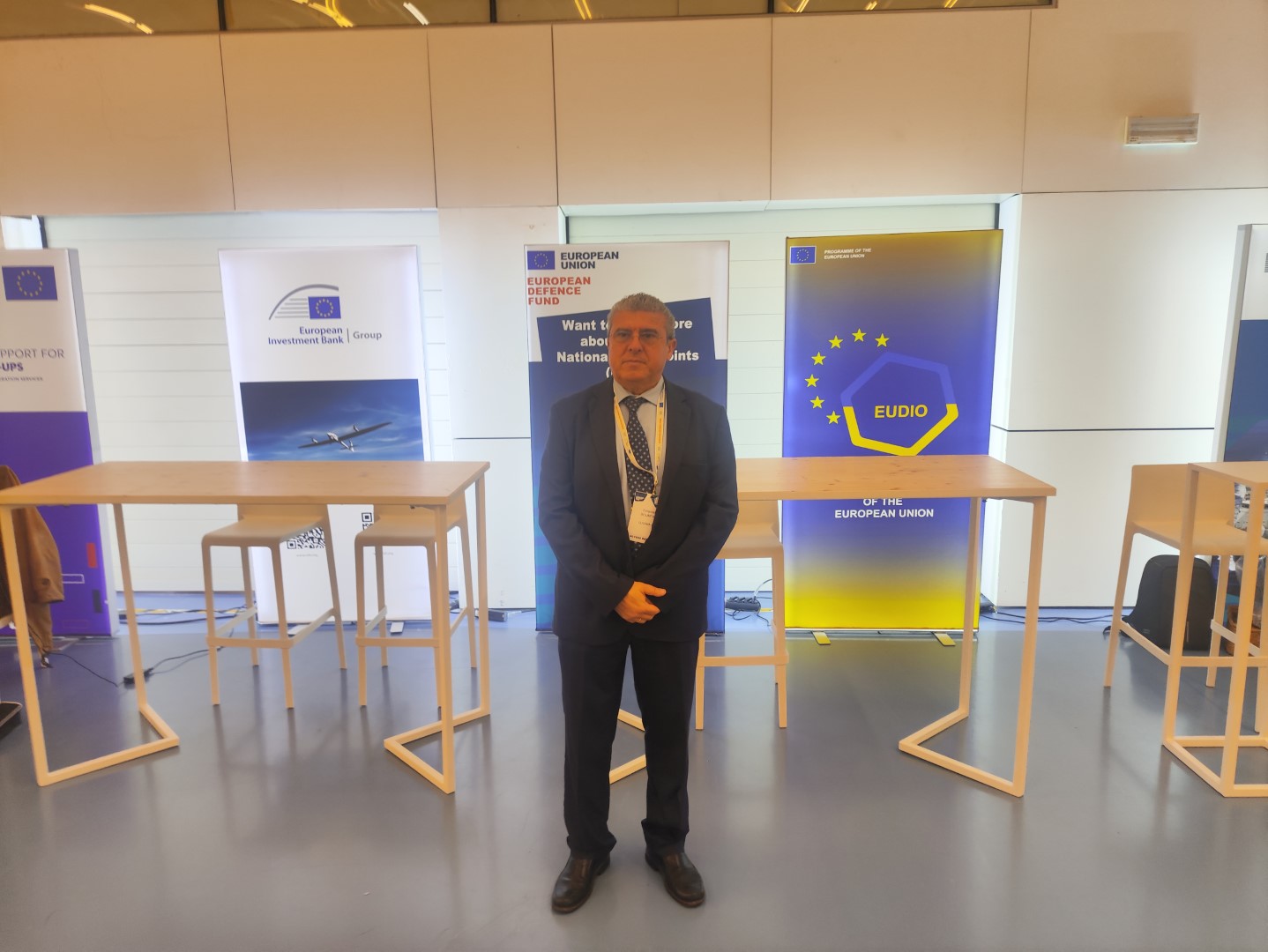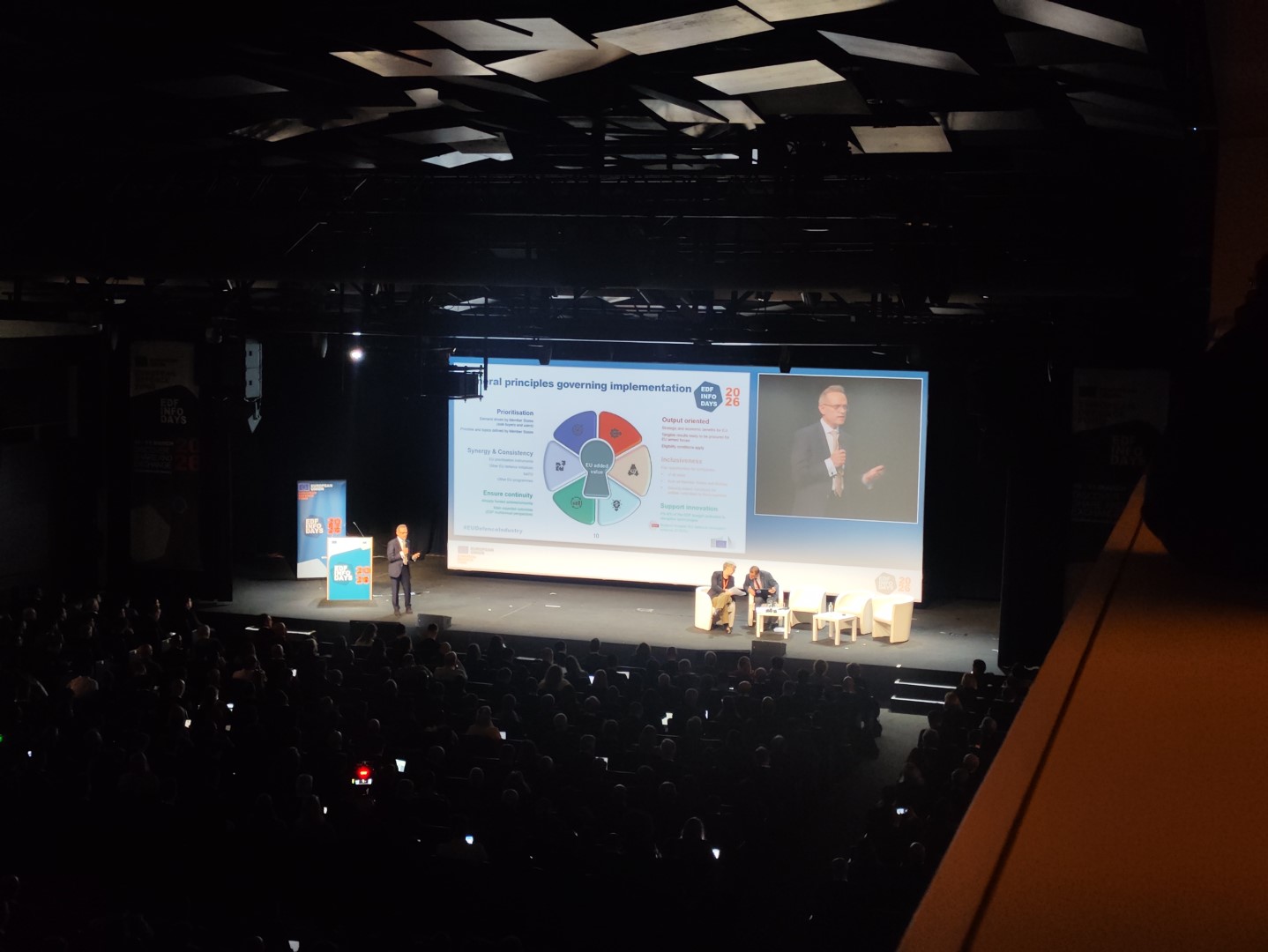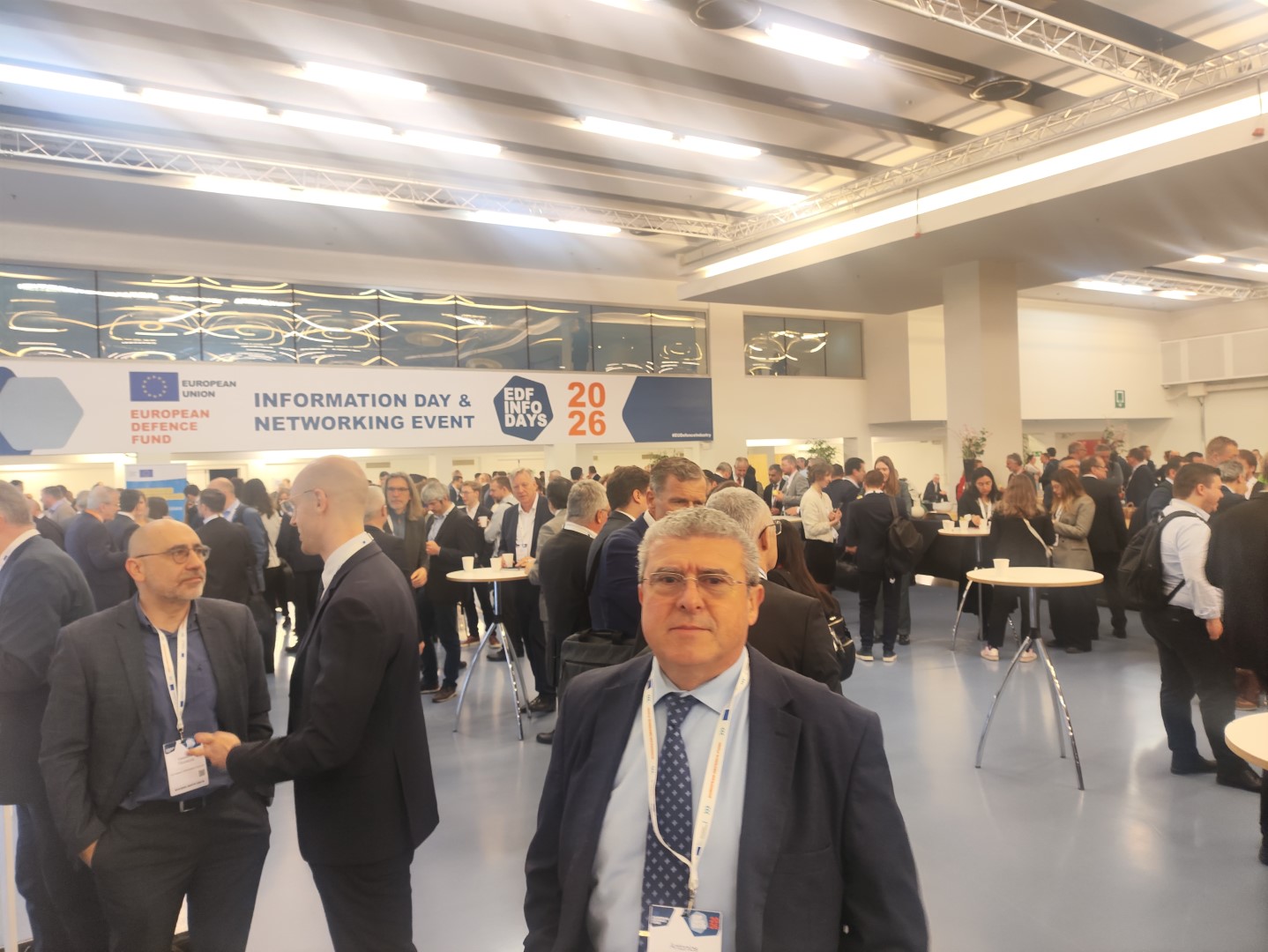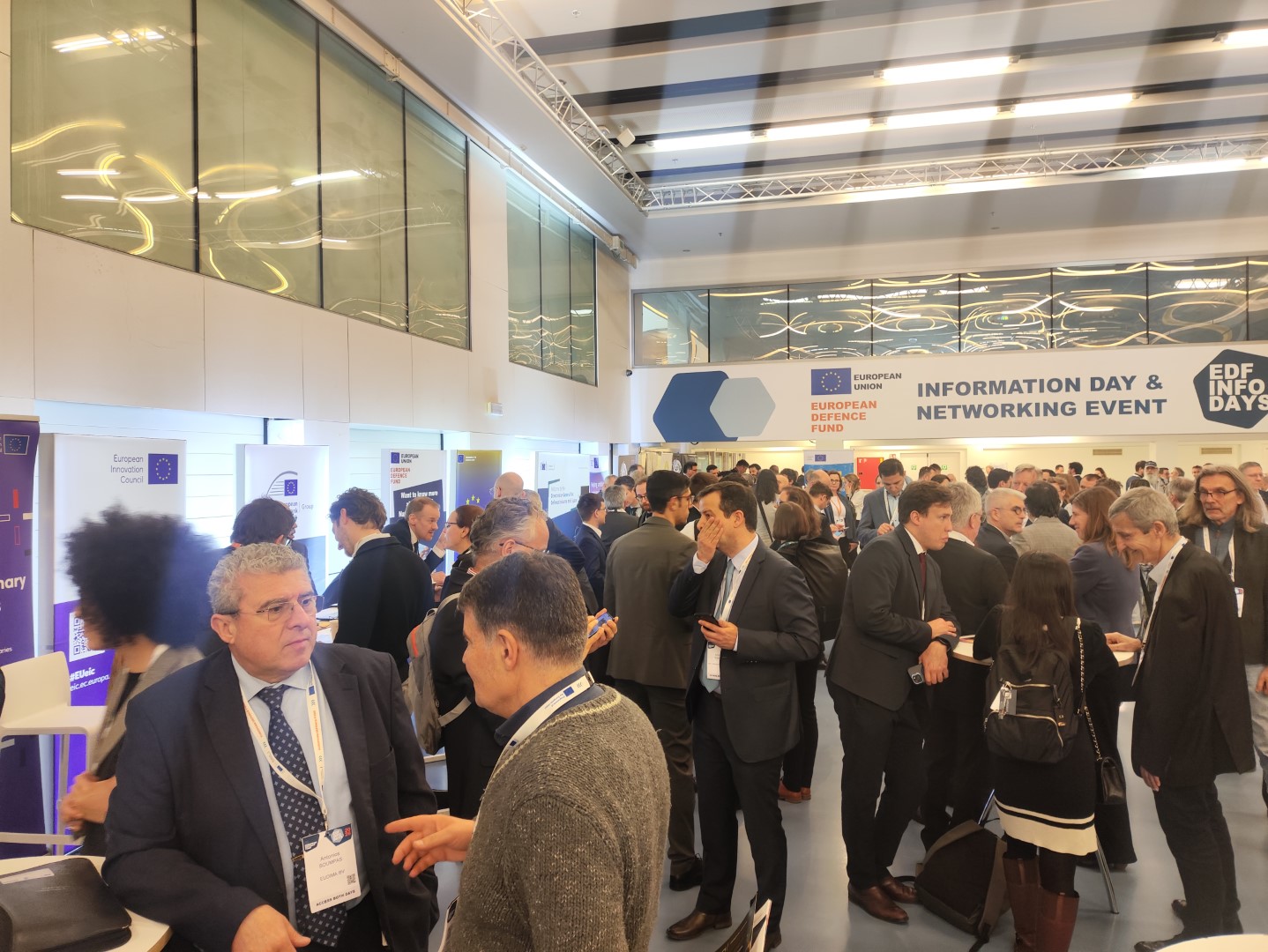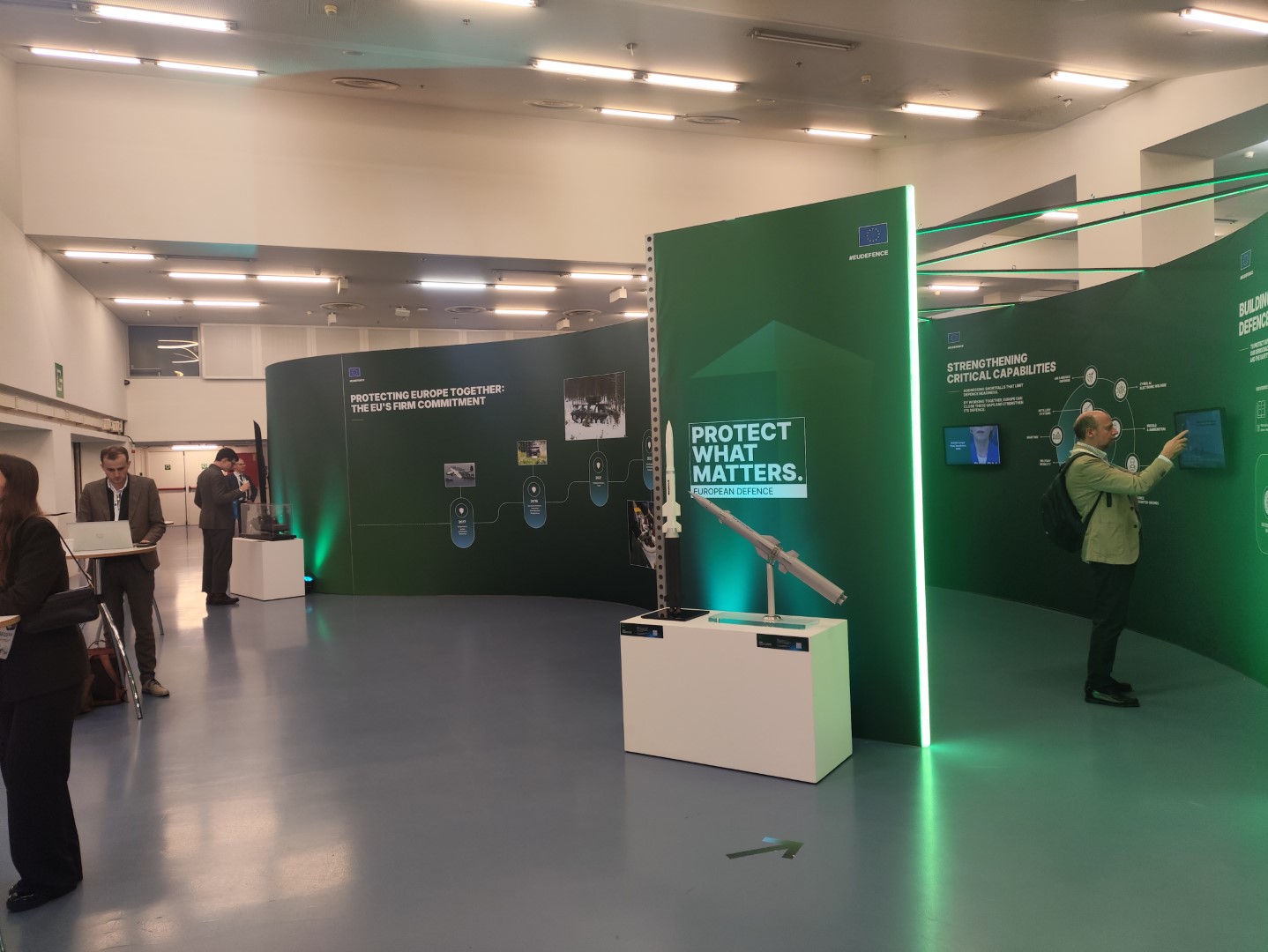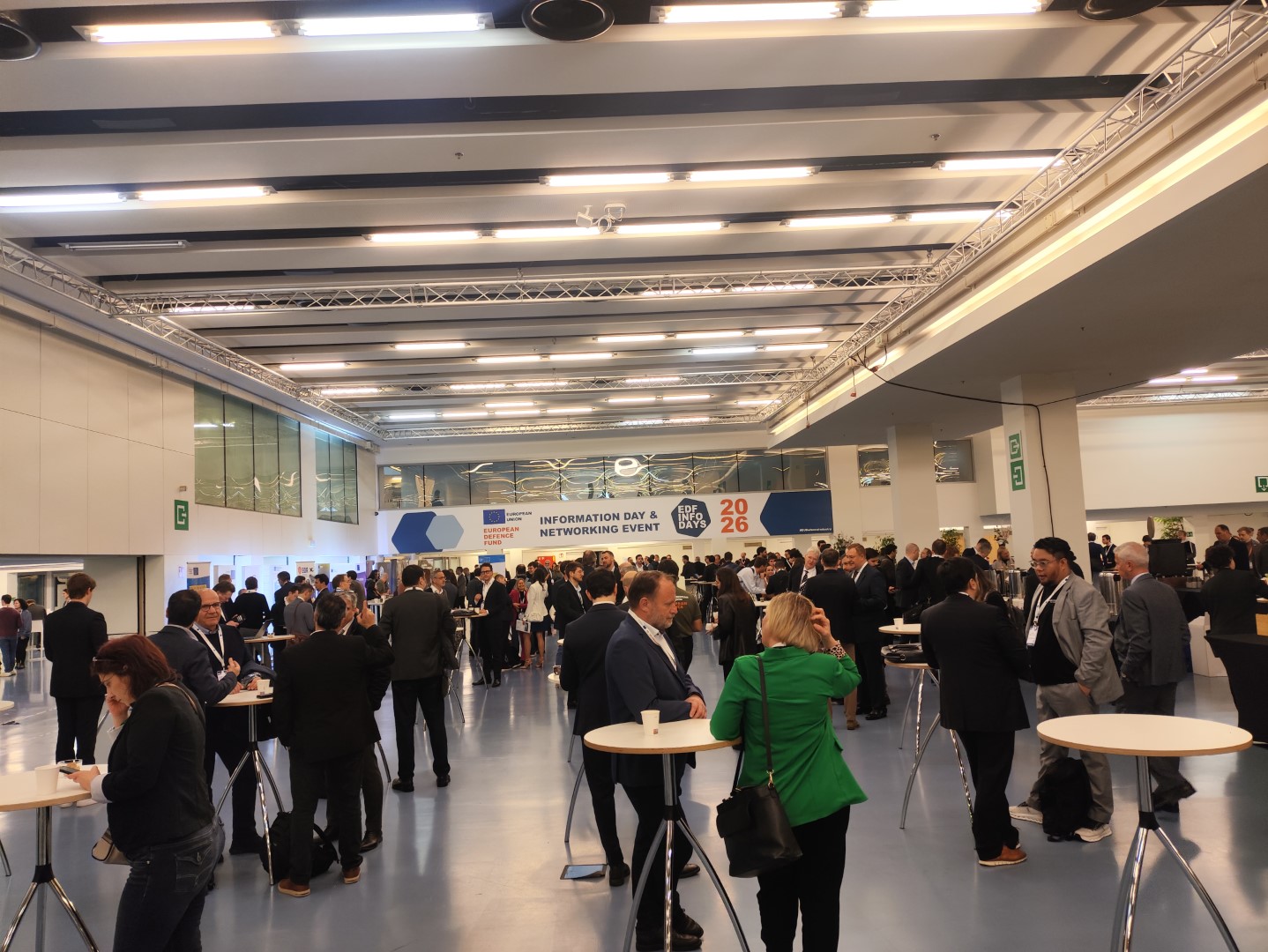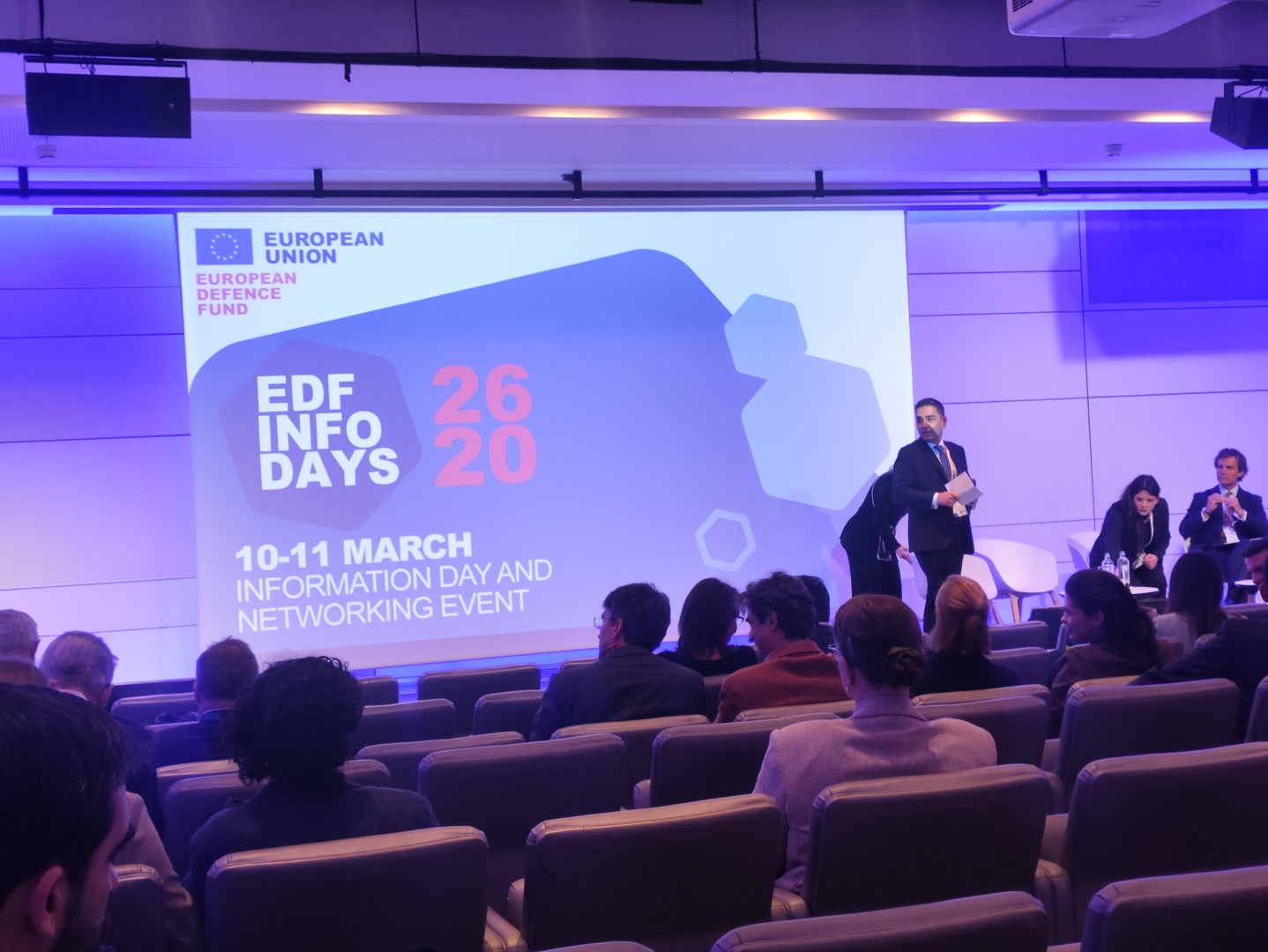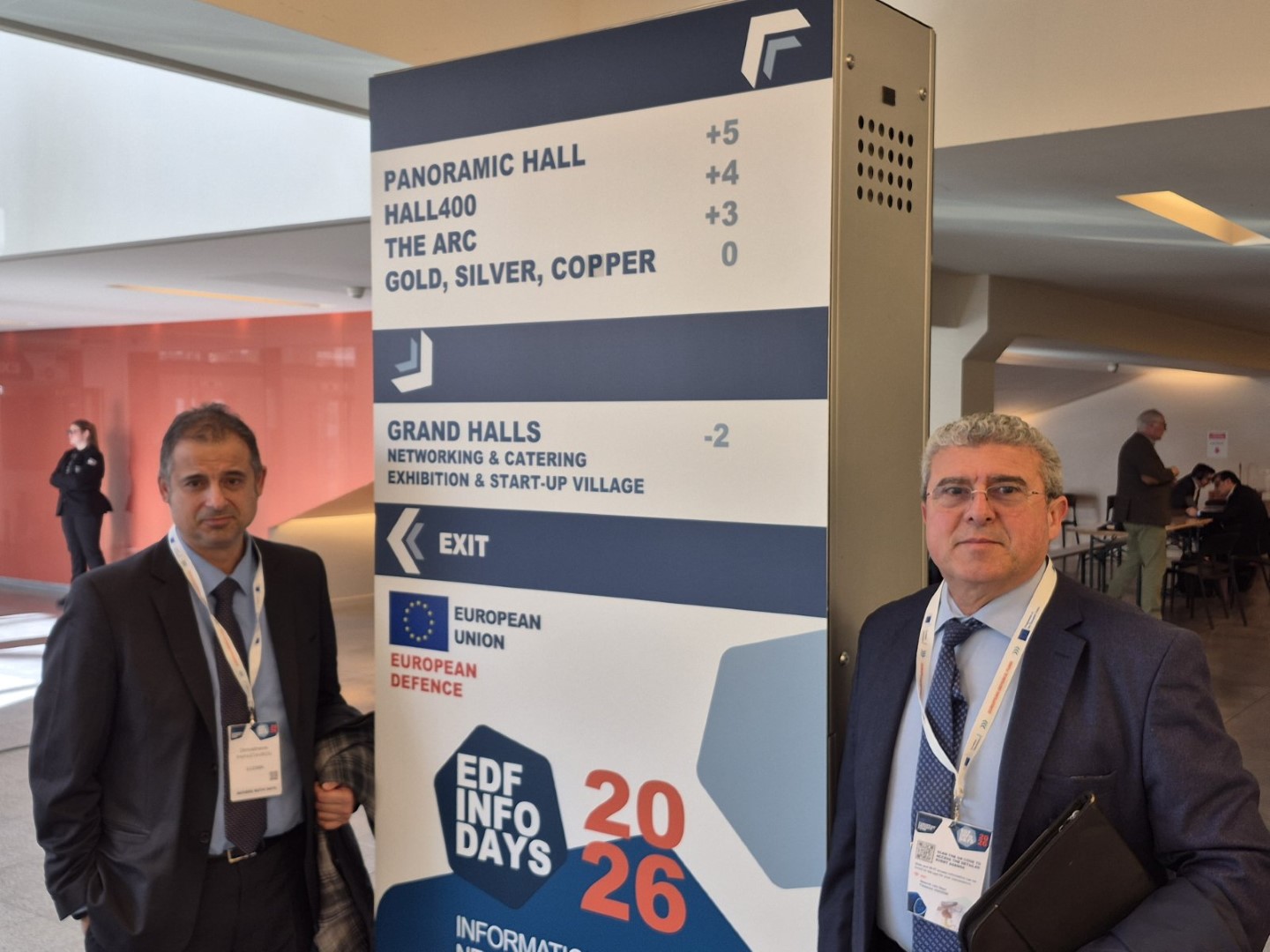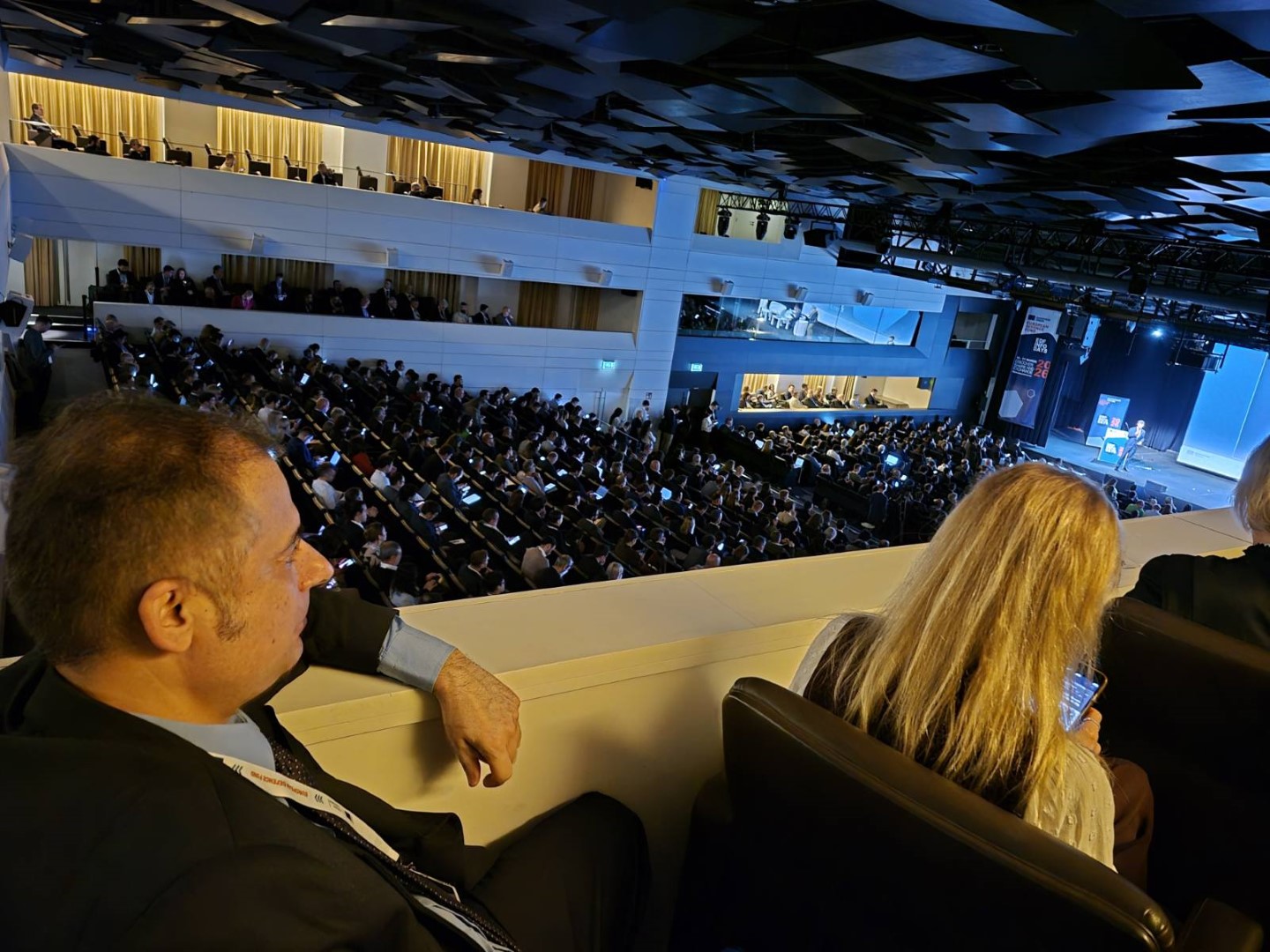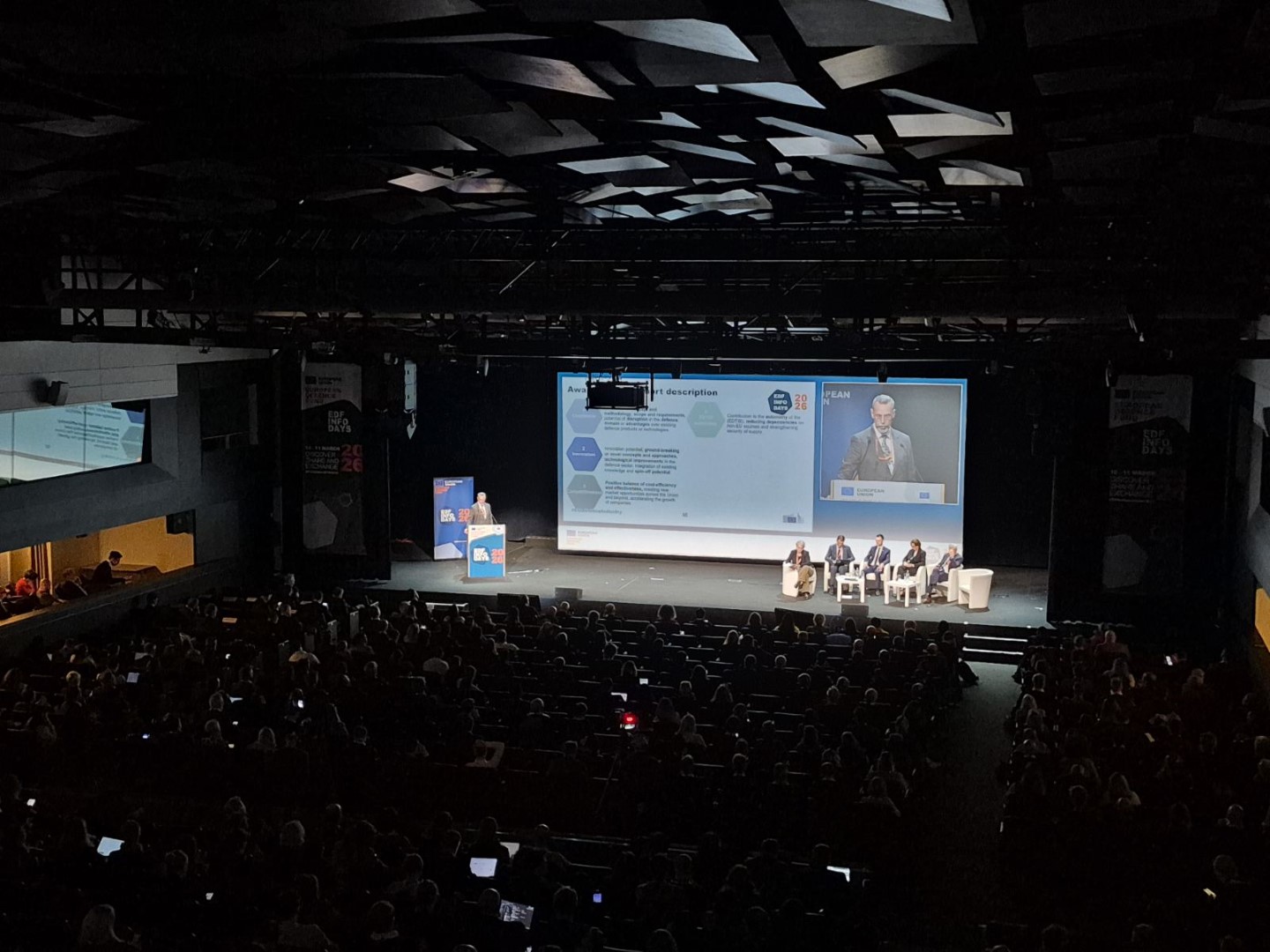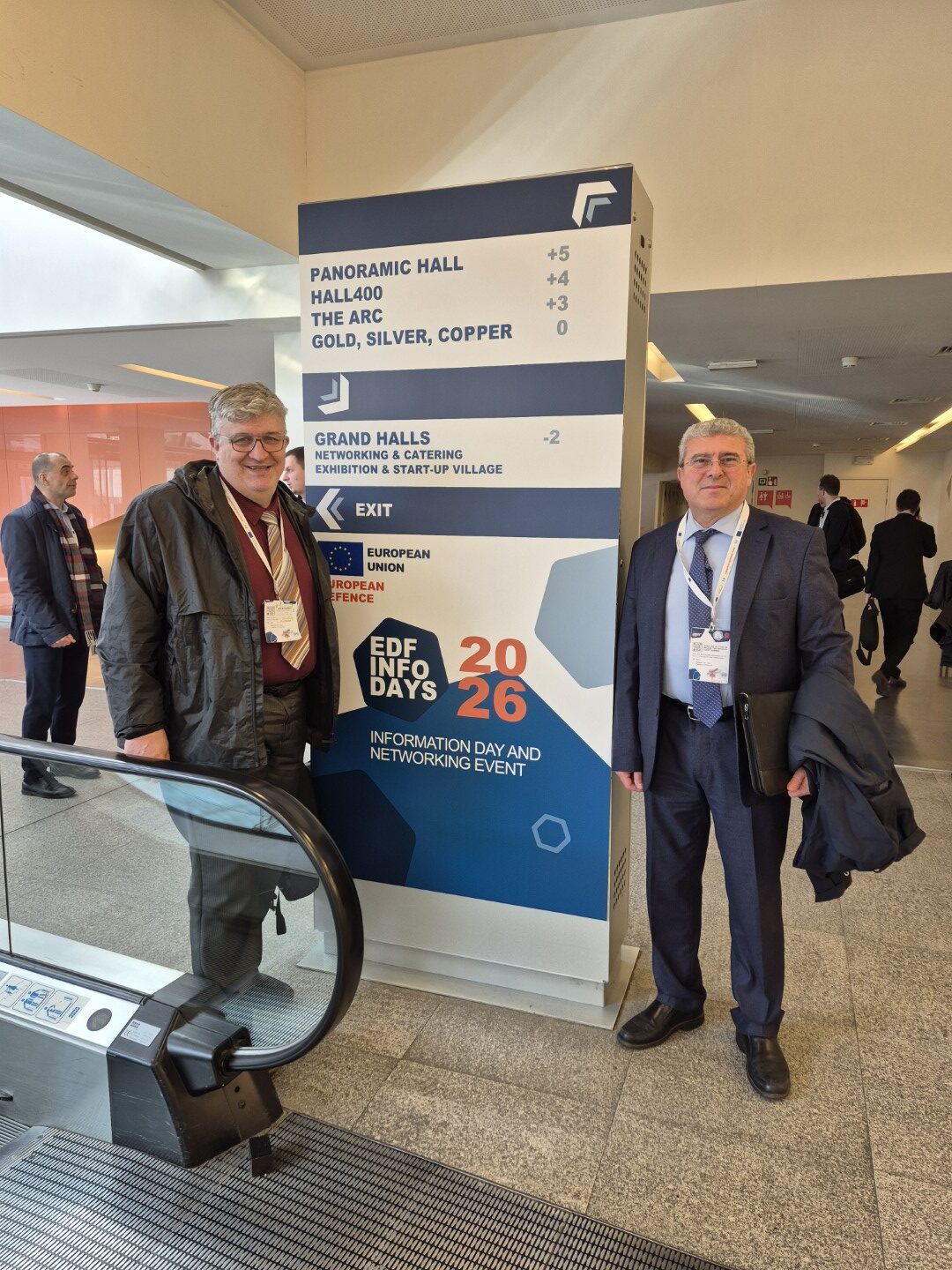
With €1 billion in new funding on the table and an unprecedented number of novelties reshaping how Europe invests in collaborative defence research and development, the European Defence Fund Info Days 2026 arrived at a pivotal moment for the continent’s defence industrial base. EUDIMA participated in the two-day event, held on 10–11 March 2026 in Brussels, organised by the European Commission’s Directorate-General for Defence Industry and Space (DG DEFIS). The event gathered more than 5,200 participants from across the EU, Norway, and beyond, making it the largest edition to date and a clear signal of the growing momentum behind European defence cooperation.
The centrepiece of the Info Days was the presentation of the EDF Work Programme 2026, adopted by the European Commission on 17 December 2025. The programme earmarks €1 billion for collaborative defence research and development, distributed across 31 call topics and 10 competitive calls for proposals. Of this, approximately €330 million is dedicated to defence research and €676 million to capability development activities.
Half of the budget is directed towards collaborative R&D on major defence capabilities that remain at the core of commonly agreed European priorities. These include the development of an EU endo-atmospheric interceptor (€100 million), a future main battle tank (€125 million), a multiple rocket launcher system (€25 million), and an enhanced medium-size semi-autonomous surface vessel (€90 million). A further quarter supports critical technologies in forward-looking areas such as quantum-secured tactical networks, electronic warfare, multi-domain operations cloud services, and high-performance energy systems. The remaining quarter is dedicated to the implementation of the EU Defence Innovation Scheme (EUDIS), which supports innovation and disruptive technologies for defence through targeted measures, including approximately €60 million for disruptive technologies and €60 million in non-thematic calls for SMEs.
Andrius Kubilius, European Commissioner for Defence and Space, framed the significance of this investment at the time of the Work Programme’s adoption, stating that with the 2026 European Defence Fund, the Commission is placing collaboration at the centre of Europe’s defence innovation, turning shared priorities into shared capabilities. Since the EDF Regulation entered into force in May 2021, the Commission has committed nearly €6.5 billion in total, funding 224 projects and establishing itself as one of the world’s leading investors in defence R&D.
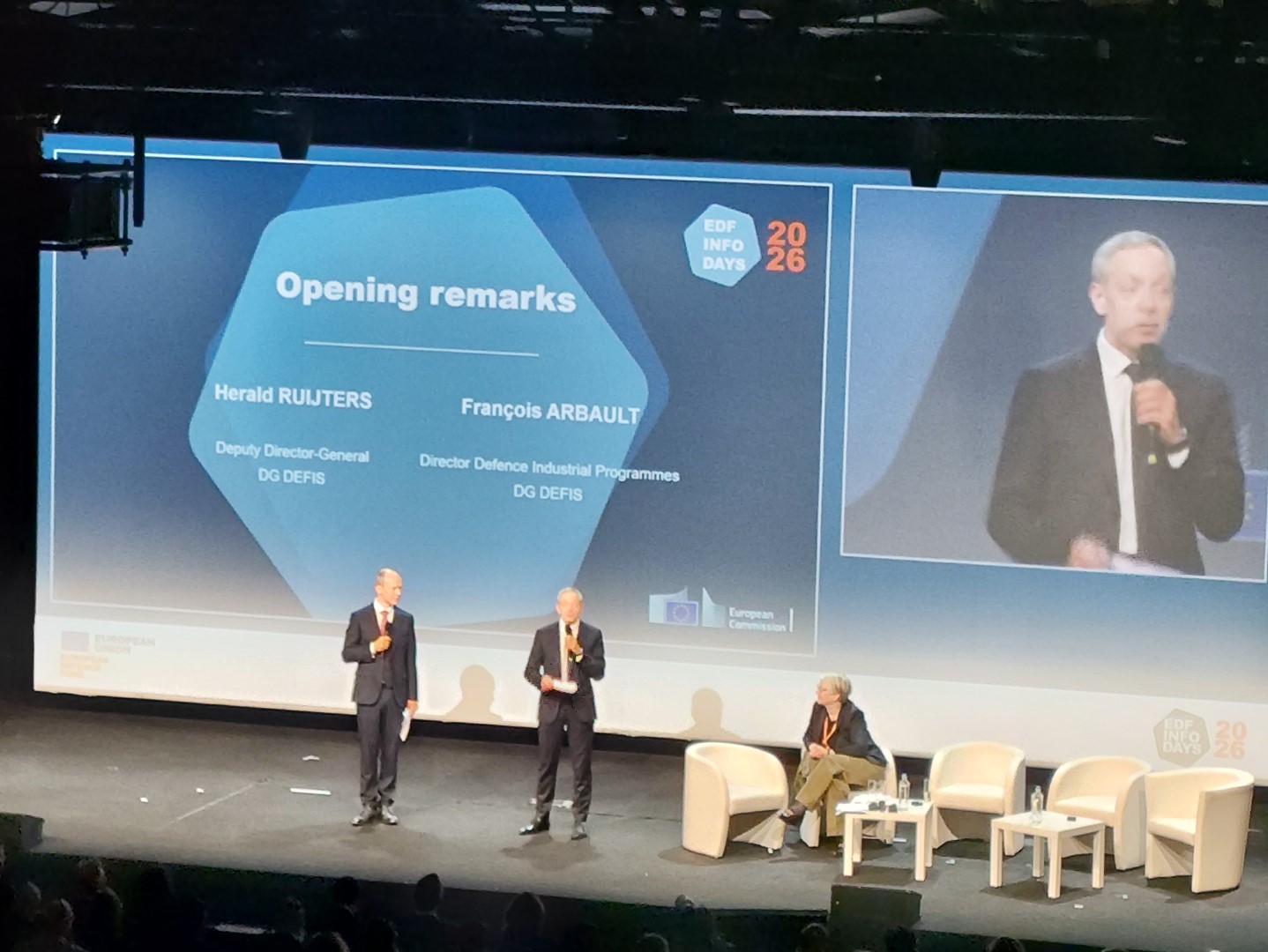
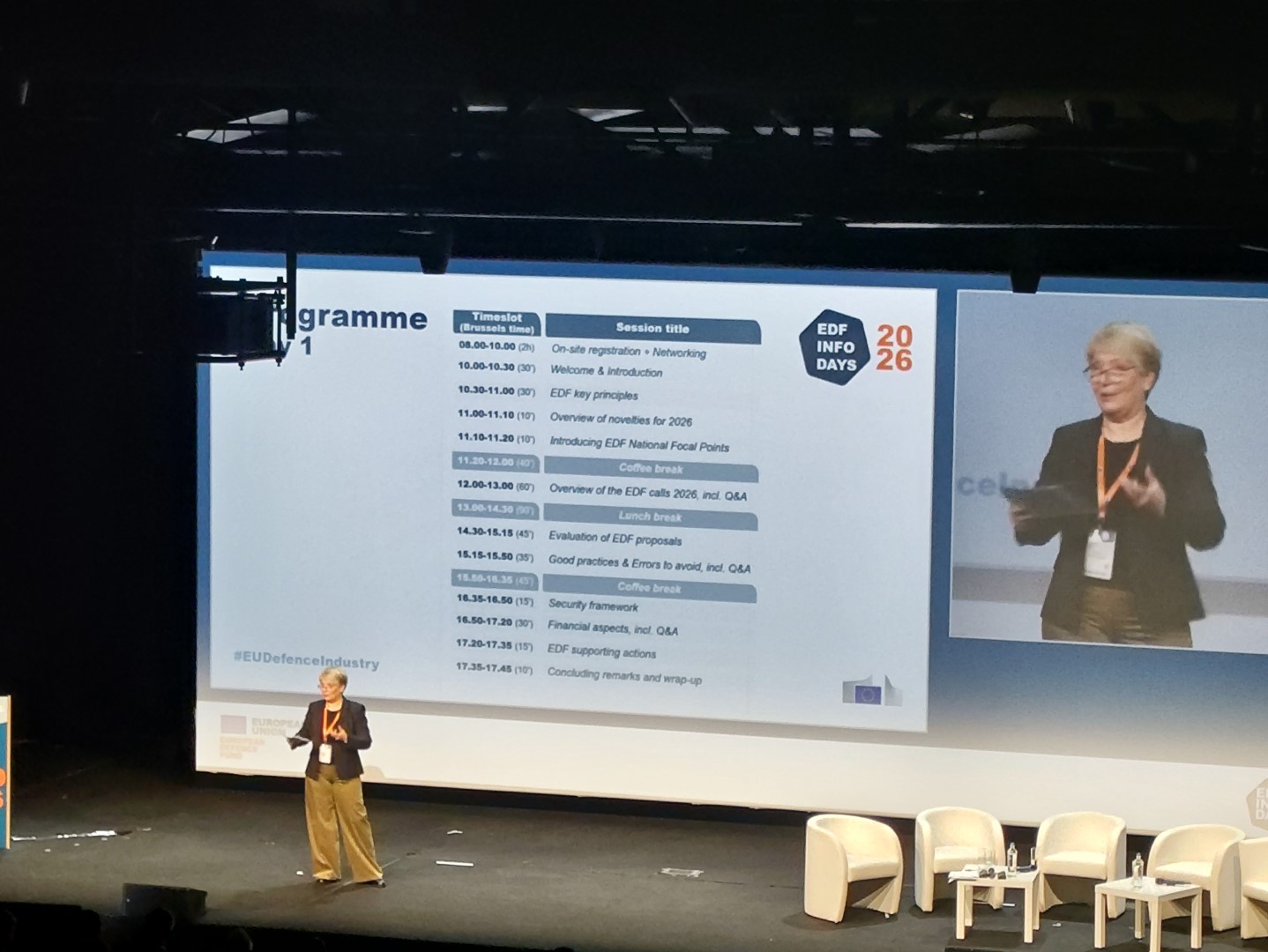
Sylvia Kainz-Huber, Head of Unit for Defence Industrial Programming Coordination at DG DEFIS, opened the plenary sessions, which featured opening remarks from Herald Ruijters, Deputy Director-General of DG DEFIS, and François Arbault, Director for Defence Industrial Programmes. The presentations that followed outlined several significant changes compared to the 2025 edition of the programme.
The most immediately practical change is the new timeline. The Work Programme and call topic descriptions were published on 17 December 2025, with a submission deadline of 29 September 2026, giving applicants more than nine months to prepare their proposals, a substantial improvement over previous cycles. One expedited call, for military multi-domain operations cloud services, carries an earlier deadline of 28 April 2026.
Beyond timing, the programme introduces structural innovations that benefit from the so-called “mini-omnibus” legislative changes adopted in December 2025. A new call type (LS-DIS) targets fast-track innovation with shorter project durations of 12 to 24 months, smaller consortia of just two entities, and funding rates of up to 100% even at higher technology readiness levels. A cascade approach has been introduced for the evaluation of SMERO and LS-DIS calls, streamlining the assessment process. Financial Support to Third Parties (FSTP), a mechanism that allows smaller players to participate in EDF projects with funding of up to €60,000 per entity, has been generalised to all call topics for the first time. Nearly all topics are also relevant for the Strategic Technologies for Europe Platform (STEP), enabling access to the STEP Seal.
Perhaps the most strategically significant novelty is Ukraine’s association to the EDF, pending the signature of the association agreement. Once in force, Ukrainian entities will be eligible to participate in EDF projects with EU funding. Martin Joesaar, representing the EU Defence Innovation Office in Kyiv (EUDIO), outlined the benefits of involving Ukrainian industry, from minimal battlefield feedback loops to a rapid innovation cycle and deep expertise in dual-use technology adaptation. The BraveTech EU initiative, combining €50 million from EDF and €50 million from Ukraine, and the €300 million Ukraine Support Instrument under the European Defence Industry Programme (EDIP), further reinforce this cooperation framework.
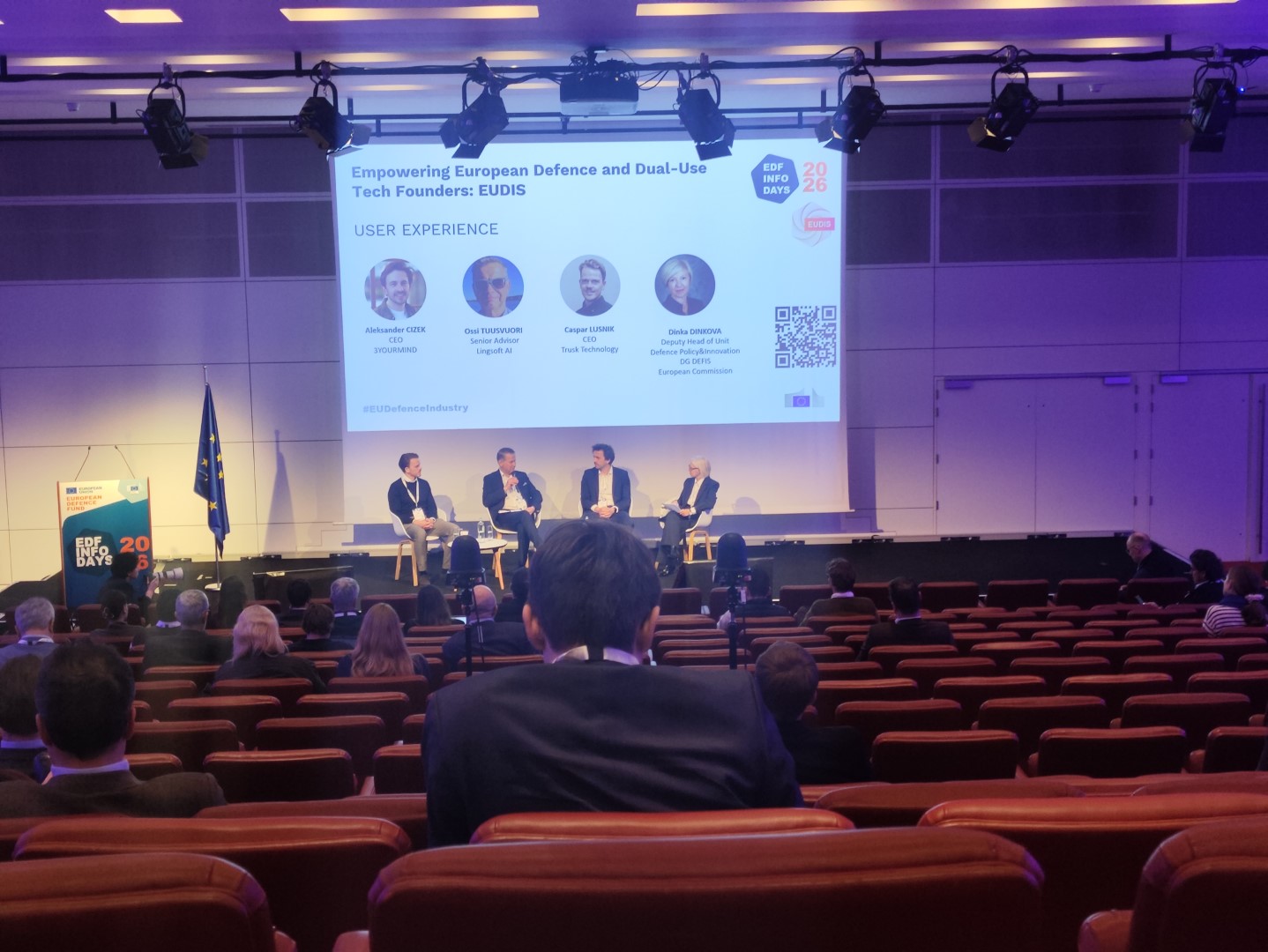
Guillaume de la Brosse, Head of Unit for Defence Policy and Innovation at DG DEFIS, presented the expanding scope of EUDIS, which continues to serve as the EDF’s principal vehicle for broadening the European defence innovation base. The 2026 programme brings several notable developments. The Defence Equity Facility 2.0, a €1 billion fund-of-funds to be implemented with the European Investment Bank and European Investment Fund, is set to begin deployment in 2026, providing growth capital for defence-related innovative SMEs and scale-ups. A new pilot instrument, AGILE, is expected to be adopted in 2026 and begin operations in early 2027, designed to support the rapid development and market uptake of game-changing defence solutions.
The EUDIS Defence Hackathons continue to expand, with two editions planned for 2026, each taking place simultaneously across eight EU Member States and Norway. The spring edition, themed “Defending Airspace,” was scheduled for 26–28 March 2026. The Business Accelerator is scaling up its support for start-ups and scale-ups through two cohorts of 20 companies each, offering tailored coaching, bootcamps, access to testing facilities, and a €120,000 performance-based seed-funding voucher. A robust matchmaking programme, with seven onsite events planned across Europe, completes the innovation support architecture.
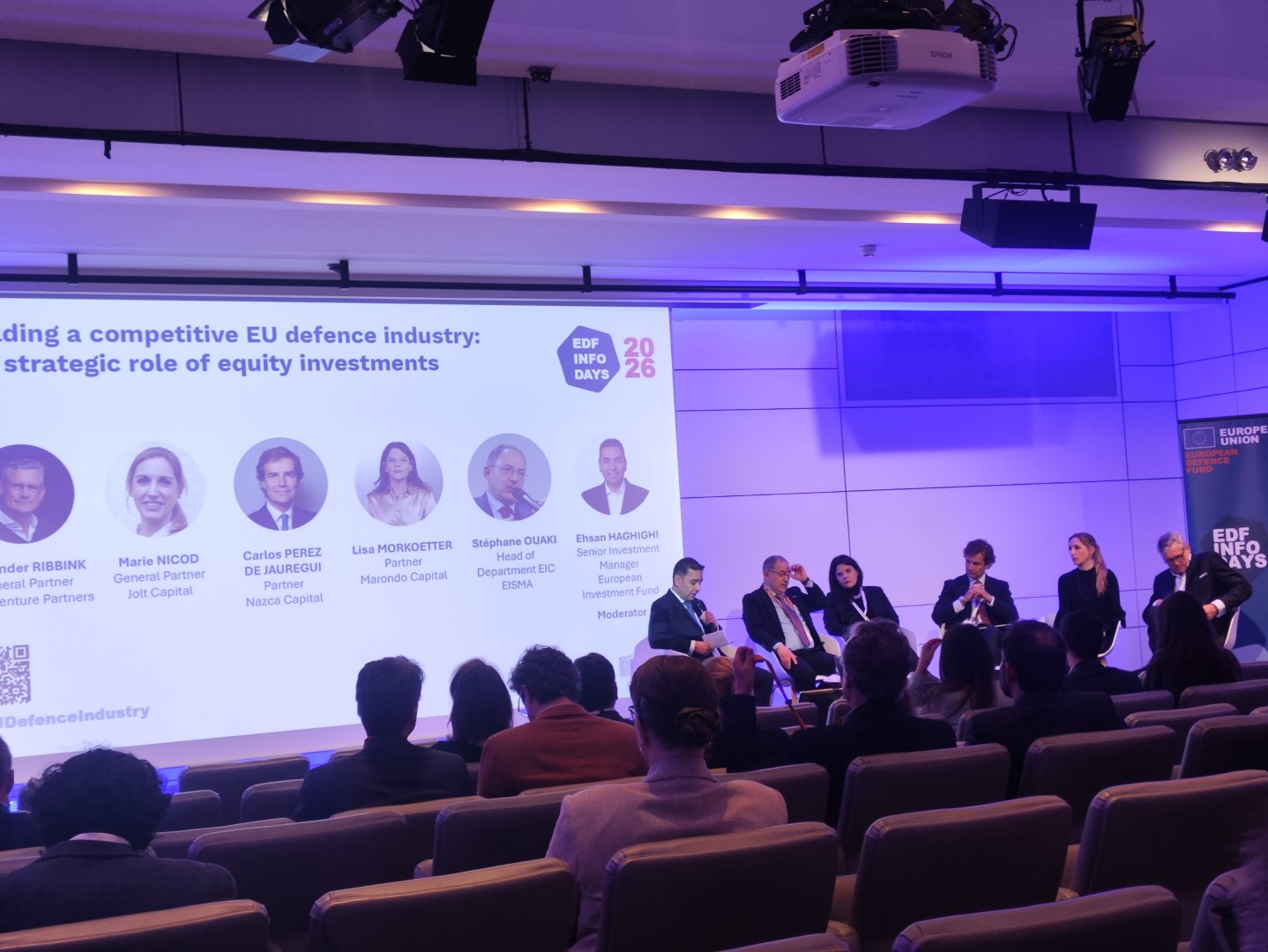
While the first day focused on the substance of the calls and the regulatory framework, the second day was dedicated to international networking and consortium formation. Participants engaged in thematic pitch sessions covering areas from future air and space operational capabilities to maritime capabilities, ground combat, electronic warfare, and simulation and training. Dedicated investor sessions explored themes such as fuelling defence innovation from early-stage to growth financing, the strategic role of equity investments in building a competitive EU defence industry, and mobilising debt financing to scale the EU’s defence capabilities.
Sessions on effective partnering with Ukraine, including one on investing in dual-use technologies and another on keeping pace with battlefield innovation, reflected the growing integration of Ukrainian defence innovators into the European ecosystem. A dedicated SME pitching session brought together start-ups, small enterprises, and research organisations to present their technologies and capabilities to potential consortium partners. Throughout the day, one-to-one onsite matchmaking in the Grand Hall provided a structured environment for direct bilateral discussions.
EUDIMA participated across both days of the event, attending the plenary information sessions on the 2026 calls, the evaluation and financial guidance presentations, and several thematic sessions on the second day. The plenary sessions provided EUDIMA’s team with a thorough understanding of the procedural and substantive changes introduced in the 2026 Work Programme, from the new call structures and simplified application processes for SMEs to the evolving eligibility framework following Ukraine’s association.
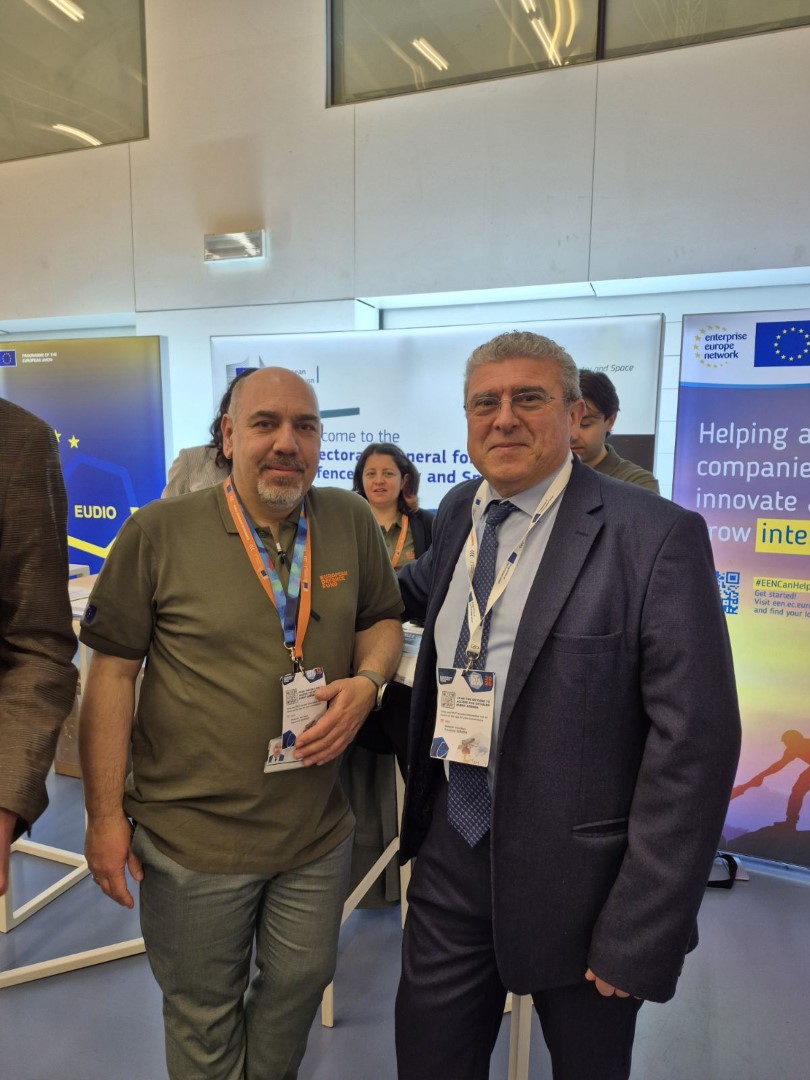
Beyond the formal programme, the event provided an invaluable platform for networking with companies from across the EU, with EU and Belgian institutional representatives, and with officials from DG DEFIS and supporting organisations such as the European Network of Defence-related Regions (ENDR) and the Enterprise Europe Network (EEN). EUDIMA also represented its clients at the event, supporting those who participated in identifying relevant opportunities, establishing contacts, and navigating the complexities of the EDF landscape. These exchanges strengthen EUDIMA’s capacity to advise on consortium building, proposal development, and strategic positioning within the European defence funding architecture, which extends well beyond the EDF itself to encompass instruments such as SAFE, EDIP, and the proposed European Competitiveness Fund.
The EDF Info Days 2026 confirmed that Europe’s investment in collaborative defence R&D is no longer experimental; it is structural. With nearly €6.5 billion committed since 2021, ever-increasing competition for funding, with 410 proposals received in the 2025 round alone, and a programme that now integrates Ukrainian industry into its framework, the European Defence Fund has matured into a central pillar of the continent’s defence industrial strategy. The broader policy environment, from the White Paper on European Defence Readiness 2030 to the upcoming Defence Readiness Omnibus, continues to expand the ambition and the tools available to European defence stakeholders.
The next milestone is clear: 29 September 2026, the submission deadline for the majority of EDF 2026 calls. For organisations across the European defence ecosystem, from primes and mid-caps to SMEs, research organisations, and innovative start-ups, the months ahead represent a critical window for consortium building, proposal development, and strategic alignment with EU capability priorities.
EUDIMA extends its thanks to the European Commission’s DG DEFIS for the organisation of this essential event, and to the National Focal Points, ENDR, and Enterprise Europe Network teams who supported participants throughout the two days.