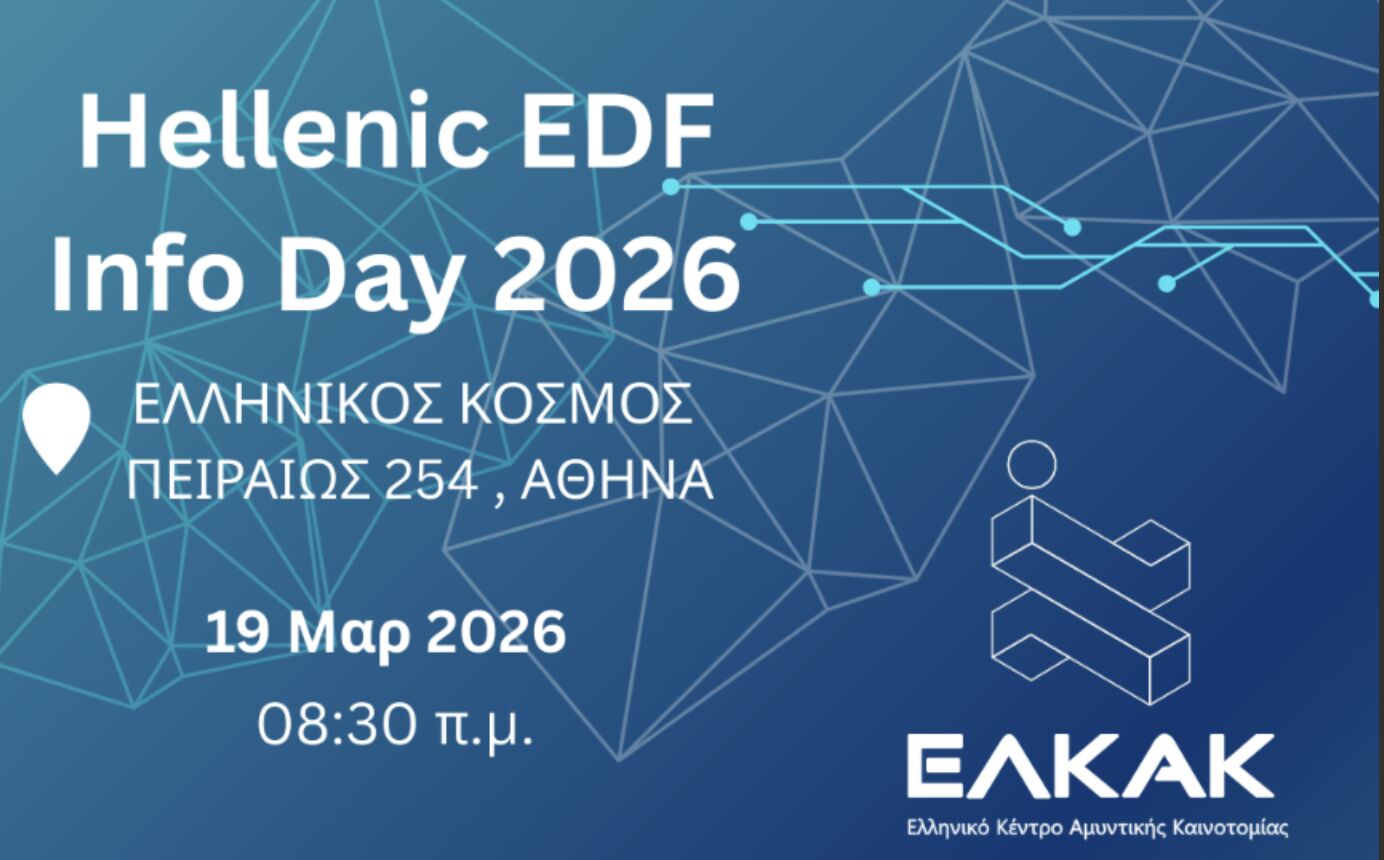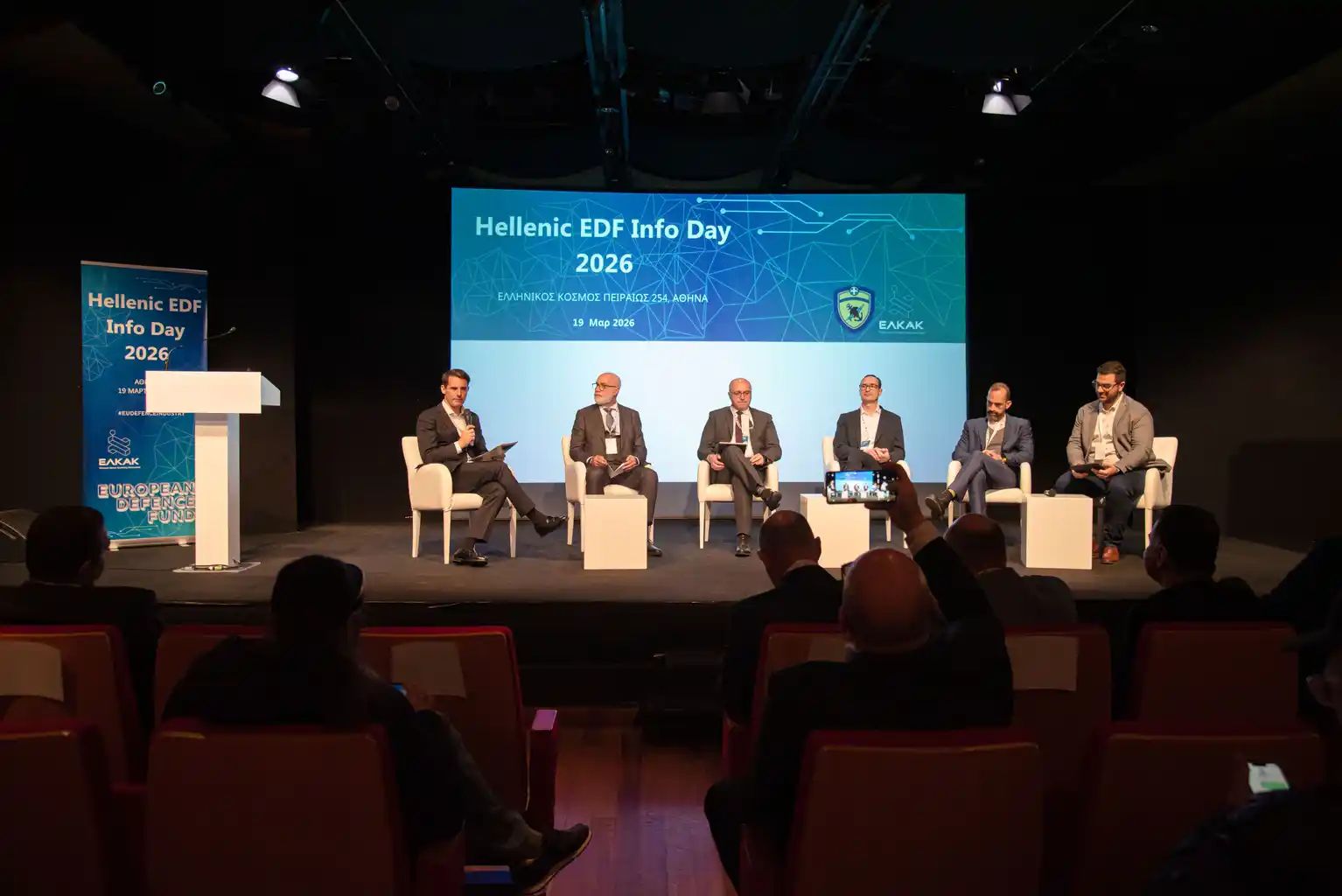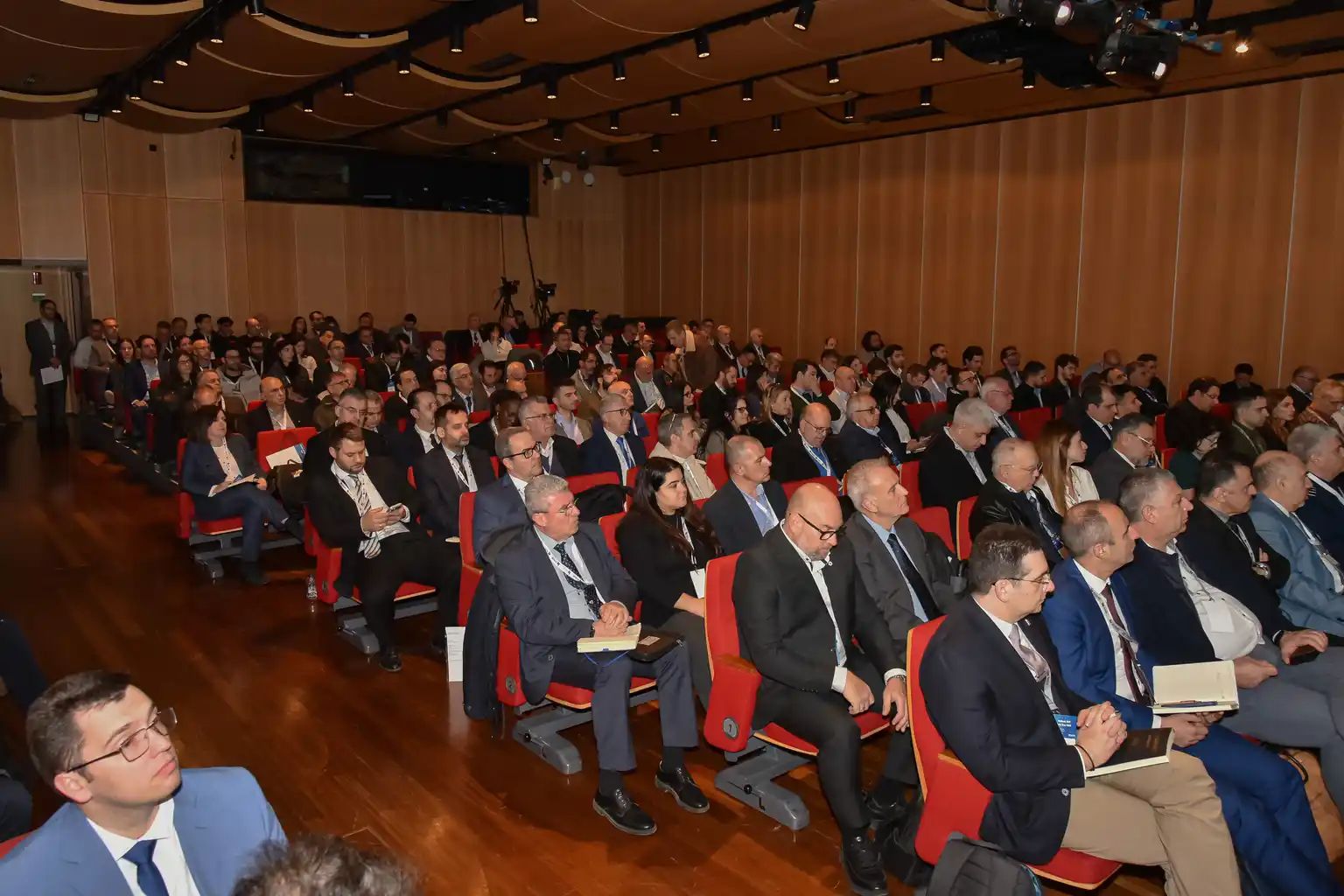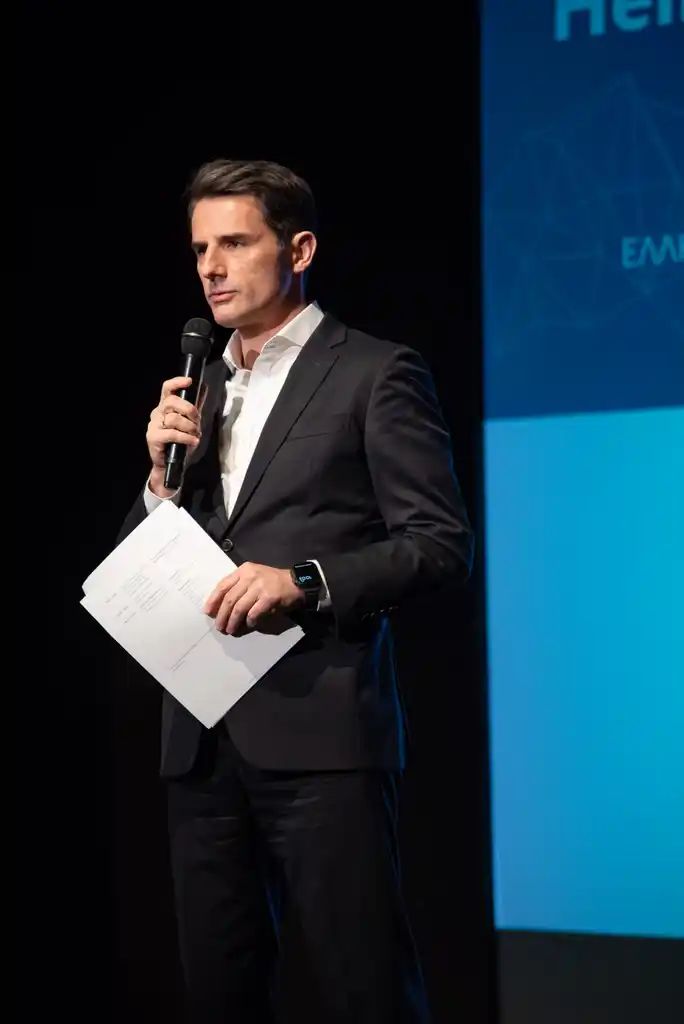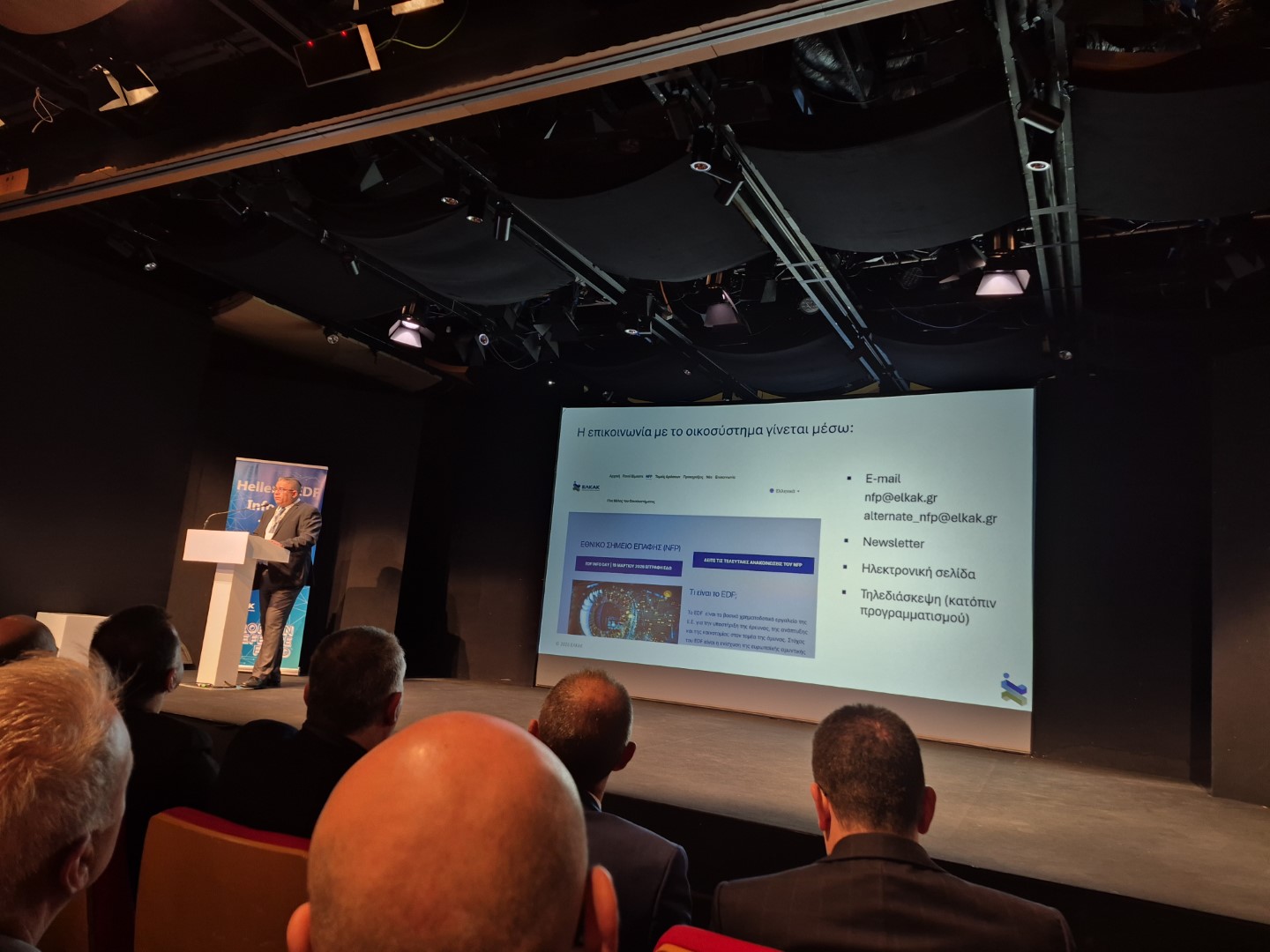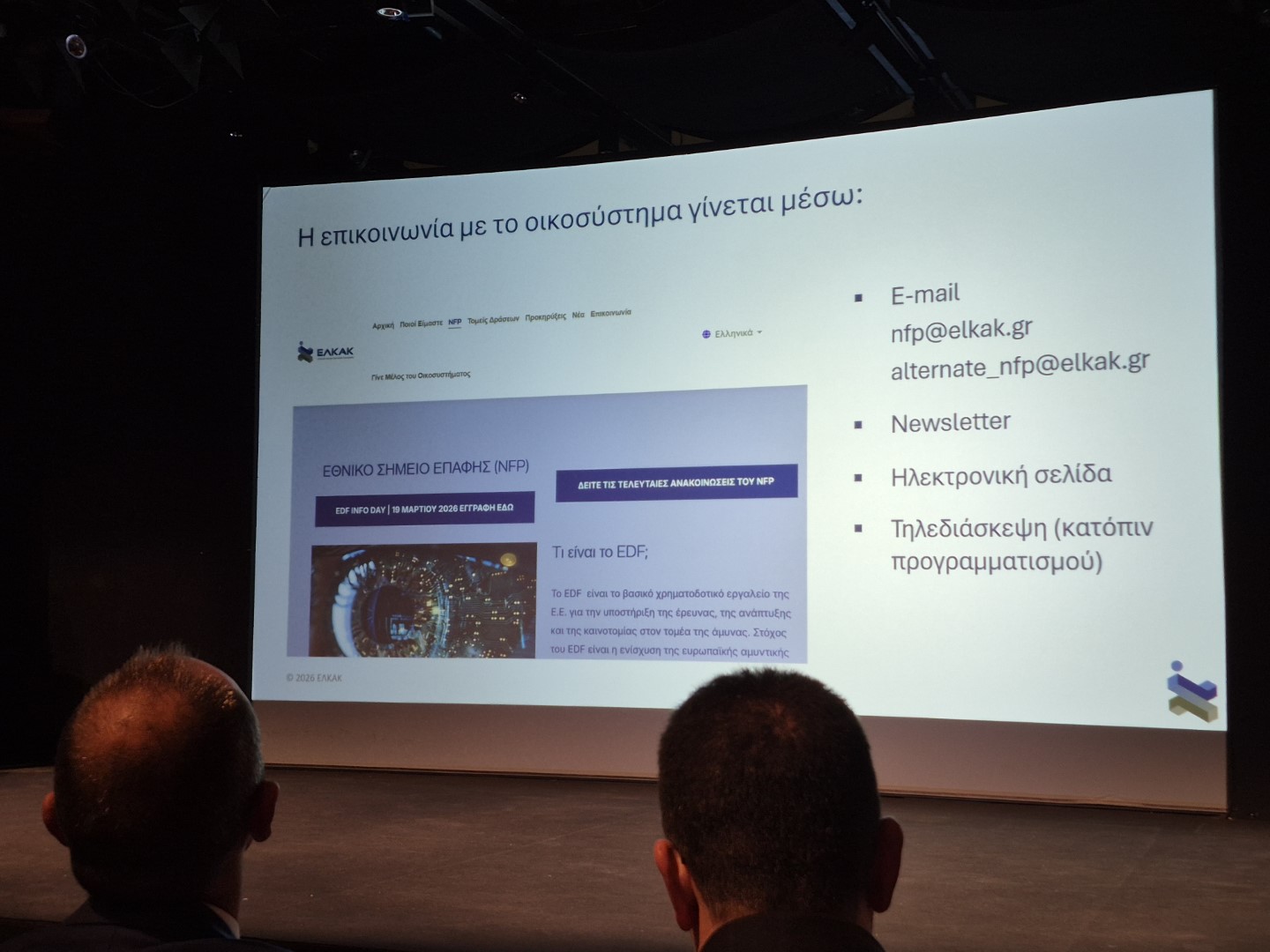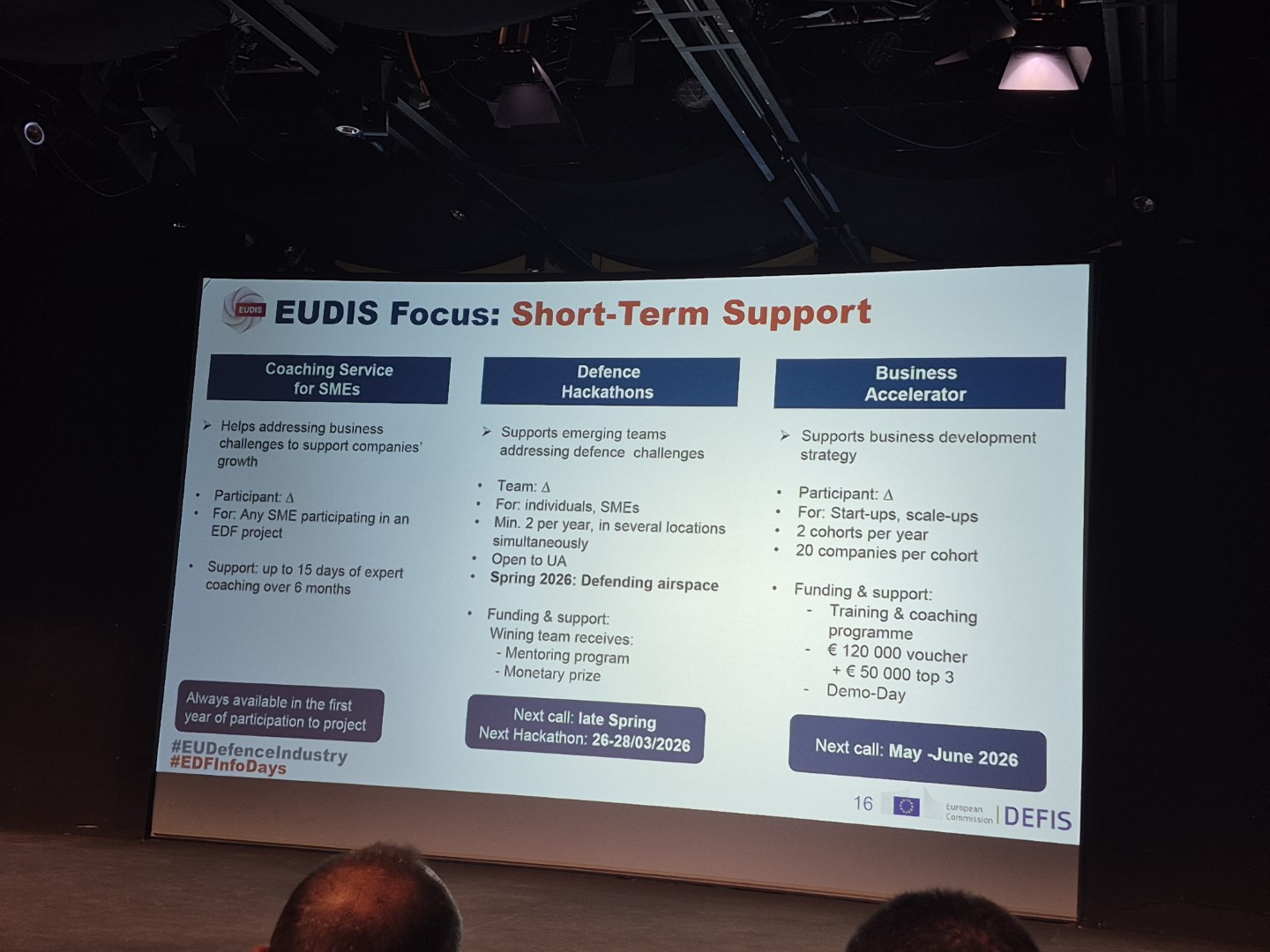
As the European Defence Fund enters a decisive phase of its current programming cycle, the need for national stakeholders to understand and engage with its mechanisms has never been greater. On 19 March 2026, the Hellenic EDF Info Day 2026 brought together Greek industry, research centres, and academic institutions at the “Hellenic Cosmos” Cultural Centre in Athens for a comprehensive briefing on the Fund’s 2026 Work Programme. Organised by the Hellenic Centre for Defence Innovation (HCDI/ELKAK) in cooperation with the General Directorate for Defence Investments and Armaments (GDDIA) and the European Commission’s Directorate-General for Defence Industry and Space (DG DEFIS), the event offered a strategic window into one of the EU’s most significant defence funding instruments. EUDIMA’s CEO, Antonios Mpoumpas, attended the Info Day on behalf of the consultancy.
The Info Day took place against the backdrop of a significantly strengthened European defence funding landscape. The EDF 2026 Work Programme, adopted by the European Commission on 17 December 2025, earmarks approximately €1 billion for collaborative defence research and development. The programme addresses 31 call topics across seven thematic and three non-thematic calls for proposals, alongside dedicated actions targeting hypersonic threats and defence medical countermeasures. Half of the budget supports collaborative R&D on major defence capabilities, including the development of an EU endo-atmospheric interceptor, a main battle tank, a multiple rocket launcher, and a semi-autonomous vessel.
Since the EDF Regulation entered into force in May 2021, the Commission has committed close to €6.5 billion in total, positioning the EU among the world’s leading investors in defence R&D. The Fund’s total budget for the 2021–2027 period stands at nearly €7.3 billion. The Hellenic EDF Info Day was one of several national Info Days organised across Europe in March 2026, following the central EDF Info Days 2026 held on 10–11 March in Brussels, which attracted more than 5,200 participants.
Officials from DG DEFIS delivered the event’s keynote briefings, covering three interconnected pillars of the EU’s evolving defence framework. The first addressed the overall strategic landscape of the EDF 2026, outlining the new calls for proposals, eligibility criteria, and the submission process that Greek entities would need to navigate.
A dedicated session focused on the Security Action for Europe (SAFE) instrument, the EU’s landmark financial mechanism providing up to €150 billion in loans for common defence procurement. Adopted on 27 May 2025 as the first pillar of the ReArm Europe Plan / Readiness 2030, SAFE represents the most ambitious European defence investment tool to date. Greece is among the 16 Member States whose National Defence Investment Plans had been approved by the Council by mid-February 2026, clearing the path for disbursement of affordable, long-term loans aimed at closing critical capability gaps. The presentation of SAFE in the context of this national Info Day was particularly timely, given the direct implications for Greek defence procurement planning and the opportunities it creates for the Hellenic defence industrial base.
The third pillar of the DG DEFIS briefings addressed the EU Defence Industry Transformation Roadmap, a strategic document charting the path toward a more integrated and competitive European defence-technological and industrial base. This broader policy vision provides the context within which both EDF-funded R&D and SAFE-financed procurement are designed to operate, reinforcing the EU’s drive toward strategic autonomy in defence.
Complementing the European Commission’s presentations, ELKAK’s National Focal Point (NFP) office outlined Greece’s national approach to the EDF 2026 cycle. As the entity appointed by the Greek state to support the implementation of the European Defence Fund, ELKAK plays a critical role in bridging the gap between EU-level policy and the practical needs of the Greek defence ecosystem. The NFP team provided hands-on guidance on administrative and legal procedures, the national proposal submission and evaluation process, and the co-financing framework that underpins Greek participation in EDF consortia.
This practical dimension is essential. The EDF’s collaborative nature, requiring consortia of at least three entities from different Member States, means that successful participation depends not only on technological capability but also on a clear understanding of the procedural and regulatory landscape. ELKAK’s guidance helps lower the barrier to entry, particularly for smaller companies and research organisations that may not yet have experience with EU-level defence funding programmes.
The Info Day concluded with a session dedicated to best practices, where Greek entities with proven EDF track records shared their experiences. Among them, INTRACOM DEFENSE (IDE) offered a particularly instructive perspective on what it takes for a Greek company to lead European consortia. Dr Dimitrios Petrantonakis, R&D Programs Manager for New Technologies at IDE, emphasised the importance of three key pillars in successful consortium formation: complementary technological expertise supported by well-defined architectural design and targeted partner selection, a balanced ecosystem combining large industrial players, SMEs, and research organisations, and strong European involvement ensuring meaningful geographic representation.
IDE’s track record underscores this message. The company has coordinated multiple EDF projects, including LOTUS and SMOTANET, and continues to lead PROTEAS and ACTUS, the latter being among only five active EDF projects that reach up to the certification level. The broader takeaway for the Greek defence ecosystem was clear: reliability, technological excellence, and the ability to deliver and further develop project outcomes are the decisive factors that lead major European partners to entrust coordination to Greek entities. Greece, in other words, can and does act as a solution provider and contributor to European defence strategy, not merely a participant.
For EUDIMA, the Hellenic EDF Info Day provided a valuable opportunity to deepen its understanding of the evolving EDF landscape and the specific dynamics of Greek participation in European defence R&D. As a consultancy that supports clients in navigating the complexities of EU defence funding, from strategy development and consortium building to proposal preparation and programme management, events like this one offer direct insight into the operational realities that shape successful EDF engagement. The detailed presentations from DG DEFIS, the practical guidance from ELKAK’s NFP office, and the candid lessons shared by experienced Greek participants all contribute to the evidence base that informs EUDIMA’s advisory work across the European defence ecosystem.
With €1 billion on the table for 2026, the SAFE instrument unlocking unprecedented procurement investment, and the EU’s defence-industrial ambitions accelerating under the Readiness 2030 agenda, the opportunities for European industry have never been more substantial, nor has the imperative to seize them. National Info Days like this one in Athens serve as a critical link in the chain, ensuring that the ambitions articulated in Brussels translate into concrete action at the national level. For Greece’s defence and innovation community, the message from the Hellenic EDF Info Day 2026 was unequivocal: the time to engage is now.
EUDIMA extends its thanks to HCDI/ELKAK, the GDDIA, and DG DEFIS, in particular the Greek EDF NFP Mr. George Pouraimis, for organising a substantive and well-structured event that serves the Greek defence ecosystem at a pivotal moment for European defence cooperation.