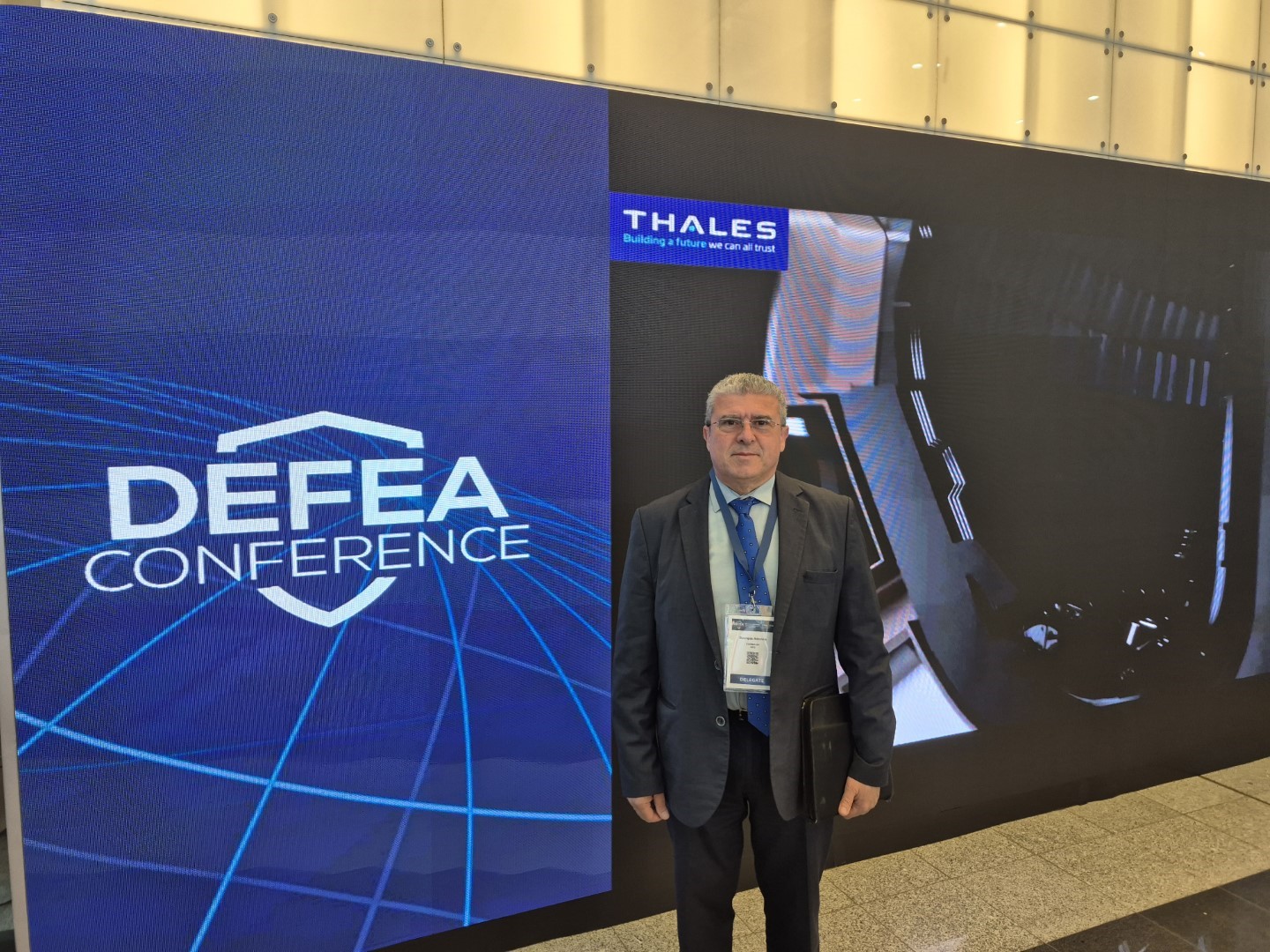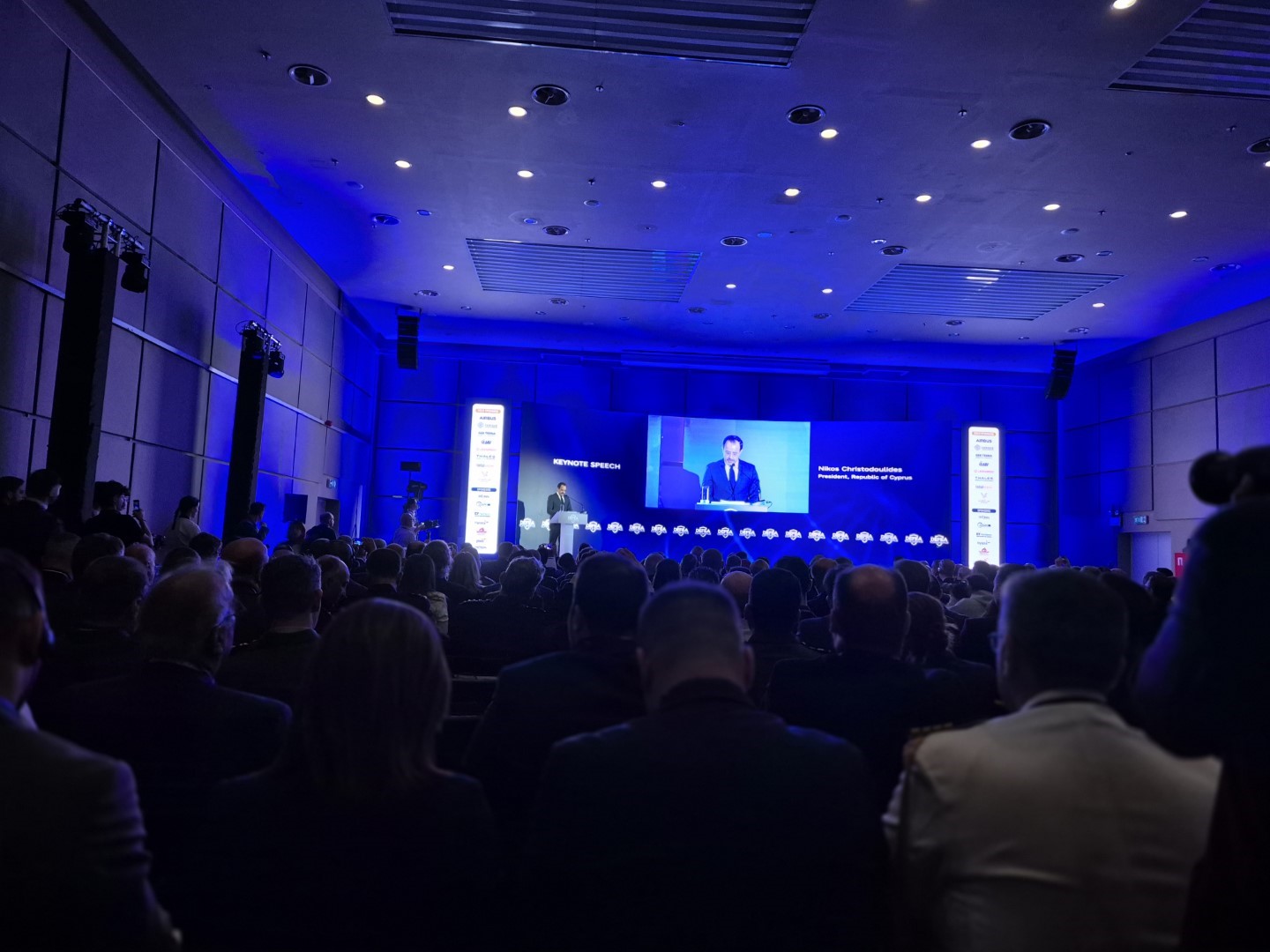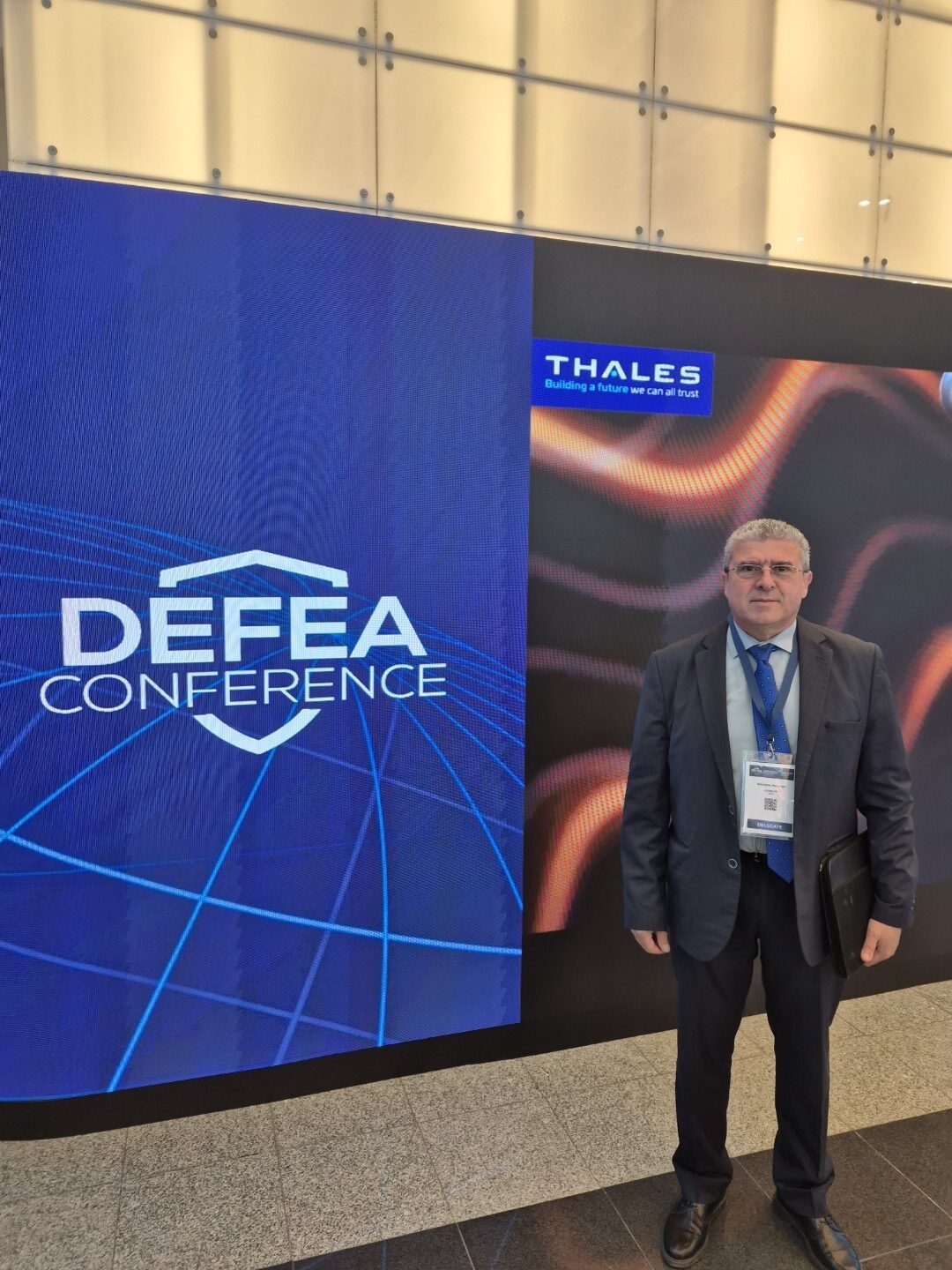
At a moment when European defence is undergoing its most consequential transformation in decades, Athens hosted one of the sector’s most substantive single-day gatherings of 2026. The DEFEA Conference 2026, held on 5 May at the Metropolitan Expo, Athens International Airport “Eleftherios Venizelos,” brought together 25 distinguished speakers from EU institutions, NATO, national governments, armed forces, defence industry associations, and leading companies, in a sold-out event organised under the auspices of the Hellenic Ministry of National Defence. EUDIMA attended as an observer, following the substantive discussions across all thematic pillars of the programme.
Opening Addresses: Industrial Ambition and Strategic Urgency
The conference opened with a high-level address by Nikos Dendias, Minister of National Defence of Greece, who set a tone of both ambition and realism. Speaking in a discussion format, Dendias outlined a target for the Greek defence industry to reach €10 billion in value through participation in European armament programmes and domestic procurement, a figure that goes beyond the projections established in Greece’s Medium-Term Defence Equipment Plan 2025–2037. He stressed that innovation must lead capability development rather than lag behind it, and that public spending oversight and industrial dynamism are not mutually exclusive. The 25% domestic industry offset requirement, he noted, serves as a baseline from which Greek companies and institutions must build a more ambitious presence in European programmes.
Andrius Kubilius, European Commissioner for Defence and Space, addressed the conference and outlined his vision for the future of the European defence industrial base, stressing the imperative of stronger cooperation, industrial resilience, and strategic autonomy. His remarks reflected the broader Commission agenda: that European countries must close the gap between declared ambitions and actual production capacity, at a time when the Security Action for Europe (SAFE) instrument and the forthcoming Defence Readiness Omnibus represent the most significant EU legislative push for defence in the bloc’s history.
Radmila Shekerinska, Deputy Secretary General of NATO, delivered a keynote that connected the industrial dimension to the Alliance’s credibility. Drawing on the priorities she outlined for the upcoming NATO Summit in Ankara, Shekerinska argued that investing in defence industry is not a separate concern from deterrence, but its foundation. She called for a stronger Europe within a stronger NATO, and highlighted the Alliance’s deepening cooperation with the European Union, Indo-Pacific partners, and Ukraine’s own defence industry. Her message to the assembled delegates was pointed: “We need a strong European defence. We must be realistic when it comes to security.”
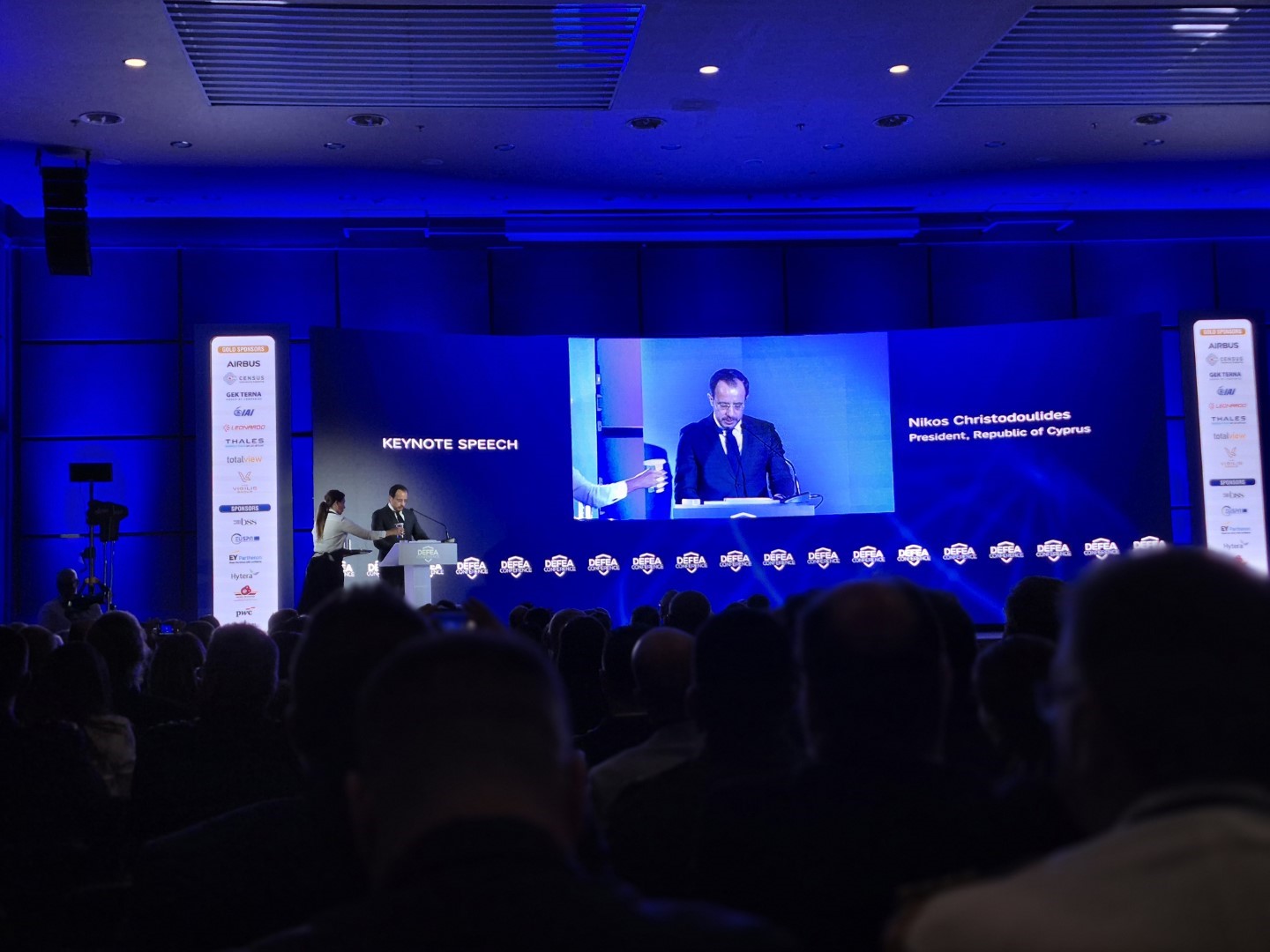
Nikos Christodoulides, President of the Republic of Cyprus, also addressed the conference, speaking in his country’s capacity as holder of the Presidency of the Council of the European Union. On the sidelines, President Christodoulides met with Commissioner Kubilius, where discussions focused on strengthening the EU’s mutual assistance clause under Article 42.7 of the Treaty on European Union, and on how the Cyprus Presidency can advance the legislative agenda in defence during its term. General Dimitrios Choupis, Chief of the Hellenic National Defence General Staff, underscored the military perspective, stating plainly that “a strong defence ecosystem built on innovation and resilience is essential.”
Transforming the Industrial Base: Procurement, Associations, and the European Supply Chain
The first thematic pillar addressed the structural transformation of the European defence industrial base. The round table on Industrial Base and Procurement Transformation brought together a cross-institutional panel: Camille Grand, Secretary General of the Aerospace, Security and Defence Industries Association of Europe (ASD); Evi Papantoniou, Head of Unit for Defence Single Market and Hybrid Threats at DG DEFIS A of the European Commission; Lorenzo Poliseno, Acting Head of the Programme Management Support Division at the Organisation for Joint Armament Cooperation (OCCAR); and Allan McLeod, Director of Lifecycle Management at the NATO Support and Procurement Agency (NSPA). Moderated by Ben Watts of Shephard Media, the discussion mapped the current bottlenecks in European procurement: fragmented national demand signals, lengthy regulatory timelines, insufficient supply chain transparency, and the persistent challenge of bridging the gap between framework agreements and actual deliveries at scale.
A parallel round table on Defence Industrial Associations and Ecosystem Cooperation offered a different vantage point, bringing together the heads and senior representatives of major national defence industry associations, including ZBOP of Slovakia, BDSV of Germany, GICAN of France, and SEKPY of Greece. Moderated by Iannis Voutsinos, Managing Director and Head of EU Affairs and Funding at PwC, the discussion explored how national associations can act as connective tissue within a fragmented European industrial landscape, facilitating consortium formation, joint lobbying on EU regulatory frameworks, and the identification of complementary capabilities across member states.
Strategic Autonomy and Emerging Threats: A Multi-Domain Challenge
The round table on Strategic Autonomy and Emerging Threats brought together a distinctly institutional set of voices. Dr. Baudouin Heuninckx, Acting Director for Industry Synergies and Enablers at the European Defence Agency (EDA); Christina Giannopapa, Head of the Office of the Executive Director at the EU Agency for the Space Programme (EUSPA); Andreas Mitrakas, Head of Unit at the Office of the Executive Director of the European Union Agency for Cybersecurity (ENISA); and Georgios Giannopoulos, Acting Director of the Joint Research Centre (JRC) of the European Commission, engaged in what was, in effect, a survey of the multi-domain threat landscape. Moderated by Elena Lazarou, Director General of the Hellenic Foundation for European and Foreign Policy (ELIAMEP), the panel examined how geopolitical instability, hybrid warfare, the expansion of the space and cyber domains, and the rise of artificial intelligence in defence are reshaping the requirements for collective security, and what the EU’s institutional architecture must do to keep pace.
The common thread running through this panel was the intersection of regulation and capability: that Europe’s ability to assert strategic autonomy depends not only on what it produces, but on how quickly and coherently it can align legislative frameworks, research investments, and operational requirements across civil and military domains.
Innovation and Technology Transfer: From Ecosystem to Capability
The two remaining round tables focused directly on innovation, technology transfer, and the emerging defence tech ecosystem. The Defence Tech Ecosystems panel brought together Robert Smith, Director of Growth and Strategy for Europe at Anduril; Dimitrios Kottas, Founder and CEO of Delian Alliance Industries; and Vasilis Chaloulakos, CEO of ICEYE Hellas, a satellite analytics company whose dual-use capabilities have attracted significant defence interest across Europe. Moderated by Nigel Jones of TWJ Capital, the discussion engaged with questions of scaling, investment, and the structural conditions that allow defence technology companies to grow from promising startups to credible prime contractors or Tier-1 suppliers.
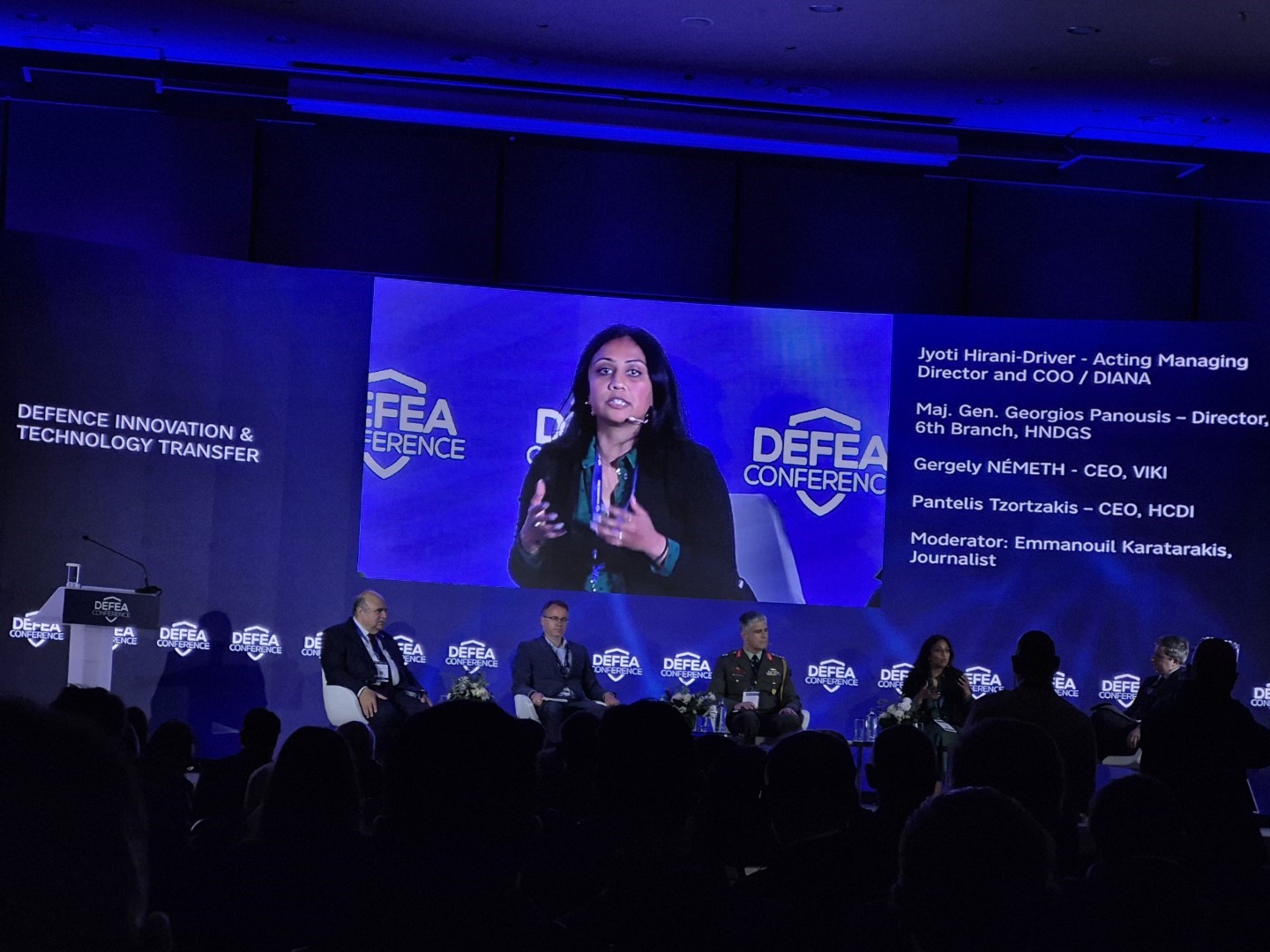
The Defence Innovation and Technology Transfer panel took a more institutional angle. Jyoti Hirani-Driver, Acting Managing Director and Chief Operating Officer of the Defence Innovation Accelerator for the North Atlantic (DIANA), outlined NATO’s efforts to connect innovative companies with defence requirements across the Alliance. Major General Georgios Panousis, Director of the Transformation Innovation Defence Technology Branch of the Hellenic National Defence General Staff (HNDGS), offered a military end-user perspective on the pace of technology adoption. Gergely Németh, CEO of the Defence Innovation Research Institute (VIKI) of Hungary, and Pantelis Tzortzakis, CEO of the Hellenic Centre for Defence Innovation (HCDI/ELKAK), contributed national perspectives on how innovation ecosystems are being built at the member state level, and how these interact with EU-level frameworks such as the European Defence Fund (EDF) and the emerging EDIP instrument.
EUDIMA’s Engagement
EUDIMA attended the DEFEA Conference 2026 as an observer, engaging with the full programme across all five round tables. The conference provided a valuable opportunity to track the current state of EU and NATO thinking on defence industrial policy, procurement transformation, and innovation ecosystems, at a moment of significant legislative and institutional flux. The discussions reinforced key priorities that directly inform EUDIMA’s advisory work: the urgency of building credible national industrial presences within EU funding frameworks such as the EDF and EDIP; the importance of consortium formation and cross-border industrial cooperation as conditions for eligibility and competitiveness; and the growing centrality of innovation, dual-use technologies, and the capability pipeline connecting research to procurement.
Beyond the formal programme, the conference offered a concentrated environment for exchange with a broad range of participants, including representatives from EU institutions, national ministries, multinational defence companies, national industry associations, innovation agencies, and academic institutions. These interactions provided direct insight into the priorities and perspectives of organisations that are shaping the European defence landscape, and contributed to EUDIMA’s ongoing effort to maintain the quality of strategic intelligence it brings to client engagements across the sector.
The DEFEA Conference 2026 confirmed what its attendance figures already suggested: that Athens is establishing itself as a meaningful venue for substantive dialogue on European defence industry and policy. The convergence of EU institutional voices, NATO leadership, and national defence ecosystems in a single forum reflects the accelerating integration of industrial, regulatory, and security dimensions that defines this moment for European defence. As the SAFE regulation, the Defence Readiness Omnibus, and EDIP move through their respective legislative paths, the conversations held at events such as this will increasingly determine how European ambition translates into industrial reality. EUDIMA thanks the organisers for hosting a rigorous and well-structured event, and looks forward to continuing to engage with these developments on behalf of its clients.