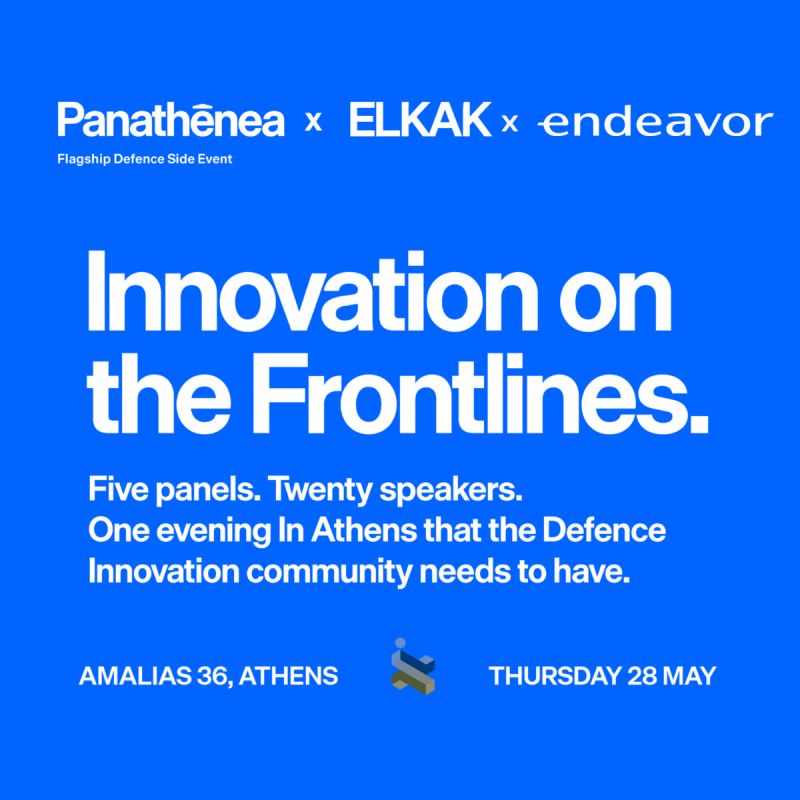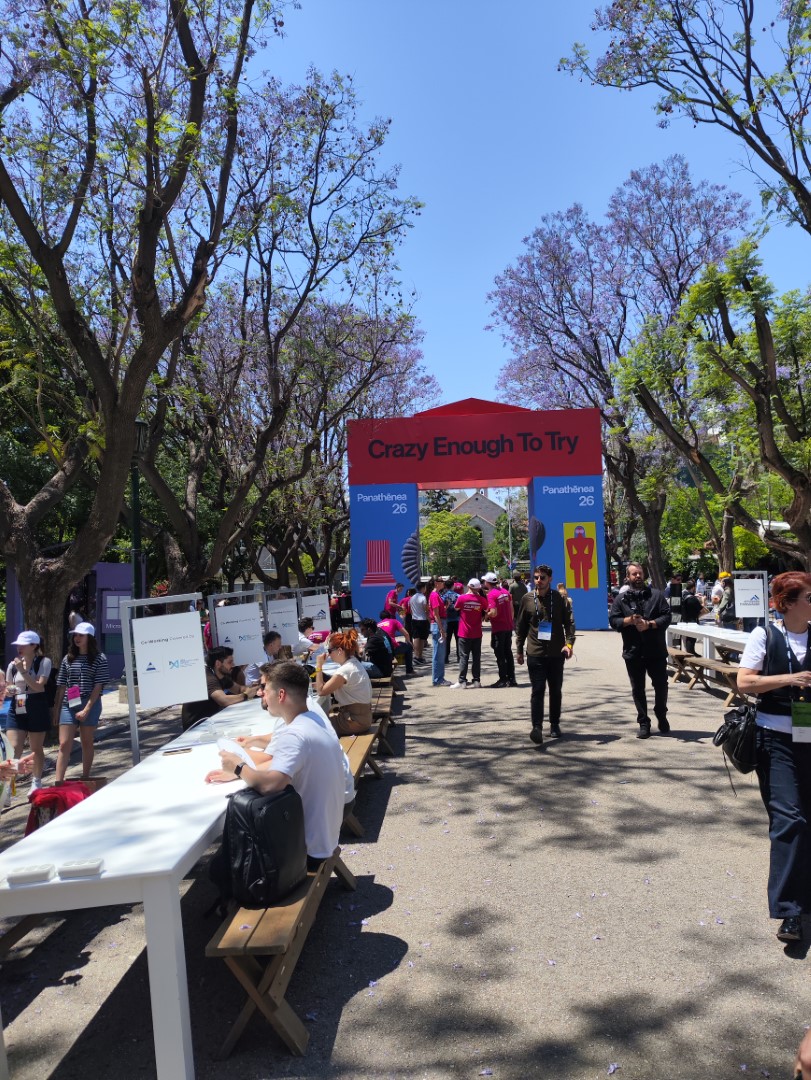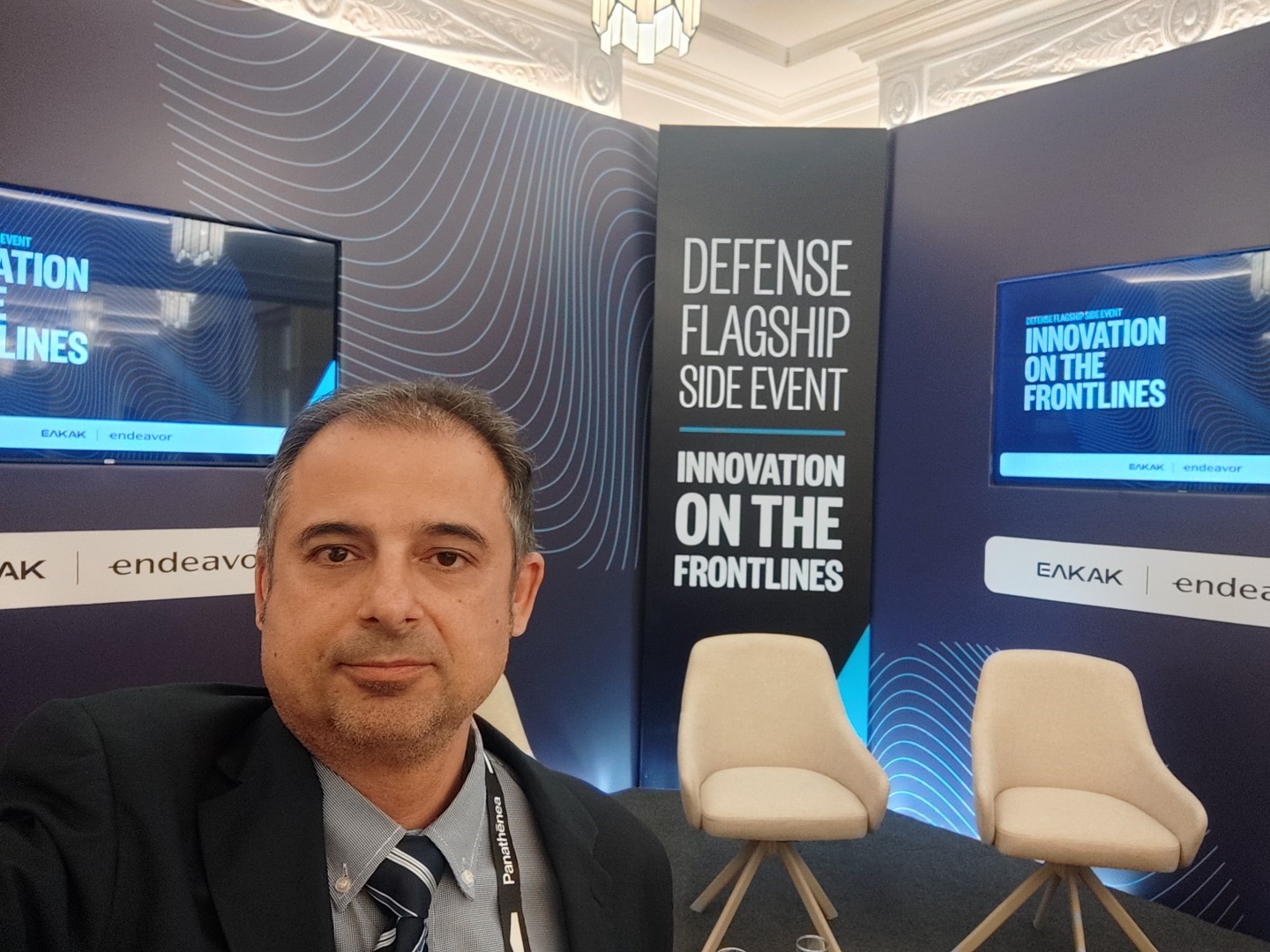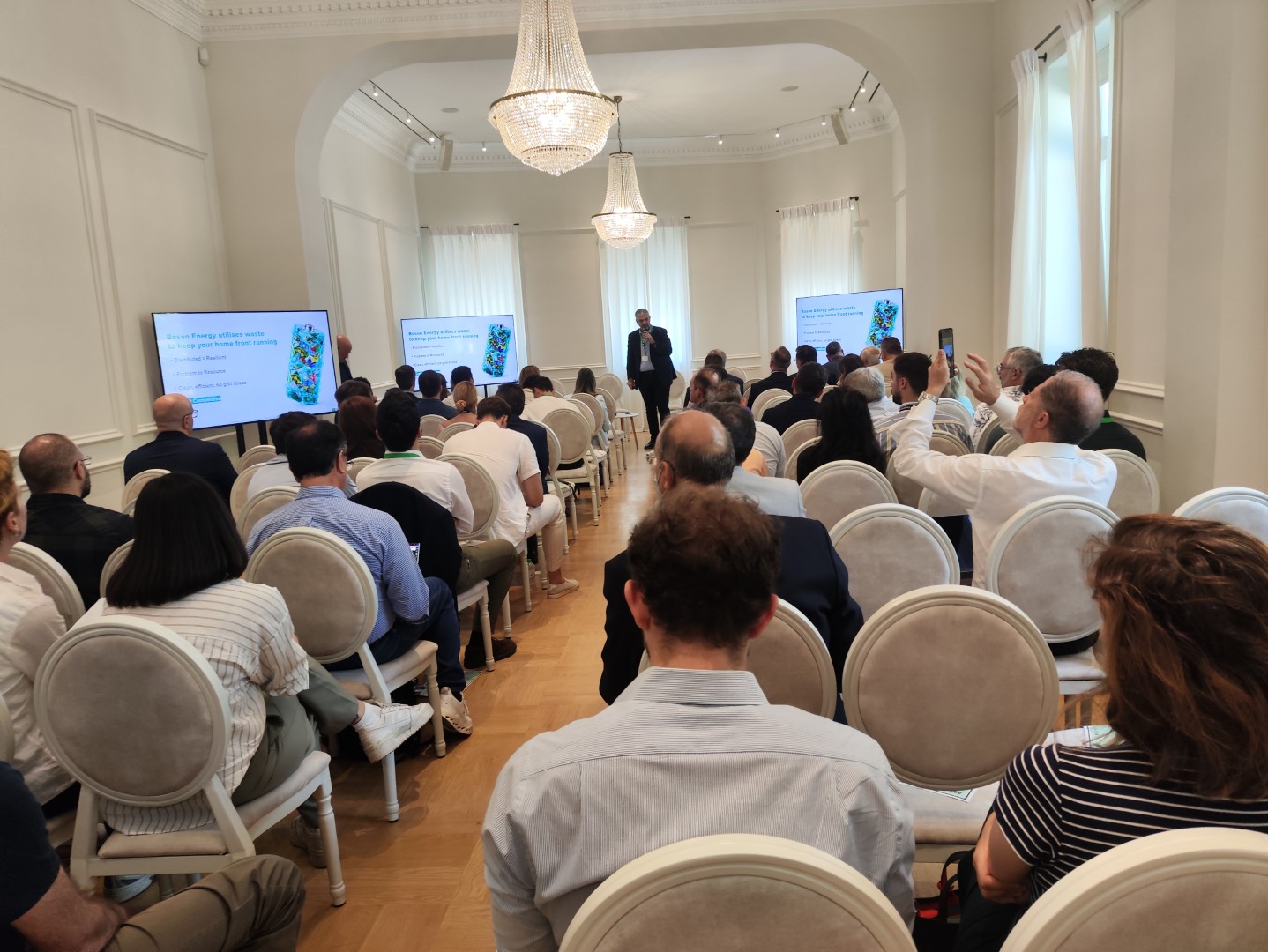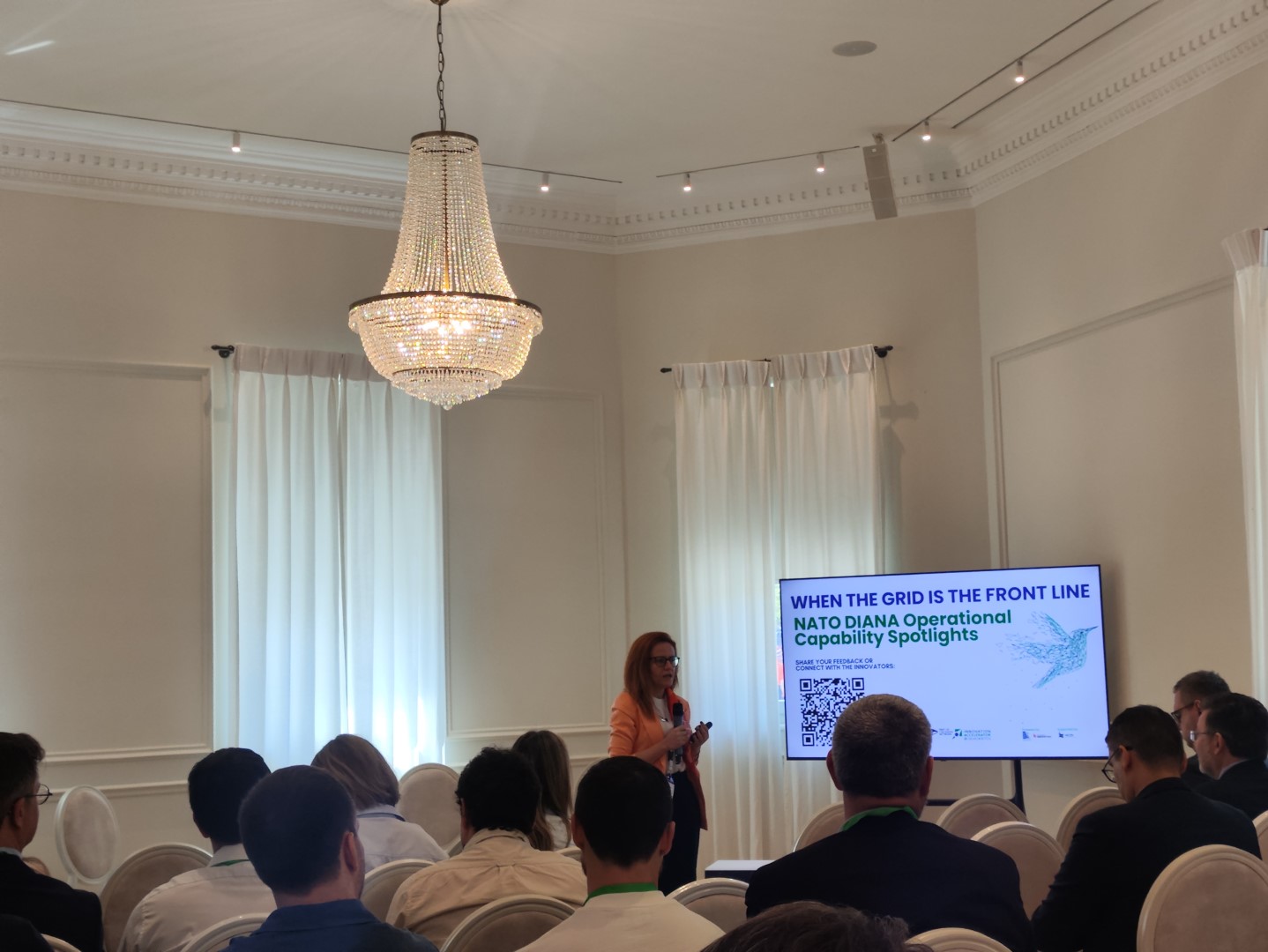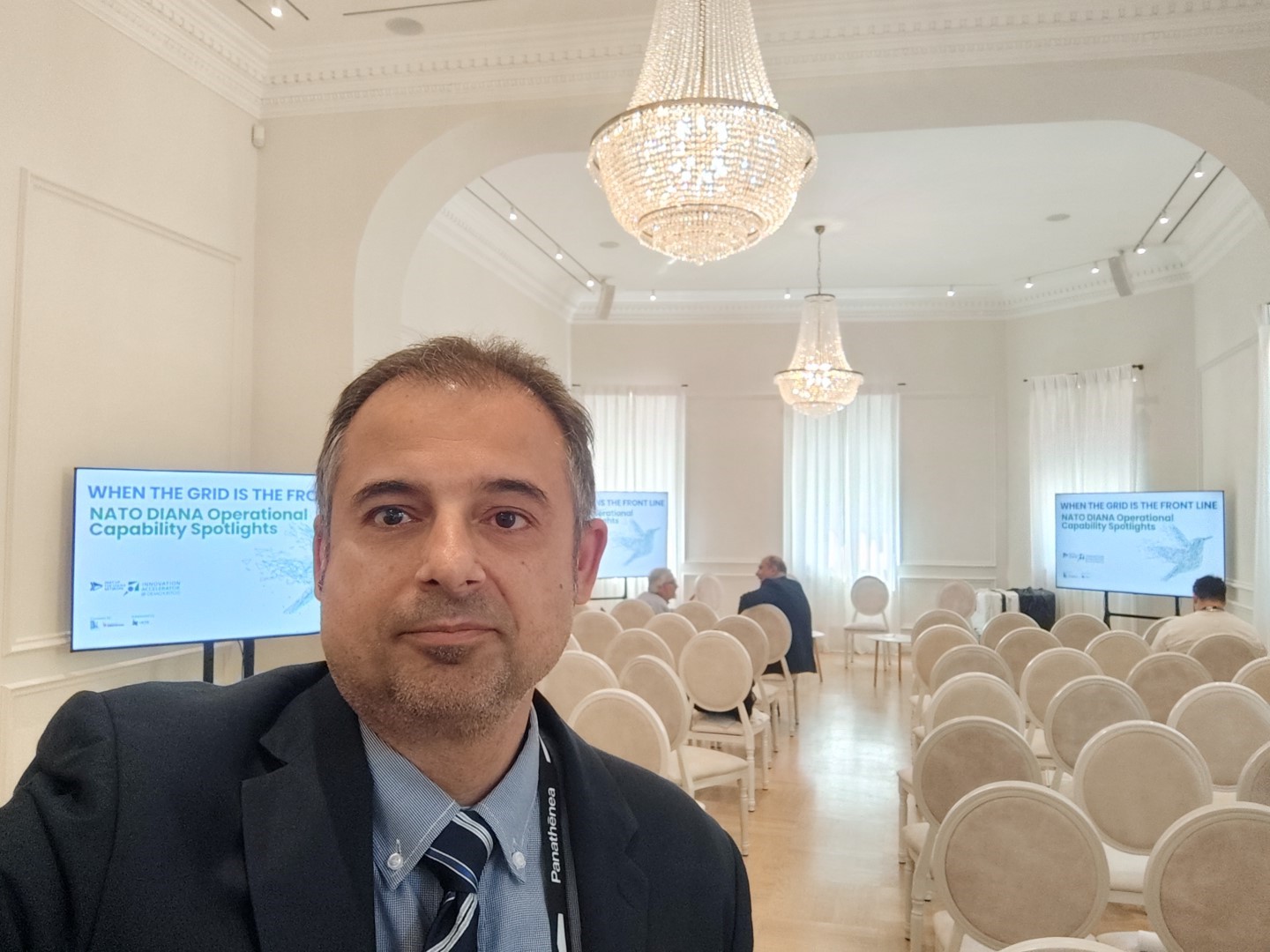
When defence innovation occupies centre stage at a festival celebrating technology, entrepreneurship, and the arts, it signals just how deeply security considerations have embedded themselves in Europe’s broader innovation conversation. EUDIMA attended the Panathenea 2026 festival (27–29 May, Athens), which drew over 10,000 participants from more than 30 countries for three days of cross-sector dialogue at the Zappeion and across the Greek capital. Within this programme, two dedicated defence side events stood out: the Hellenic Centre for Defence Innovation (HCDI/ELKAK) and Endeavor Greece’s “Innovation on the Frontlines” on 28 May, and a NATO DIANA Demo Day hosted by the Innovation Accelerator@Demokritos on 29 May.
Innovation on the Frontlines: From Laboratory to Battlefield
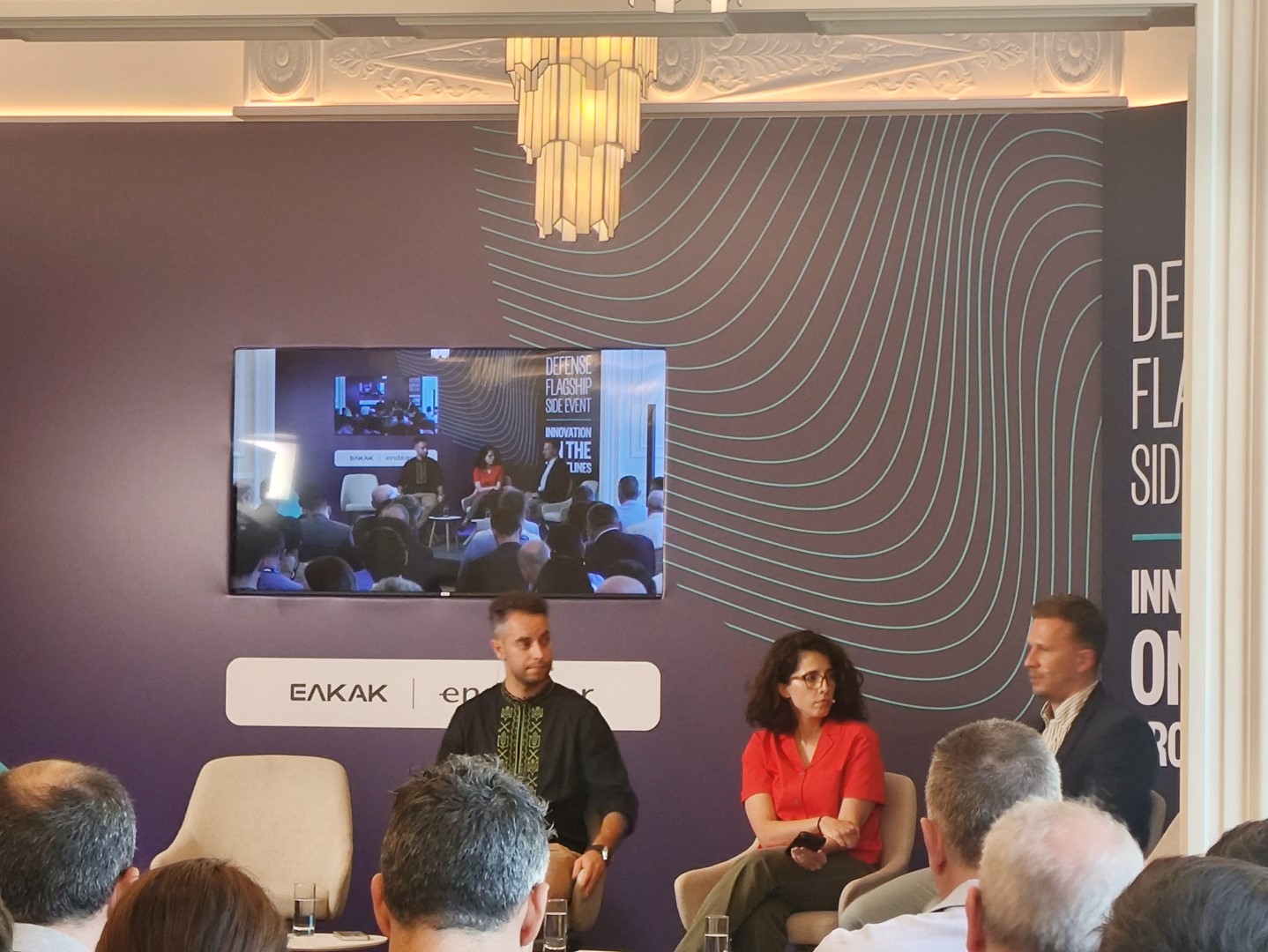
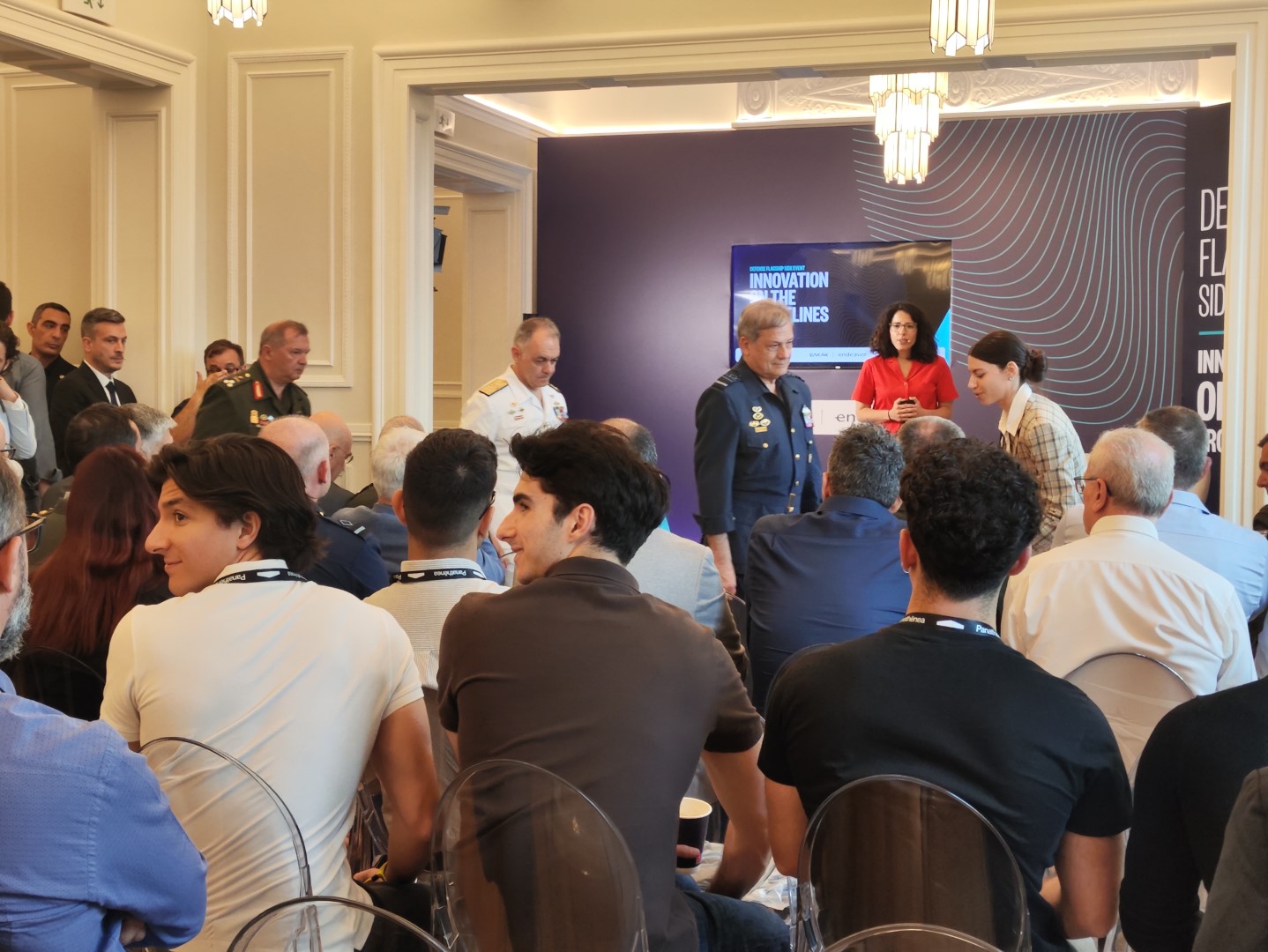
Held at Amalias 36 in central Athens, the HCDI/ELKAK side event assembled an international cast of defence innovators, investors, military leaders, and technology companies for an afternoon of panel discussions and matchmaking sessions. The event was co-organised with Endeavor Greece and structured around five thematic panels, each designed to address what Georgia Prassinos, Designated Board Advisor at HCDI/ELKAK, described as the real pain points of the defence innovation ecosystem, the persistent gap between theory and what happens in the field.
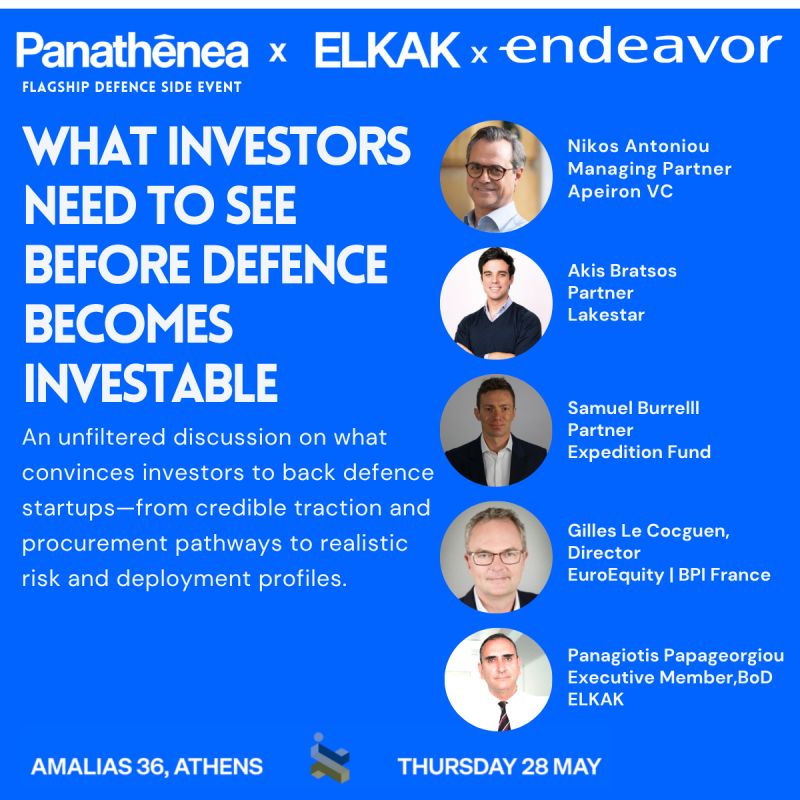
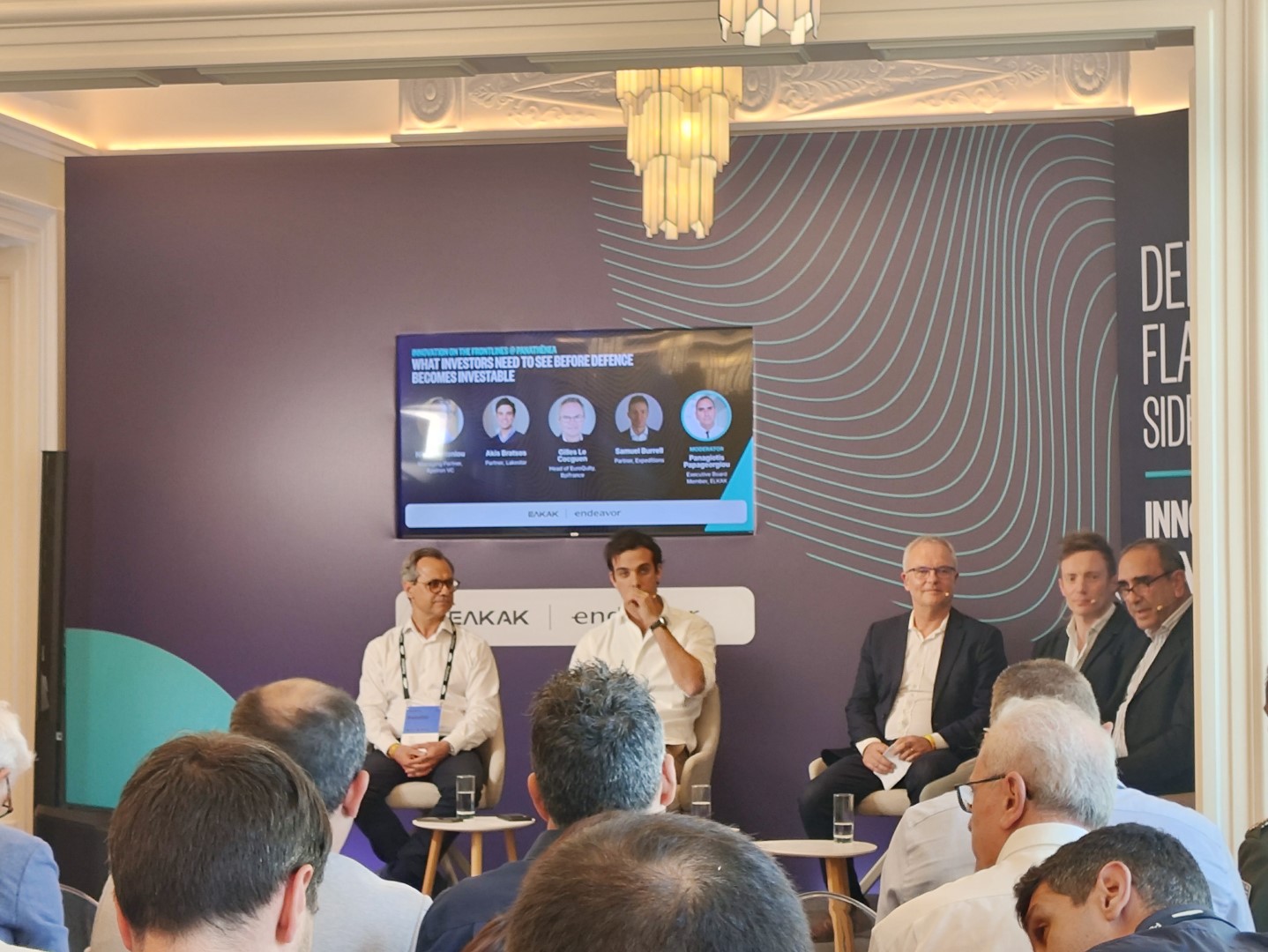
The opening panel on getting solutions to the frontline brought together Artem Moroz from Ukraine’s BRAVE1 defence tech cluster, Vootele Päi from Estonia’s Tehnopol, and Georgia Prassinos, exploring the chasm between TRL-validated technologies and battle-tested capability — a distinction that carries life-or-death consequences in operational environments. The investor panel that followed examined what it takes for defence to become a genuinely investable sector, with perspectives from Apeiron VC, Lakestar, Expeditions, and Bpifrance, alongside Panagiotis Papageorgiou of HCDI/ELKAK.
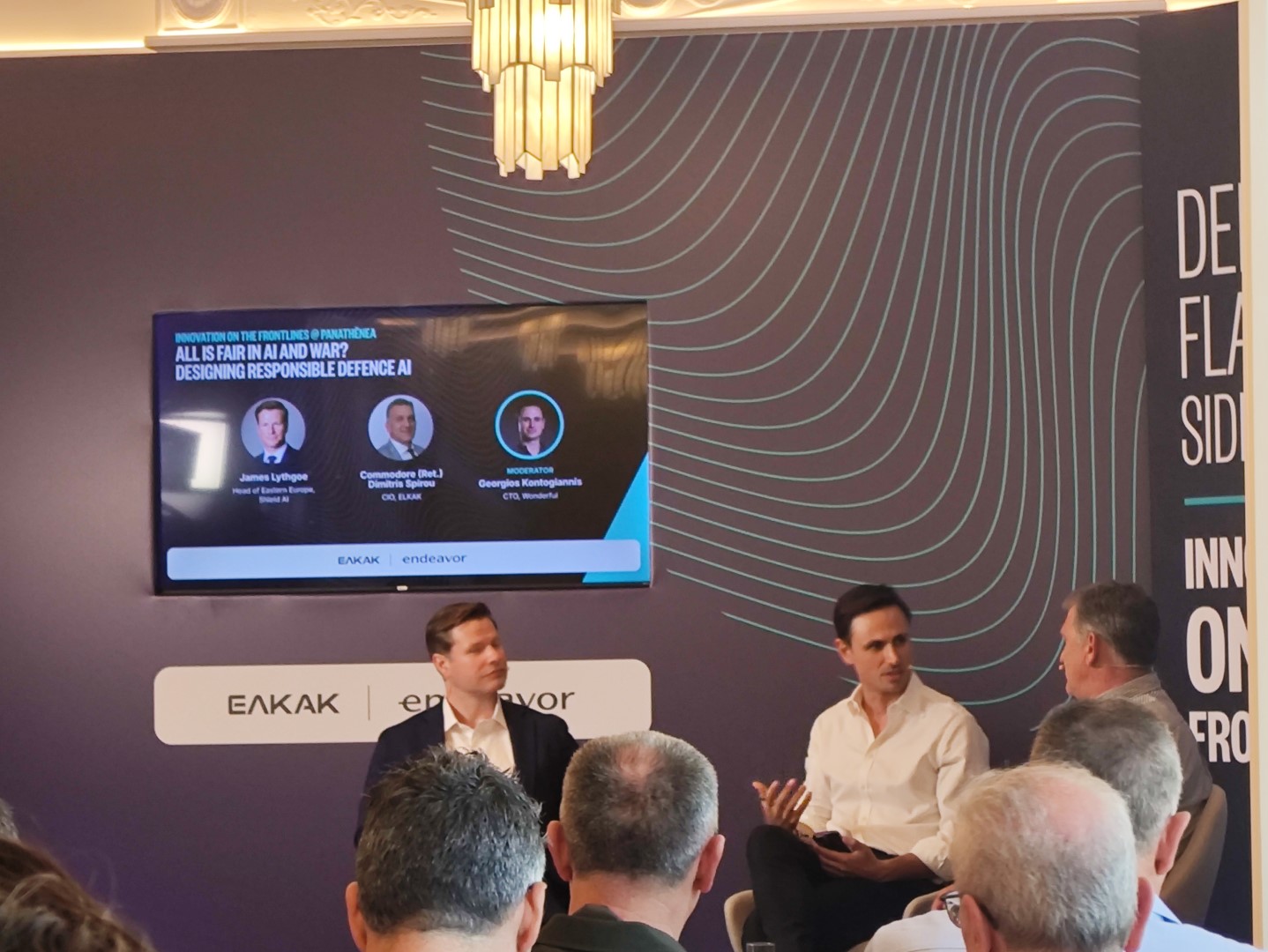
A particularly compelling exchange unfolded during the panel on responsible AI in defence, where Dimitrios Spirou, CIO at HCDI S.A. and a retired Hellenic Navy officer, offered a practitioner’s perspective on trust, speed, and deliberation. Drawing on his years of naval service, Spirou argued that AI, like any system aboard a warship, must earn trust through process and experience. “Algorithms can read the command, but they cannot replace the command,” he observed, distinguishing between defensive, tactically bounded decisions where AI excels and strategic decisions where speed can be dangerous. He invoked the 1983 Petrov incident to illustrate his point: “Those 20 minutes were not a flaw in the system. Those 20 minutes were an architectural characteristic.”
James Lythgoe of Shield AI, who spent over a year fielding autonomous weapons systems in Ukraine, complemented Spirou’s perspective with hard-won operational lessons. He argued that bounded autonomy — where humans set the conditions, mission design, and constraints — represents a different form of human control rather than its absence. “If you’re training today with technologies that require GPS, you’re giving the warfighters the tools they will ultimately lose with in the next conflict,” he warned, underscoring the urgency of preparing for contested electromagnetic environments.
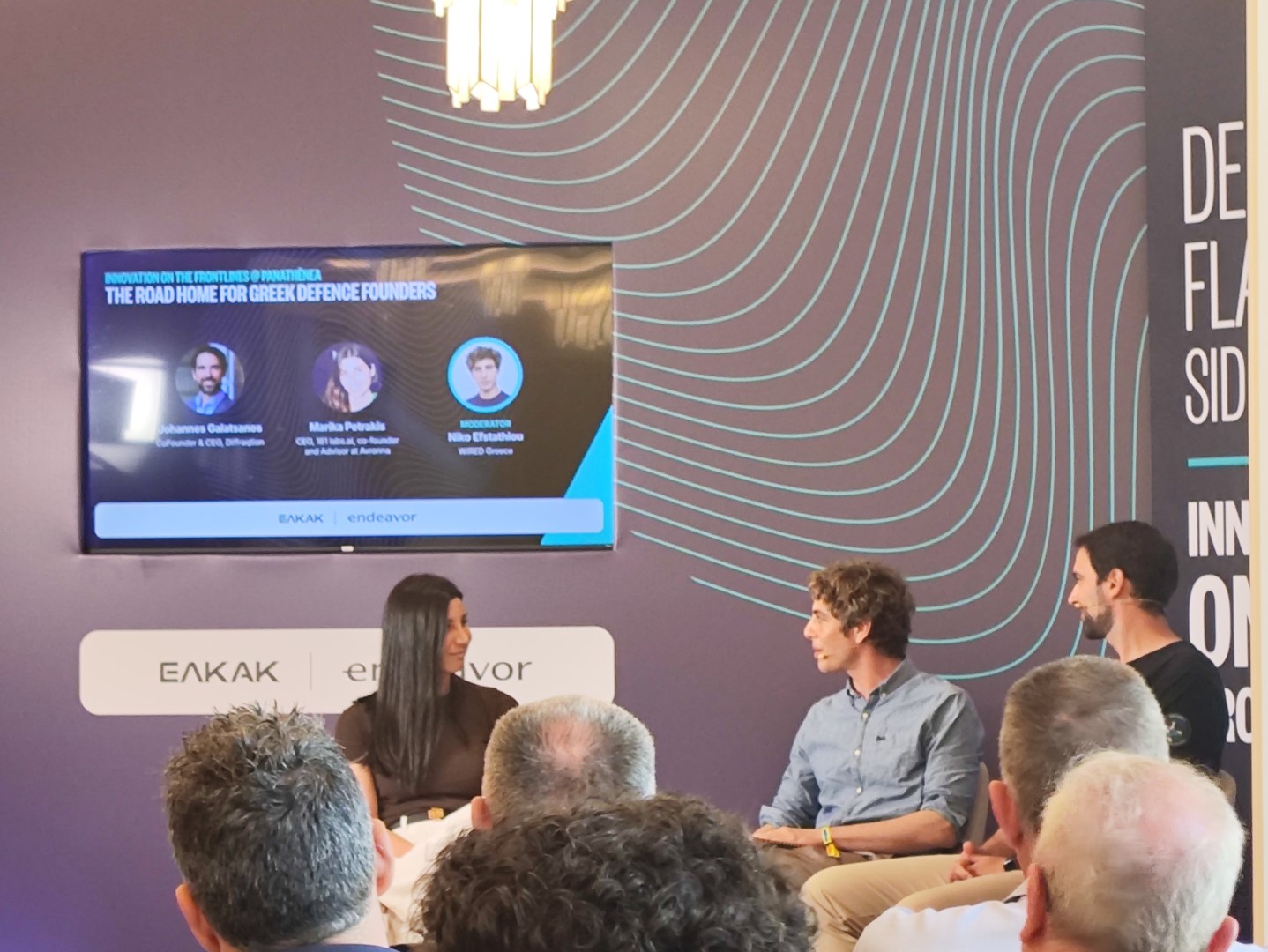
The Greek defence founders’ panel showcased the emerging generation: Johannes Galatsanos of Diffraqtion presented a quantum camera satellite capable of sub-diffraction imaging at a fraction of conventional costs, while Marika Petrakis of 1.61 Labs introduced a decision intelligence platform with applications across maritime and defence supply chain resilience. Moderated by Nikos Efstathiou of WIRED Greece, the discussion addressed the dual-use debate head-on, with Petrakis noting candidly that dual use is often “a concept we throw around to make ourselves feel better” and calling for founders to be explicit about defence applications from day one.
Naval Power in a Changing Security Environment
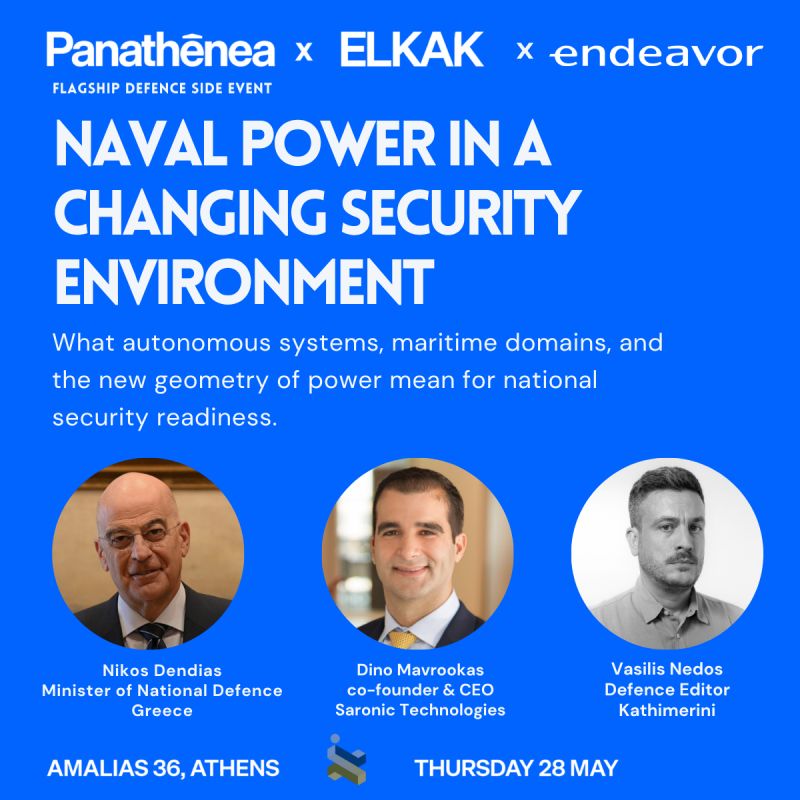
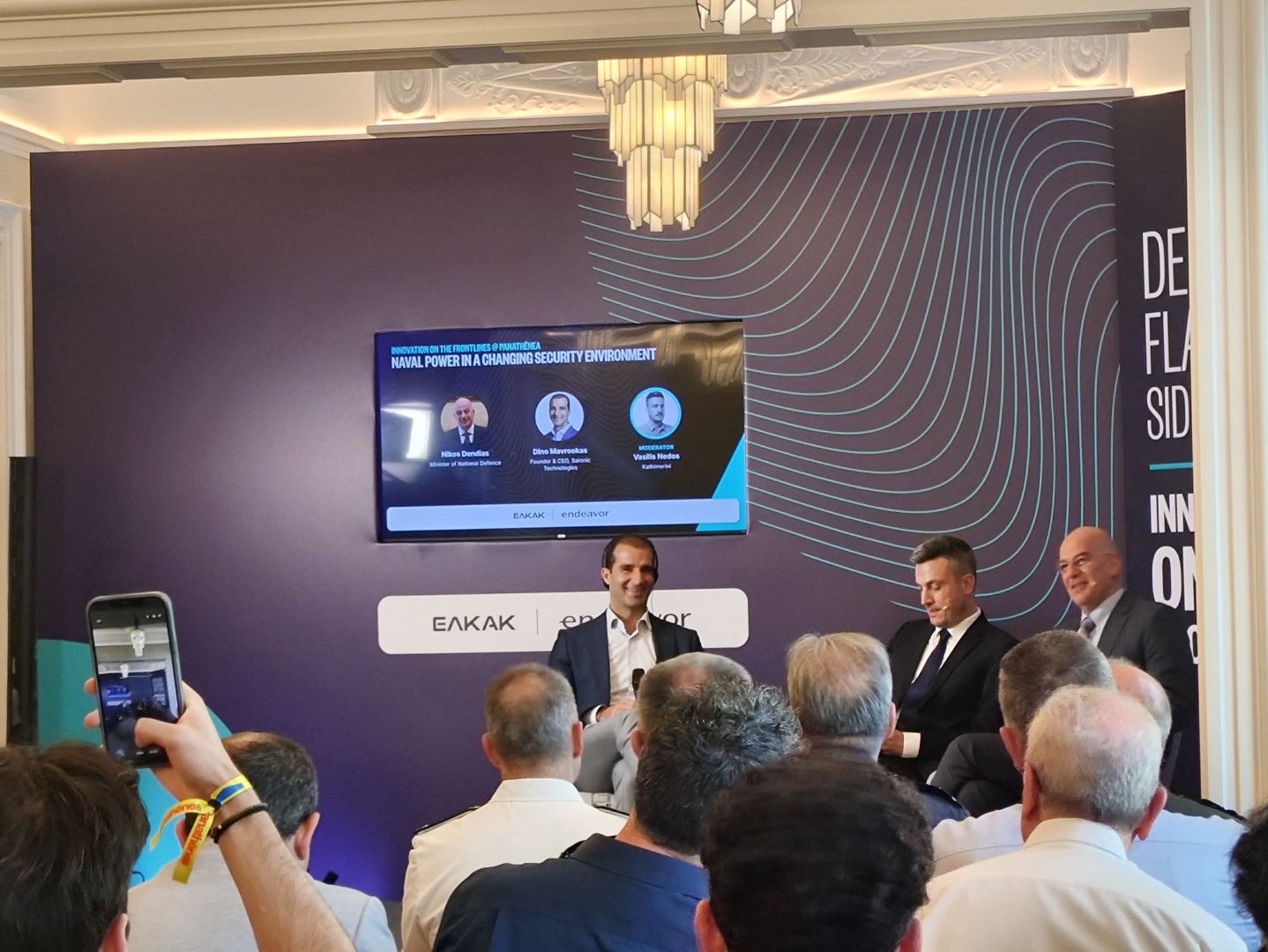
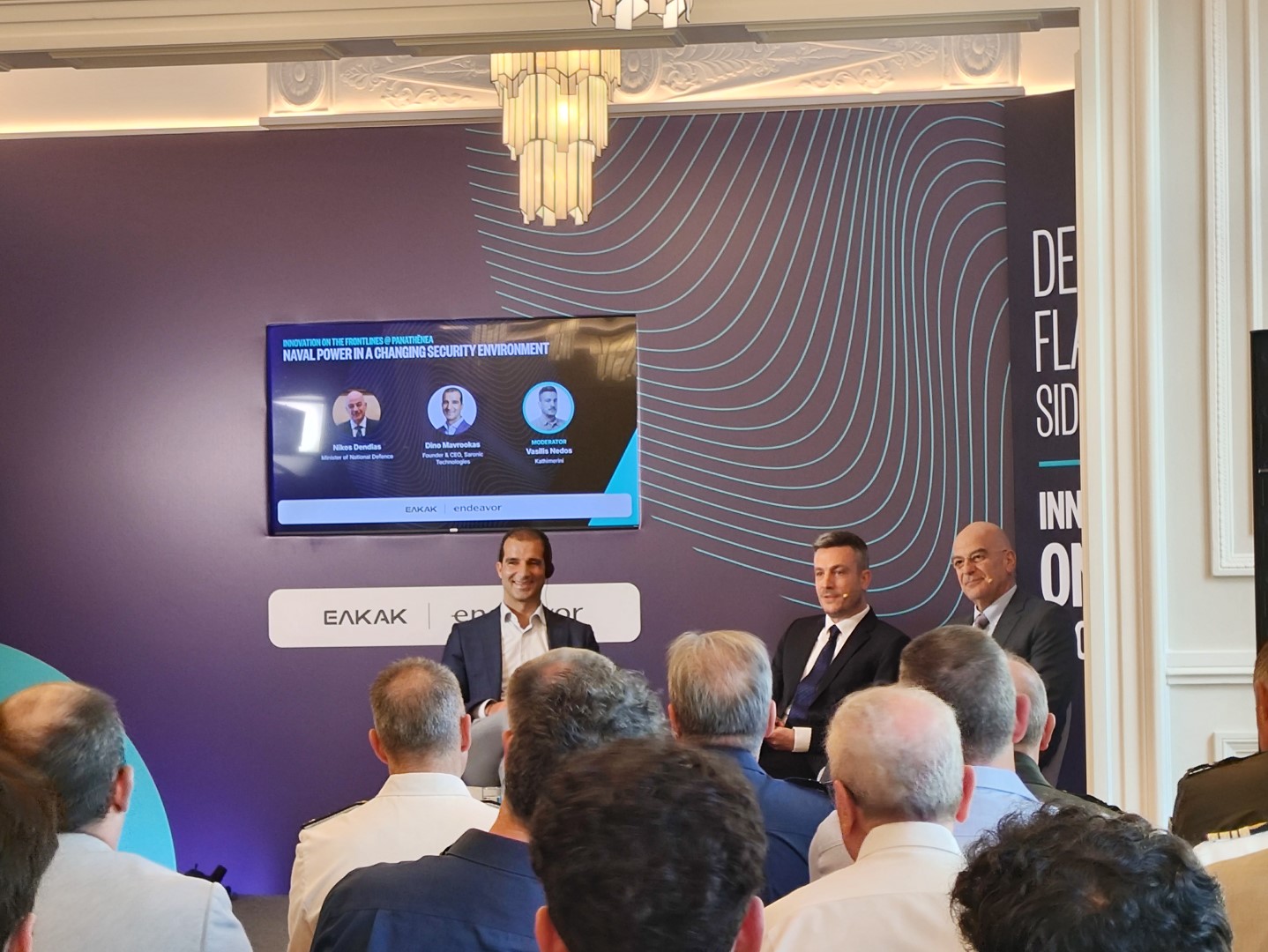
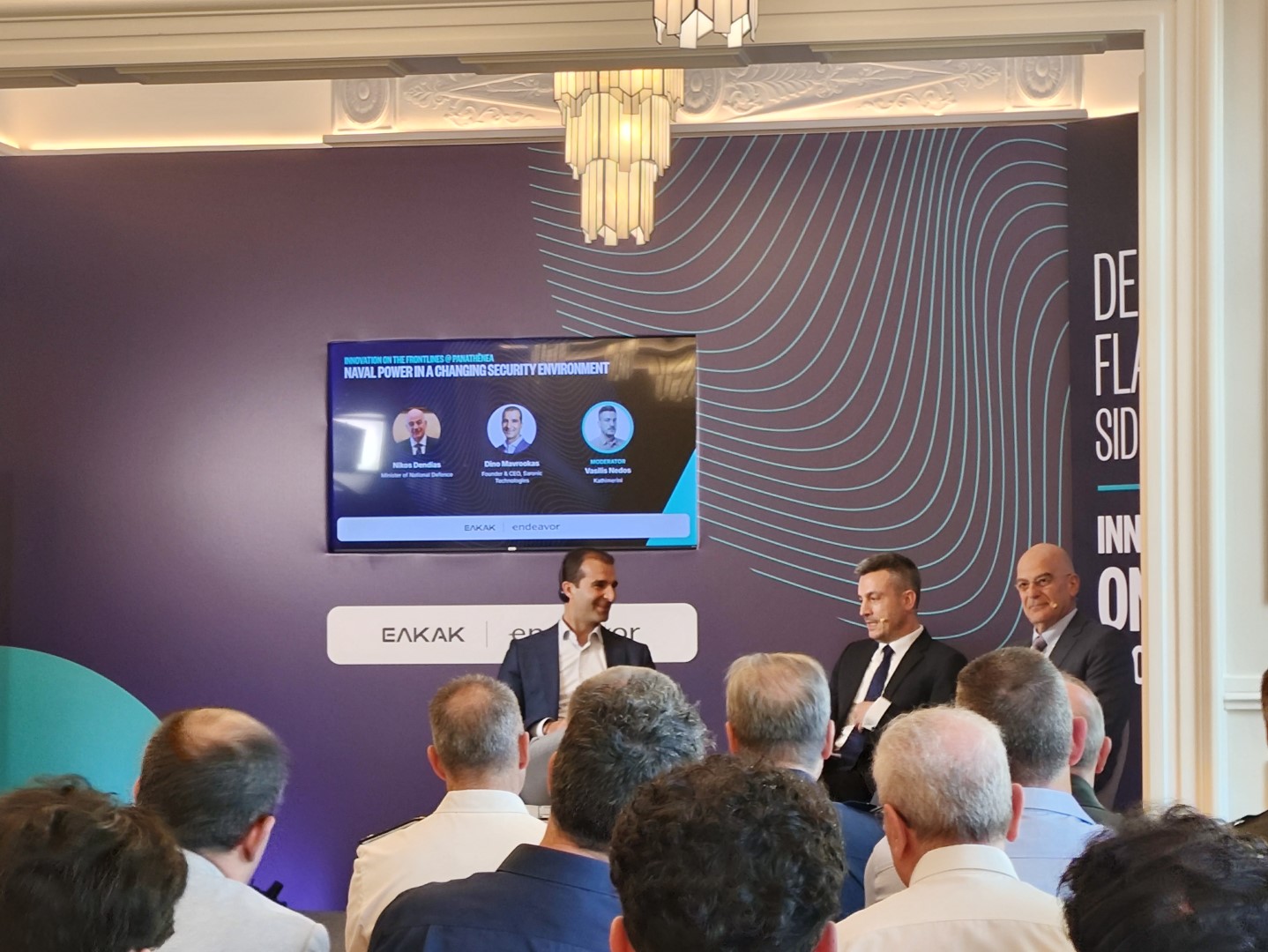
The evening’s headline panel brought together Nikos Dendias, Minister of National Defence, and Dino Mavrookas, co-founder and CEO of Saronic Technologies, in a conversation moderated by Vasilis Nedos of Kathimerini newspaper. The Minister described technology as “the great equaliser,” emphasising Greece’s need to leverage innovation as a force multiplier. He highlighted HCDI/ELKAK’s role in reshaping how the Armed Forces engage with the innovation ecosystem, noting that the approach now asks for solutions to tomorrow’s problems rather than off-the-shelf platforms. The Kentavros anti-drone system, developed with HCDI/ELKAK, KETAK, HAI, and the private sector, and already tested under operational conditions, was cited as a concrete example of this new paradigm.
Mavrookas, a former U.S. Navy SEAL whose company is valued at $9.25 billion following a $1.75 billion funding round in March 2026, outlined how autonomous surface vessels can redefine naval power through scale and affordability. His vision of partnership resonated strongly with the Minister’s message: “It’s not just how do we sell U.S. products to Greece. It’s really how do we build a partnership, how are we delivering a sovereign capability,” Mavrookas explained, revealing that he had already met with a Greek sensor company earlier that day and was scheduled to dine with a Greek shipbuilder after the panel. The discussion was attended by the Chief of the Hellenic National Defence General Staff, General Dimitrios Choupis, and the chiefs of all three branches of the Armed Forces.
NATO DIANA Demo Day: When the Grid is the Front Line
The following day, EUDIMA attended the NATO DIANA Demo Day “When the Grid is the Front Line,” hosted by the Innovation Accelerator@Demokritos at the Meropeion Foundation. As one of 17 NATO DIANA accelerator sites worldwide, the Demokritos accelerator (based at Greece’s largest multidisciplinary research centre, NCSR “DEMOKRITOS”) showcased innovators from the 2026 DIANA cohort working on the Energy & Power challenge. The session spotlighted dual-use technologies addressing critical energy infrastructure challenges, from energy security and grid resilience to operational continuity. Twelve companies presented their solutions: LUXS, SolarinBlue, Boson Energy, Airloom Energy, ATOM H2, Flatlight, Novac, Exonetik Inc., Calyos, SolarSteam Inc., TAURION Batteries GmbH, and Helicoid Industries. The European Investment Bank and the European Space Agency were among the institutional stakeholders in attendance.
EUDIMA’s Engagement
EUDIMA’s participation across both events reinforced the consultancy’s deep engagement with the Greek defence innovation ecosystem and its intersection with European and NATO frameworks. The discussions offered strategic insights of direct relevance to EUDIMA’s advisory work: the evolving relationship between national innovation agencies and international defence programmes, the growing role of autonomous systems in maritime security, and the mechanisms through which startups can access defence markets across Europe. The events also provided valuable networking opportunities with key stakeholders from the Greek and international defence innovation communities.
Panathenea 2026 demonstrated that Athens is emerging as more than a venue for defence dialogue, it is becoming a node in the international defence innovation network, where Greek ingenuity, European ambition, and transatlantic partnerships converge. As Europe accelerates its defence readiness agenda, initiatives like HCDI/ELKAK and NATO DIANA’s presence in Greece ensure that the country’s innovation ecosystem is positioned not merely to participate, but to shape the trajectory of European defence capability.
EUDIMA extends its thanks to HCDI/ELKAK, Endeavor Greece, the Innovation Accelerator@Demokritos, and the Panathenea team for organising events that brought substance and strategic depth to the defence innovation conversation.