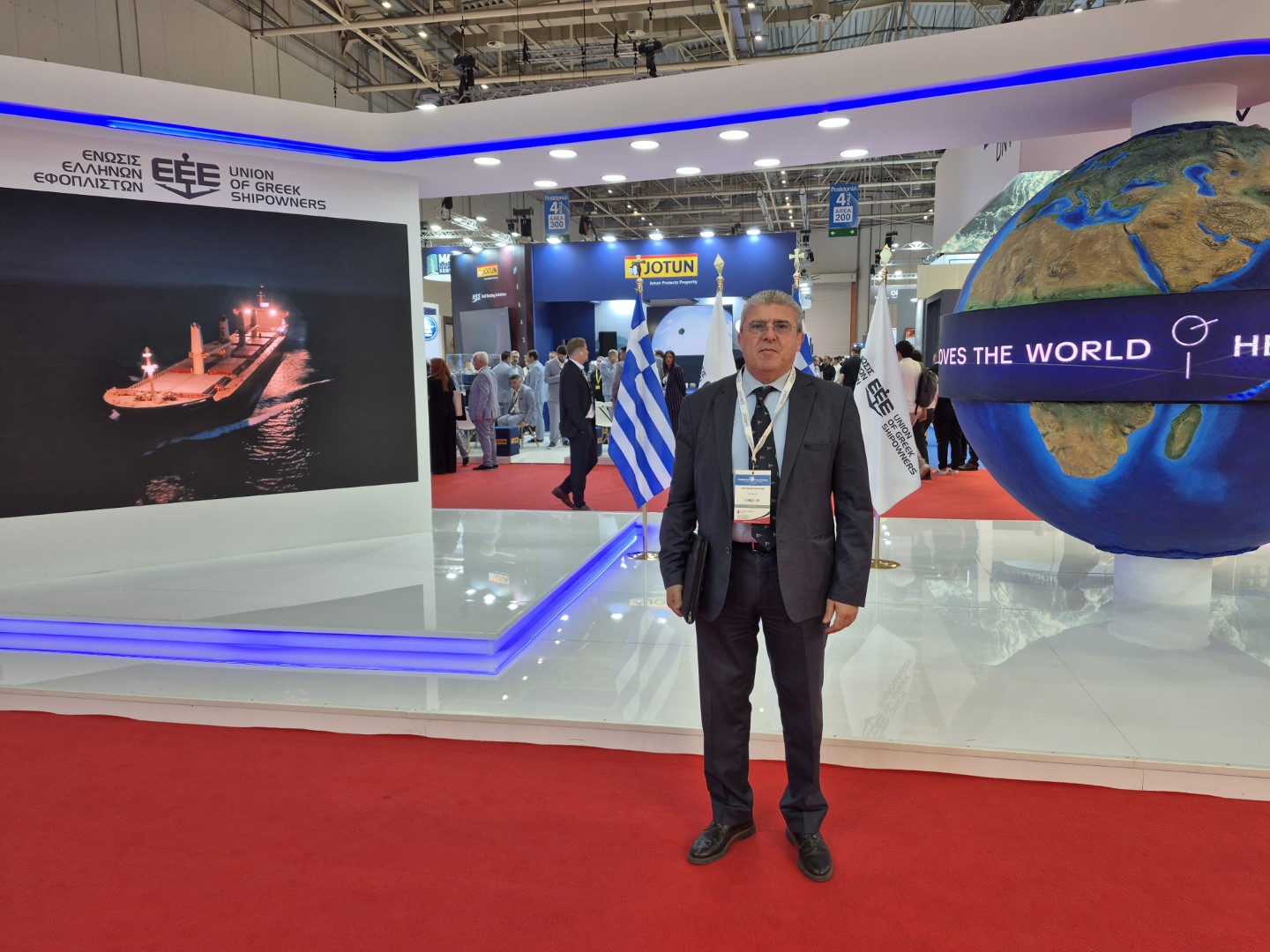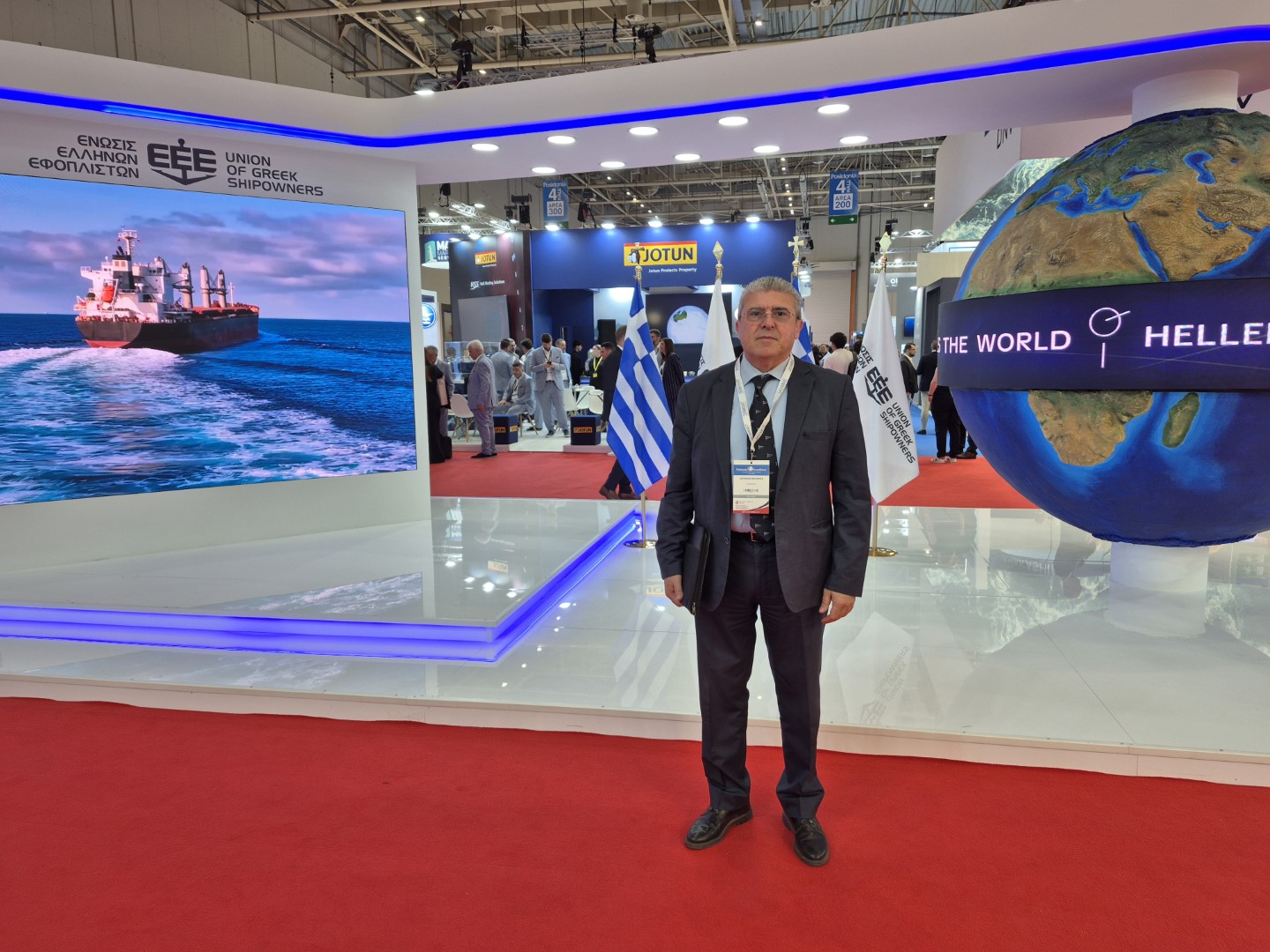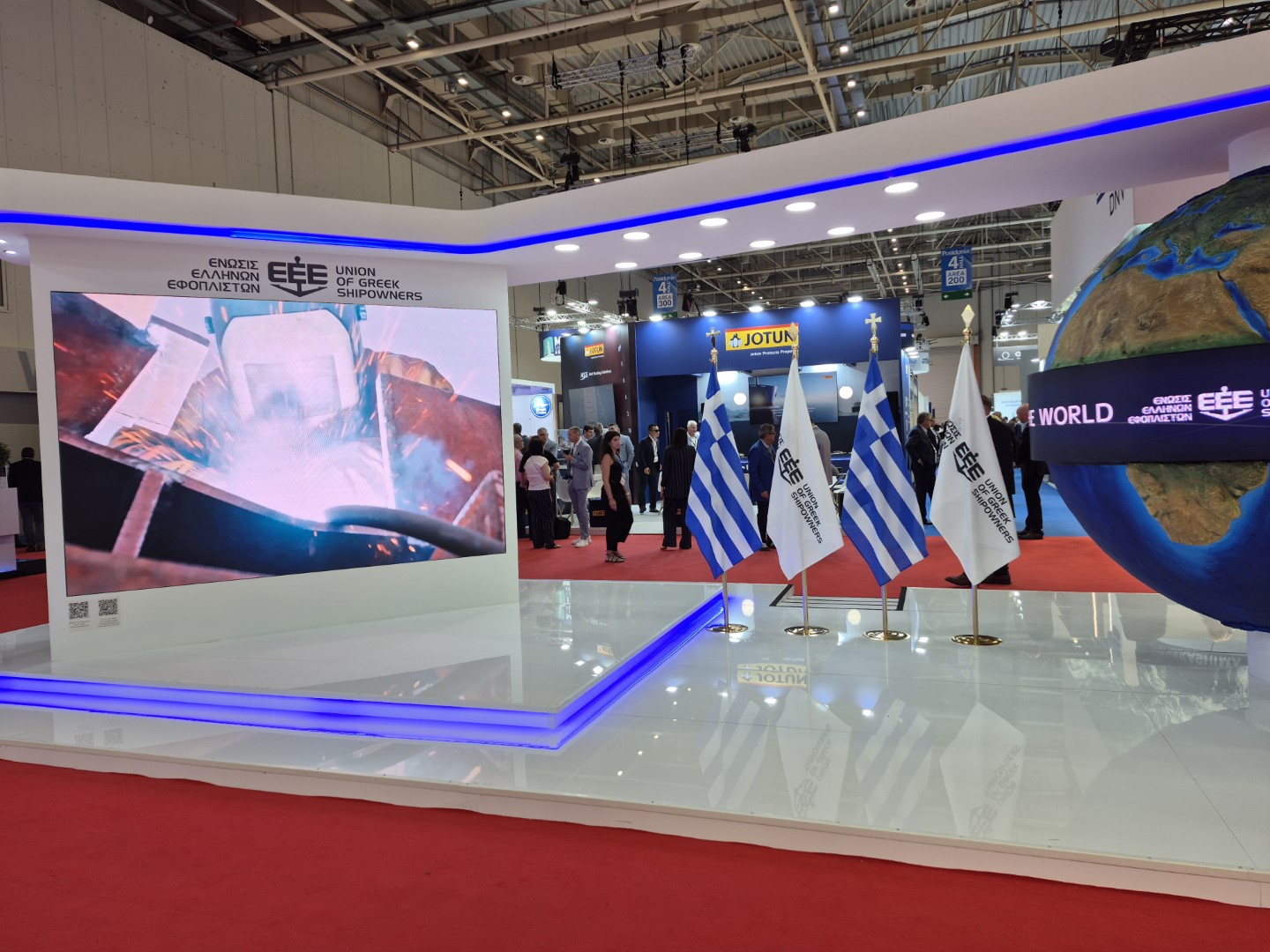
Few events illustrate the shifting relationship between commercial shipping and national security as vividly as Posidonia 2026. Held from 1 to 5 June at the Athens Metropolitan Expo, the 29th edition of what is widely regarded as the world’s largest maritime exhibition unfolded while tanker traffic through the Strait of Hormuz remained severely disrupted, the EU maintained its naval presence in the Red Sea through EUNAVFOR Operation Aspides, and governments across the Mediterranean recalibrated their approach to maritime sovereignty. For EUDIMA the event offered a unique vantage point on the themes that increasingly bind its defence and maritime advisory work together.
The numbers alone signalled the exhibition’s elevated standing. With 2,227 exhibitors from 83 countries, 24 national pavilions, and over 35,000 visitors across five days, this was the largest Posidonia ever staged. Germany and Italy returned with official pavilions after a long absence, and around 70 conferences and seminars ran alongside the exhibition floor. Greek Prime Minister Kyriakos Mitsotakis, European Commissioner for Sustainable Transport and Tourism Apostolos Tzitzikostas, International Maritime Organization (IMO) Secretary-General Arsenio Dominguez, Union of Greek Shipowners (UGS) President Melina Travlos, and the President of Panama José Raúl Mulino all addressed the opening ceremony, a concentration of political weight that reflected shipping’s growing centrality to questions of statecraft and strategic autonomy.
The Strait of Hormuz crisis emerged as the dominant theme of the exhibition, from the opening ceremony through to the closing press conference of the Union of Greek Shipowners. Data presented at the TradeWinds Shipowners Forum by Steve Gordon, Managing Director of Clarksons Research, laid bare the scale of the disruption: Hormuz transits had fallen by 95%, an estimated 1.5 billion barrels of oil shipments had been displaced during the crisis, and approximately 2% of the global fleet by tonnage remained trapped inside the Gulf, including 8% of the world’s VLCC fleet. According to the same analysis, the average distance of seaborne trade has grown by 10% since 2019, a structural shift absorbing tonnage and reshaping trade geography across every segment.
Prime Minister Mitsotakis described Greek-owned shipping as a strategic national and European asset that requires protection, stating that Greek shipowners control 25% of the global fleet by capacity and, according to the Prime Minister, over 80% of Europe’s oil and LNG tanker fleet. He reaffirmed Greece’s commitment to raising freedom of navigation at every diplomatic contact, including at the UN Security Council, where Greece will assume the rotating presidency in October 2026, and highlighted the country’s central role in EUNAVFOR Operation Aspides, headquartered in Larissa.
Commissioner Tzitzikostas emphasised that shipping carries 76% of the EU’s imports and 73% of its exports, with the value of EU maritime imports alone reaching €1.3 trillion annually. He used his address to highlight the recently adopted EU Industrial Maritime Strategy and EU Ports Strategy, adopted by the European Commission in March 2026, as key instruments for ensuring that Europe leads, rather than follows, global maritime developments. IMO Secretary-General Dominguez placed seafarer wellbeing and safety at the top of the organisation’s agenda, calling on the industry to defend freedom of navigation and to reject tolls and discriminatory transit measures.
The green transition was the second defining theme of Posidonia 2026, the first edition of the exhibition since shipping’s inclusion in the EU Emissions Trading System (ETS). UGS President Travlos argued that shipping had been “dragged” into unattainable EU targets that distorted the IMO’s 2050 objectives, and described the proposed IMO Net-Zero Framework as what she called a “revenue-collection mechanism” with funds directed towards purposes unrelated to shipping. Sotiris Raptis, Secretary-General of the European Community Shipowners’ Associations (ECSA), demanded that the EU commit to dropping ETS provisions if an IMO agreement is reached, noting that ETS-related costs for European shipping could reach an estimated €9 billion annually. Industry voices at the TradeWinds forum acknowledged that decarbonisation is inevitable, but stressed that progress depends on the availability of alternative fuels, fit-for-purpose technologies, and infrastructure that the shipping sector alone cannot provide. Nuclear energy as a maritime fuel emerged as a notable new agenda item, reflecting the broadening search for viable pathways.
Posidonia 2026 was, by the organisers’ account, the most technologically charged edition to date. More than 40 exhibitors showcased AI-enabled solutions, a leap from Posidonia 2024, and over 100 exhibitors presented environmental technologies. The conference programme featured dedicated sessions on AI applications for classification and compliance, operational behavioural intelligence for crew performance, and AI-powered decision support for emissions reduction. A technology showcase hosted by the UK Department for Business and Trade in partnership with the Society of Maritime Industries highlighted wind-assisted propulsion, digital asset management, propeller optimisation, and vessel security. Cybersecurity, dual-use digital technologies, and the operational resilience of maritime systems were recurring themes, reflecting a sector that is digitalising rapidly and confronting new categories of risk in the process.
Posidonia week also showcased the revival of Greece’s shipbuilding sector. Prime Minister Mitsotakis highlighted the government’s role in restarting Greek shipyards, noting that they now support not only commercial fleet maintenance but also defence programmes, including the production of ship sections for the Hellenic Navy’s frigate programme. The commercial dimension was underscored by a series of major deals announced during the exhibition, including a design-and-construction contract signed by ONEX Shipyards and V Group’s Antipollution for eco-friendly vessels to be built entirely in Greece at Elefsina and Syros. Travlos reported what she described as the largest Greek shipping orderbook in 25 years, comprising 931 vessels according to industry data, a statement of confidence in the sector’s future trajectory.
For EUDIMA, Posidonia 2026 reinforced a central insight, where the boundaries between commercial maritime and defence are dissolving. Freedom of navigation is no longer an abstract legal principle; it is an operational reality that demands naval assets, EU defence cooperation, and strategic coordination between commercial and military stakeholders. The convergence of maritime security, dual-use technology, shipyard revitalisation, and EU industrial strategy speaks directly to EUDIMA’s advisory work at the intersection of European defence policy, maritime consultancy, and funding frameworks. The exhibition provided an invaluable platform for strategic discussions and high-level networking with industry leaders, institutional representatives, and defence-adjacent stakeholders across the maritime ecosystem.
Posidonia 2026 confirmed that shipping is not at the periphery but at the centre of Europe’s strategic conversation. When prime ministers speak of shipping as a national security asset, when the EU’s naval operations protect the same sea lanes that sustain its economy, and when shipyards serve both frigates and commercial vessels, the traditional silos between commerce and defence no longer apply. EUDIMA will continue to operate at precisely this intersection, as earlier this year at the EURONAVAL Conference Brussels, and as the European defence and maritime agendas continue to converge in the months ahead.
EUDIMA extends its appreciation to the organisers of Posidonia 2026, Posidonia Exhibitions S.A., for delivering an edition that matched the gravity of the moment and provided a forum worthy of the industry’s most pressing challenges.