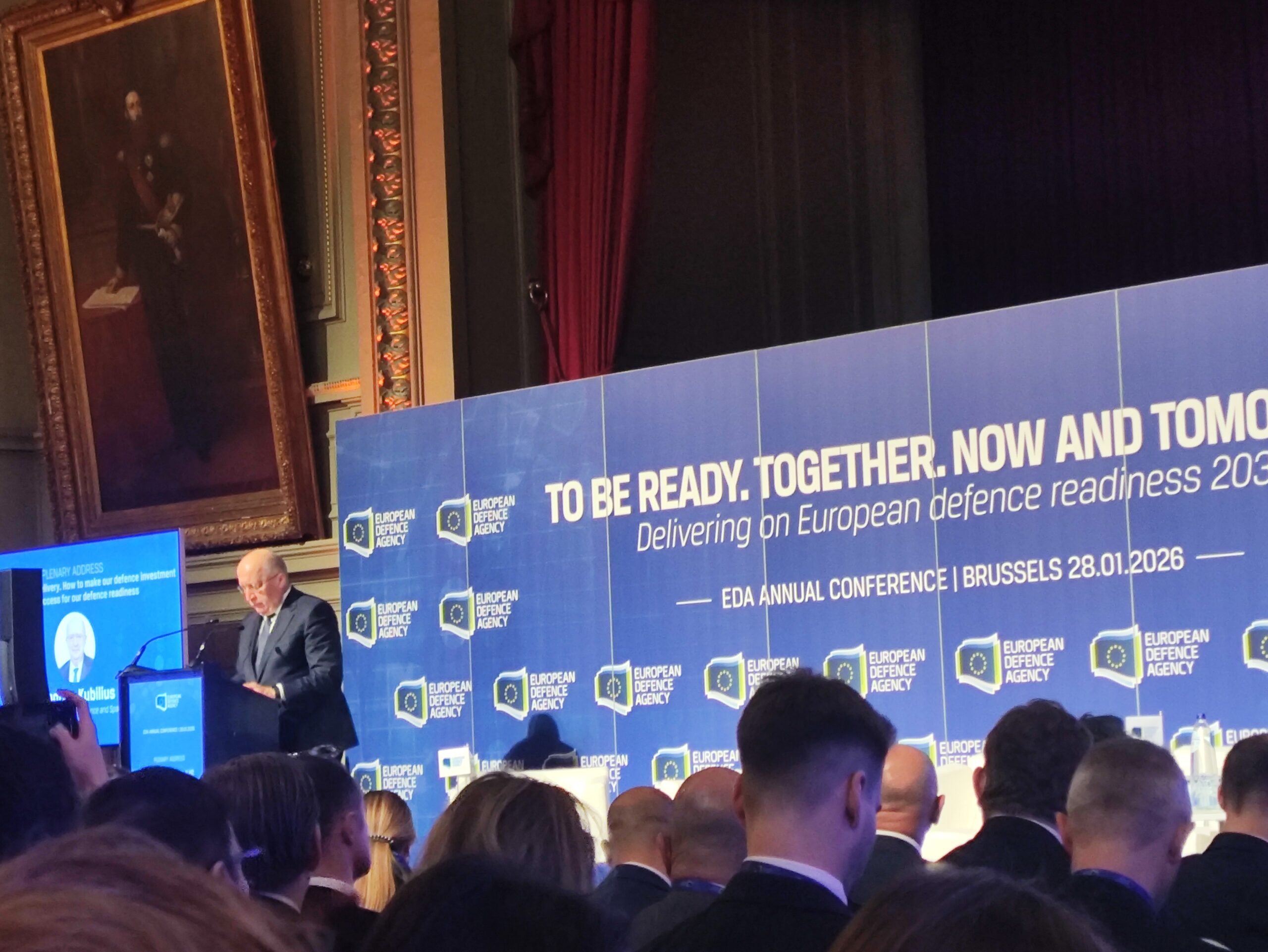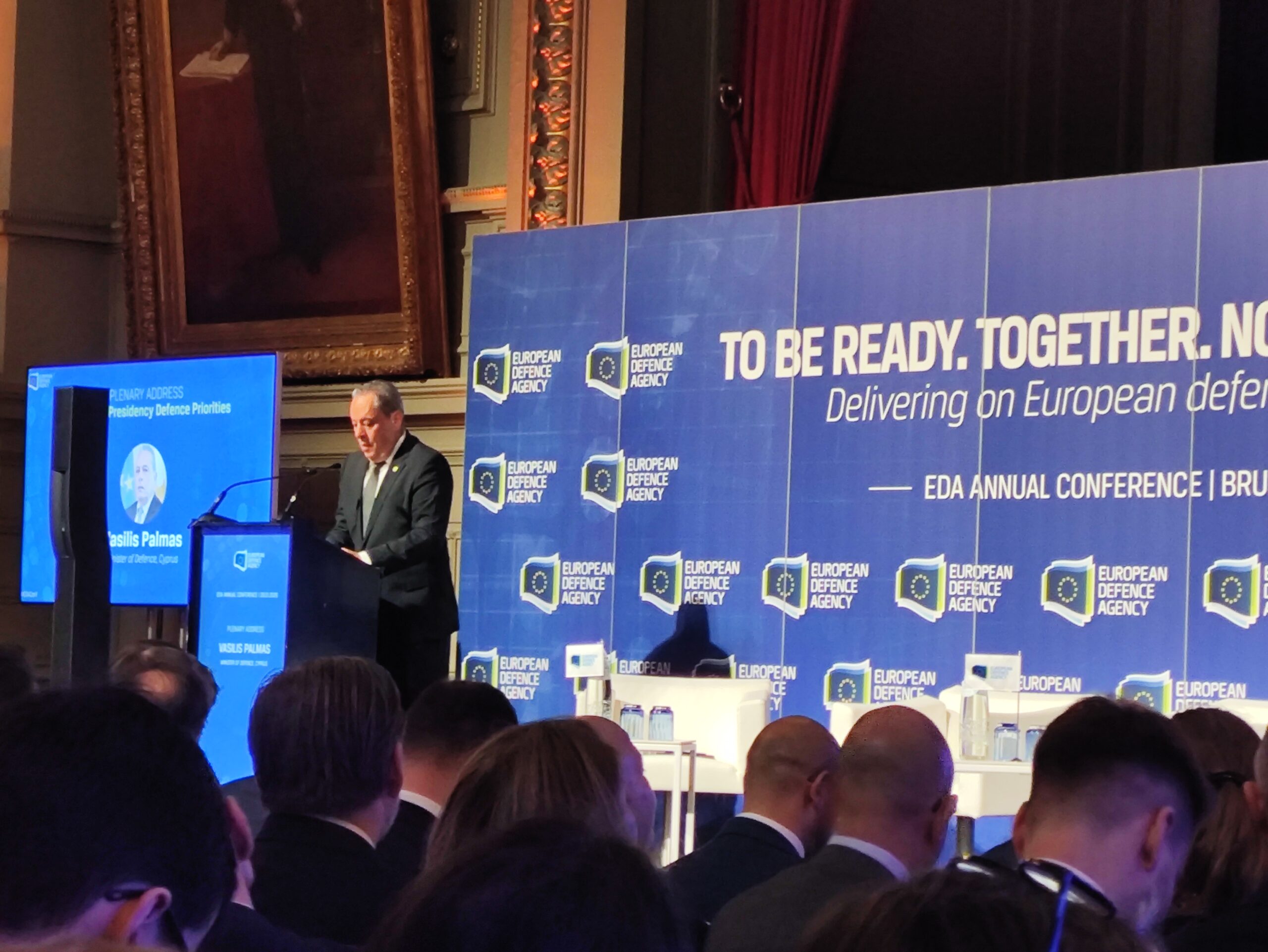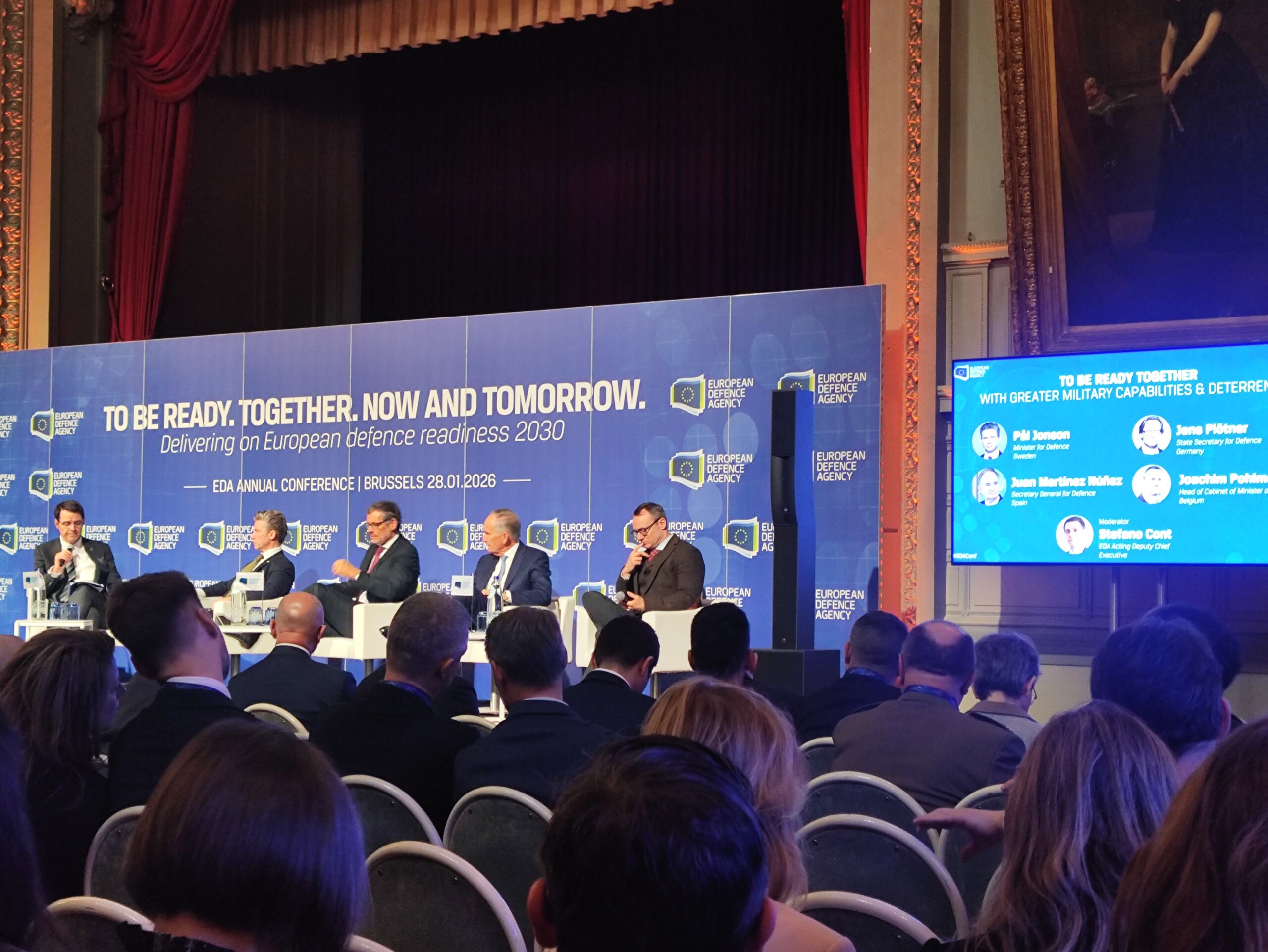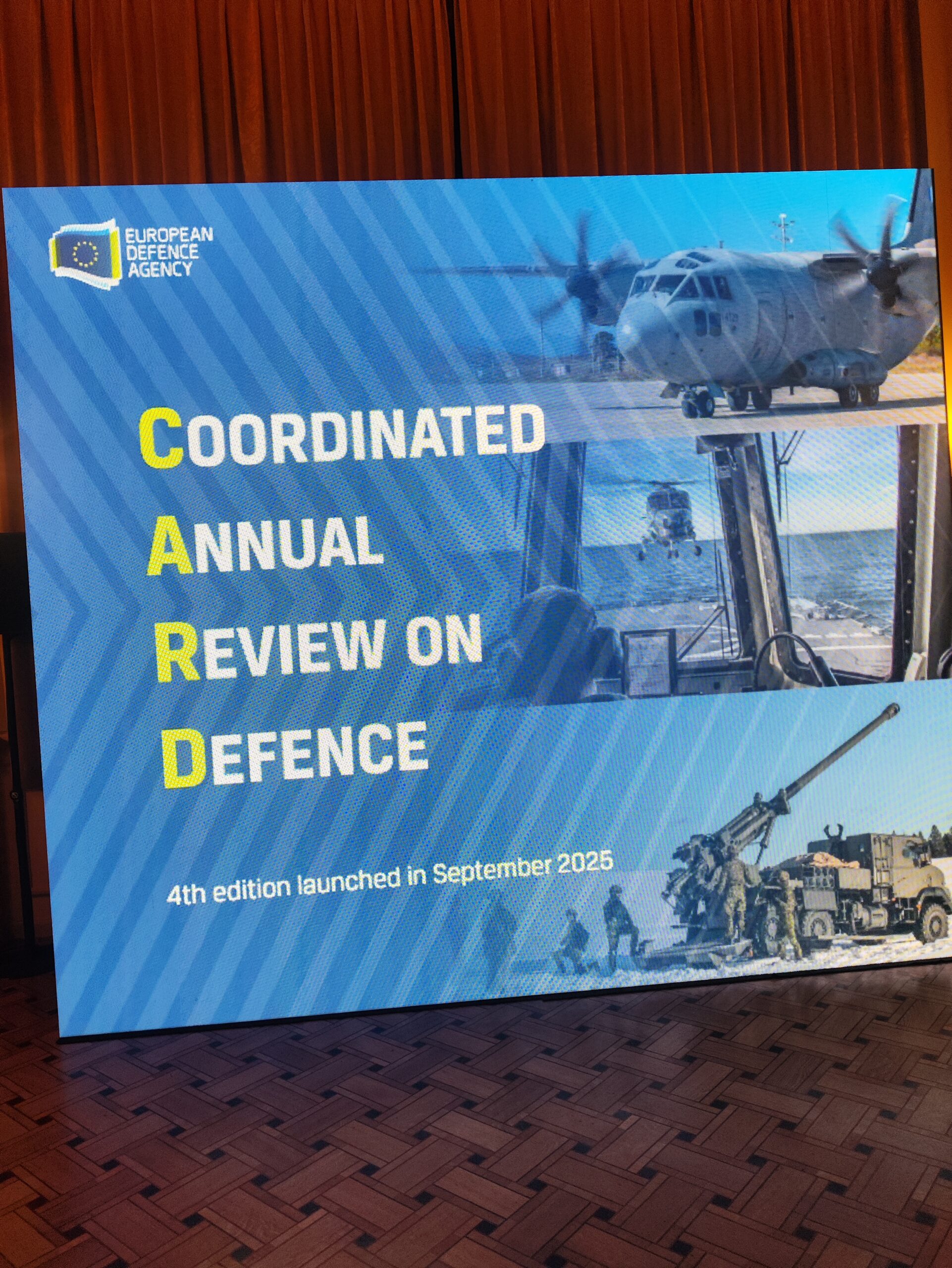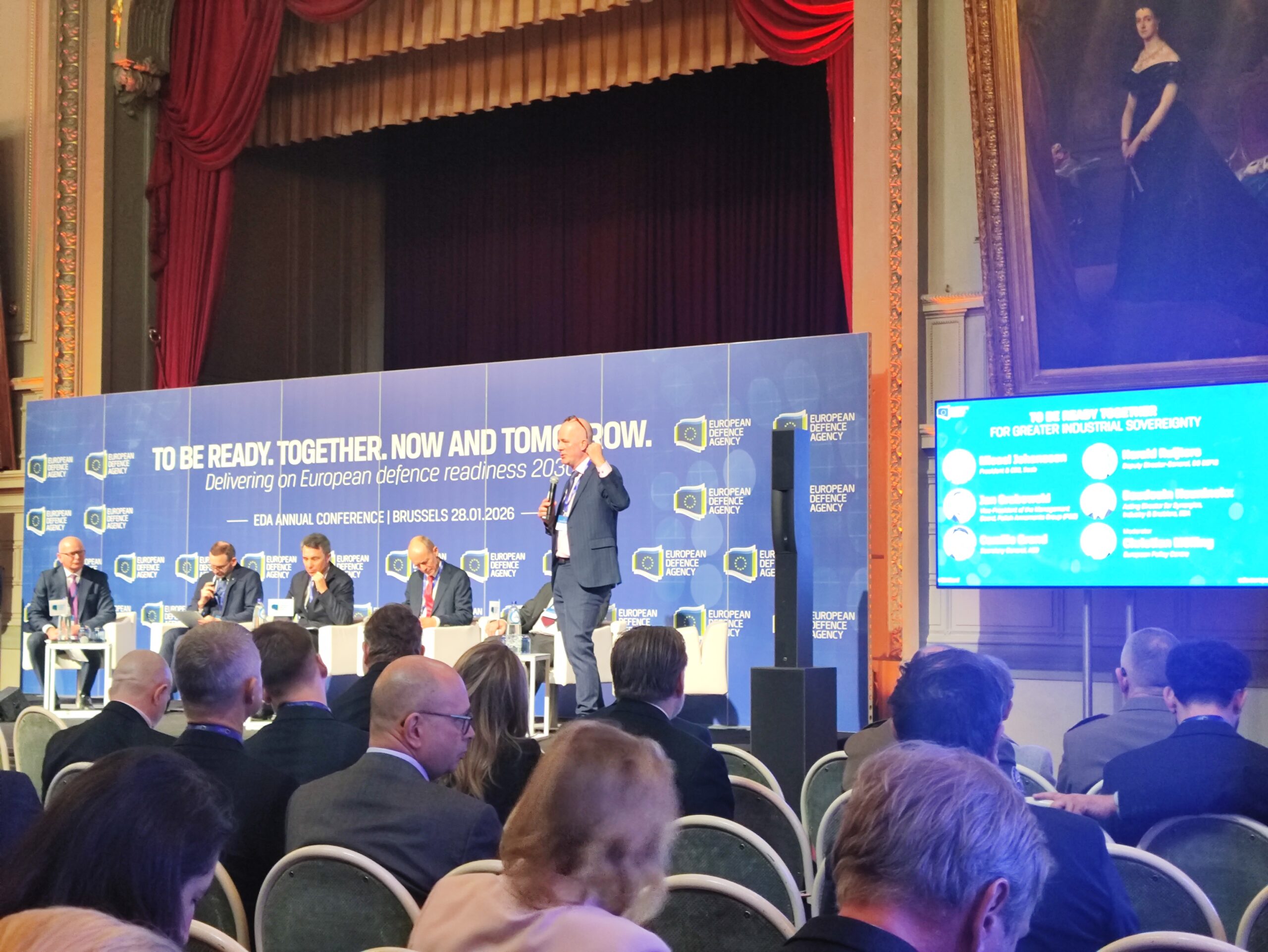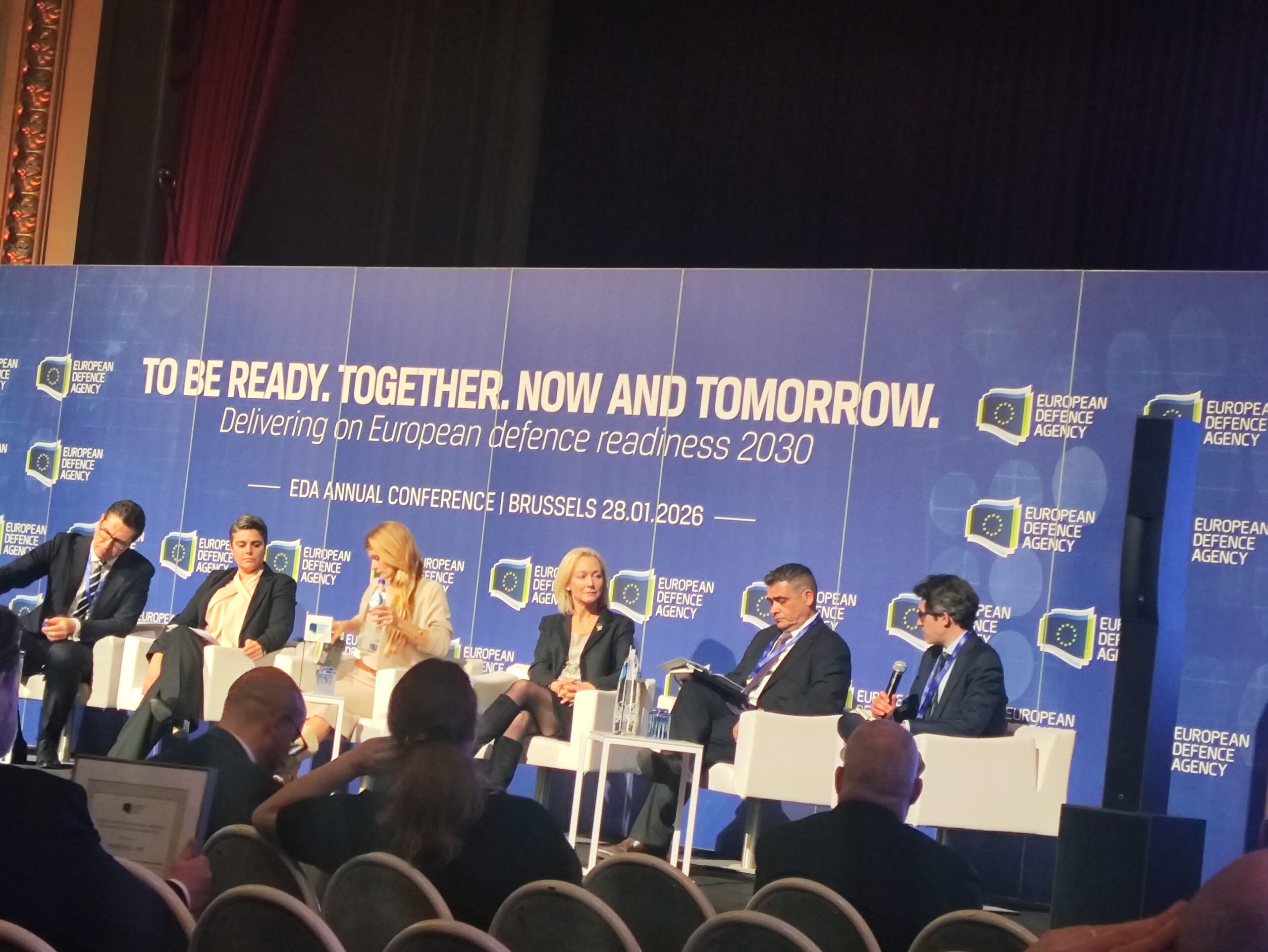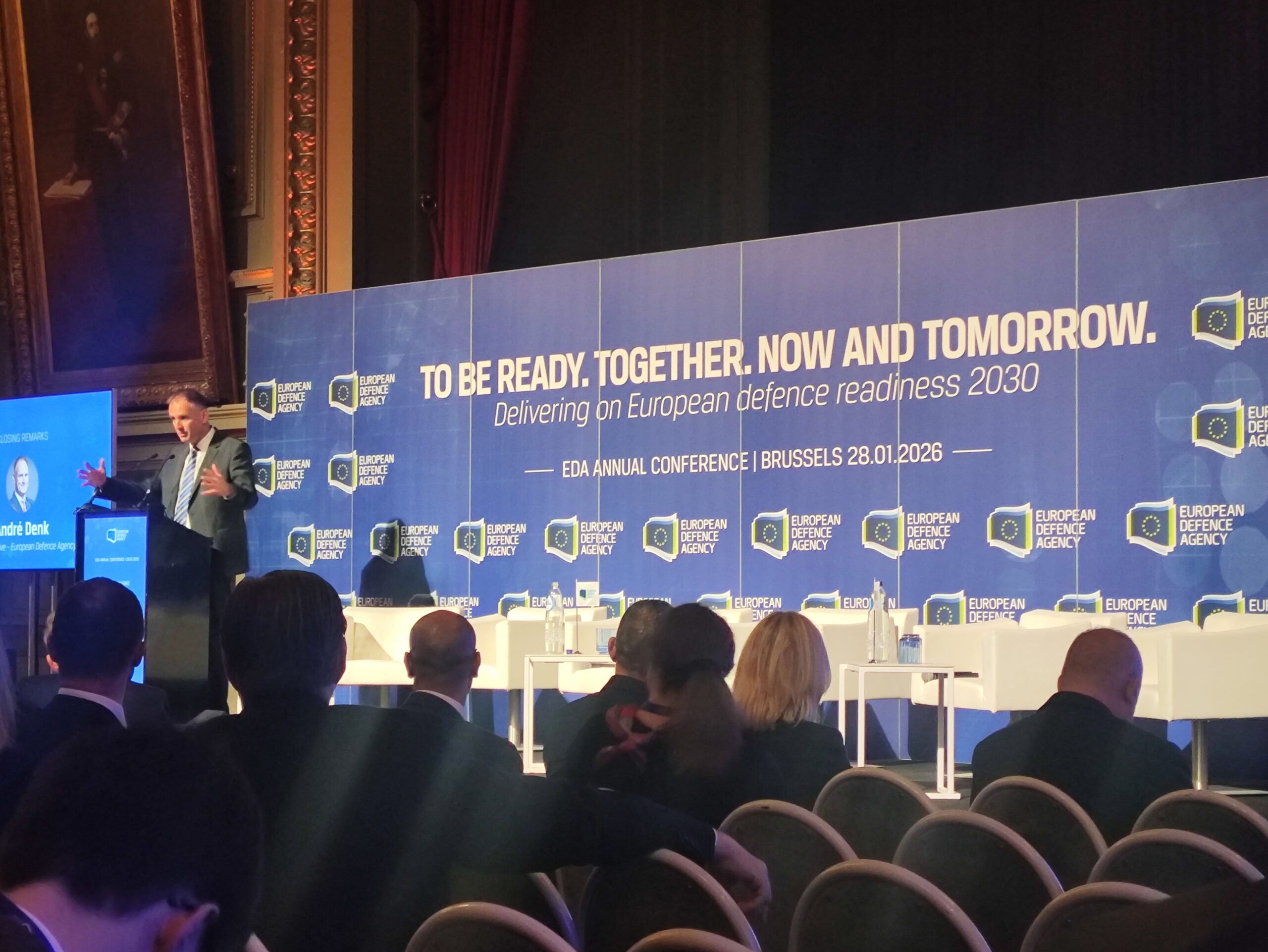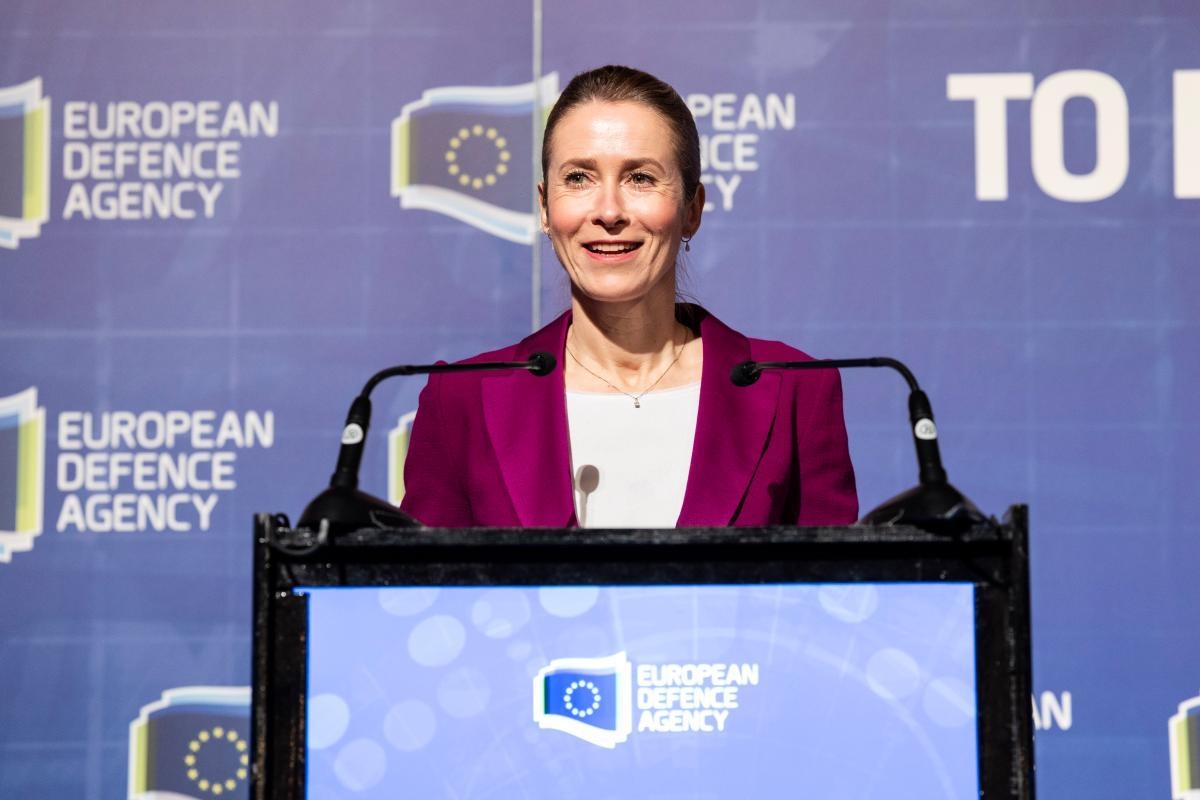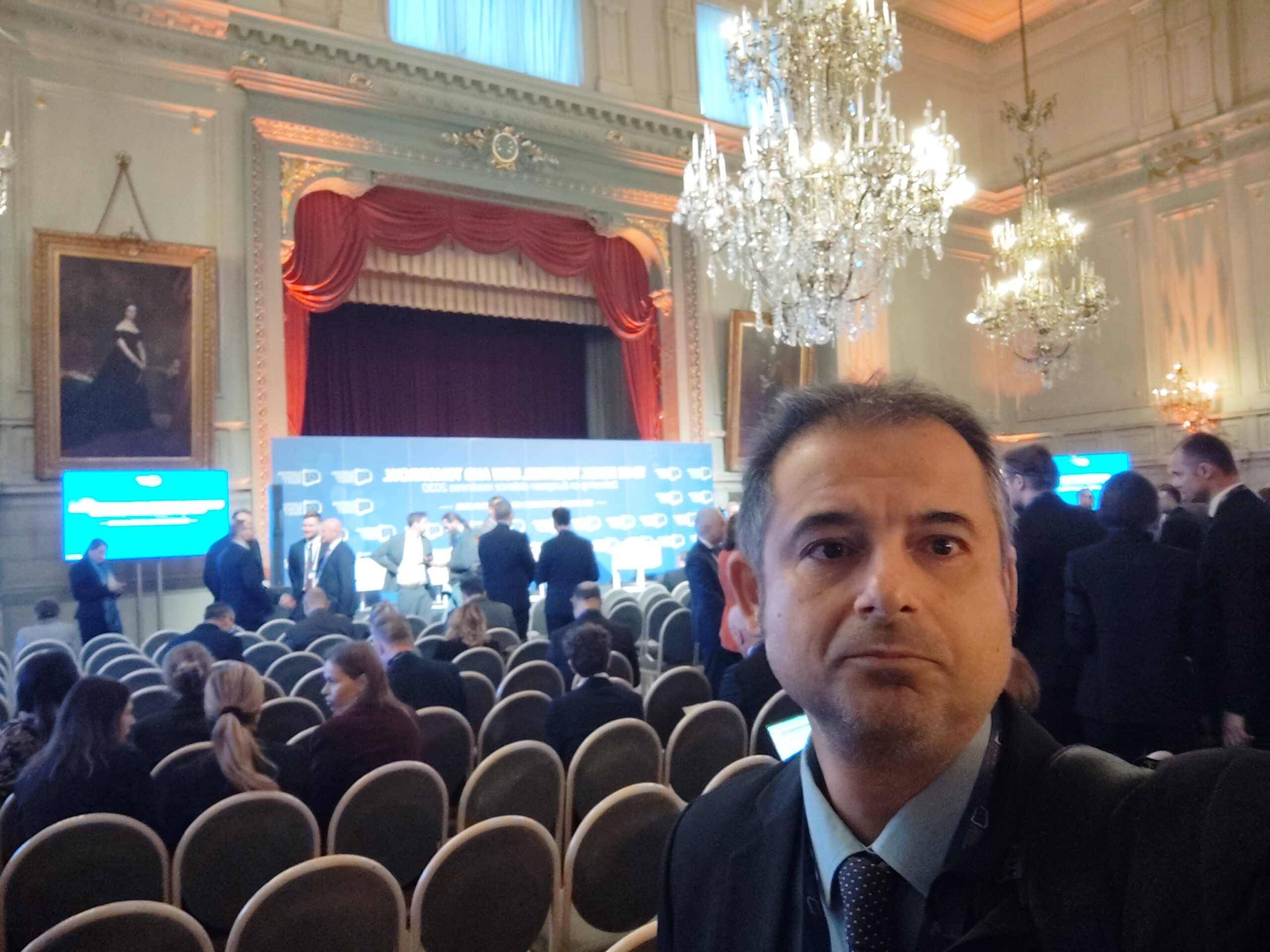
EUDIMA participated in the European Defence Agency (EDA) Annual Conference 2026: “To be ready. Together. Now and tomorrow – Delivering on European Defence Readiness 2030”, held at the Concert Noble in Brussels. The conference brought together over 400 European defence stakeholders to discuss operational readiness across all domains.
High-Level Participation
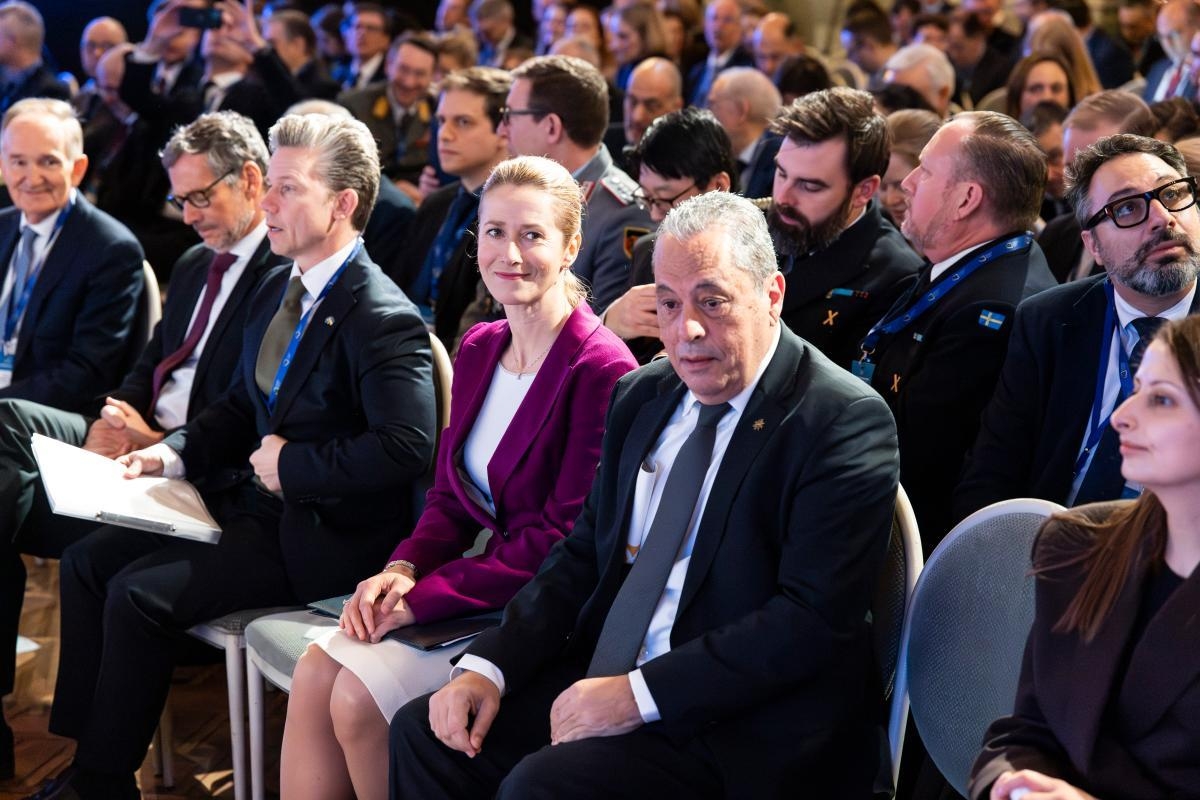
Kaja Kallas, Head of the European Defence Agency and EU High Representative for Foreign Affairs and Security Policy, and André Denk, Chief Executive of the European Defence Agency, were joined by Ministers of Defence and high-level representatives from EU Member States, senior officials from EU institutions, NATO and Ukraine, as well as leaders from industry.
Call for Strengthened EDA Leadership
The European Defence Agency (EDA) must go beyond its role as a supporter of EU cooperation to a leadership role, especially in innovation, Head of EDA and High Representative Kaja Kallas, told the Agency’s 2026 Annual Conference. Member States must give the Agency the power to do more, Kallas said, recalling EU leaders’ call in 2025 to strengthen EDA.
Kallas delivered a clear message: “This is also an open message for Member States: if you want a strong EDA, provide the necessary means. If we want to translate our political ambition into operational capability, EDA needs to lead, not just facilitate. You need to act, not just advise”.
“New EDA” Proposals
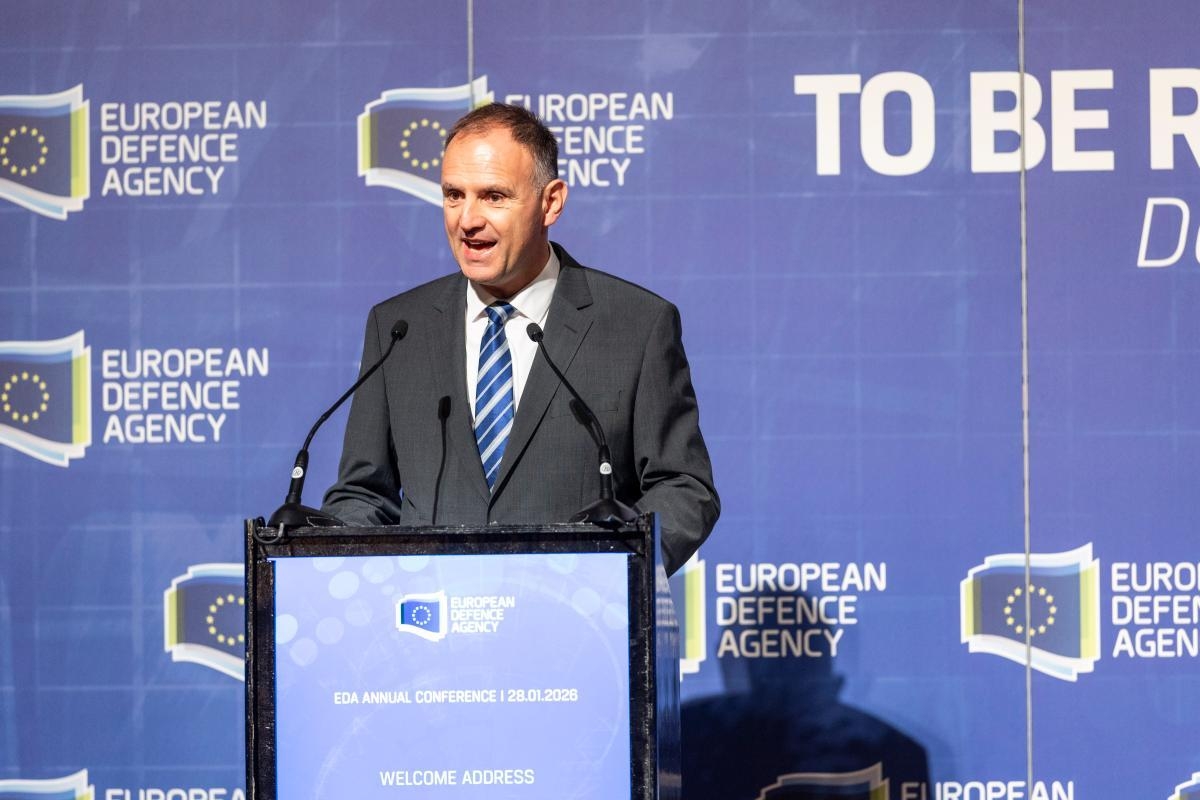
EDA Chief Executive André Denk told the conference that the Agency, which is owned and funded by the EU’s 27 Member States, will come forward in the coming days with proposals to strengthen operations. “What we are proposing is a new, re-engineered agency — the new EDA,” he said. Denk said areas to be expanded would be those in EDA’s core tasks, including preparing joint procurement to increase the effectiveness of public spending, developing new military capabilities together, and innovation — from the lab to testing to field use.
Commissioner’s Support
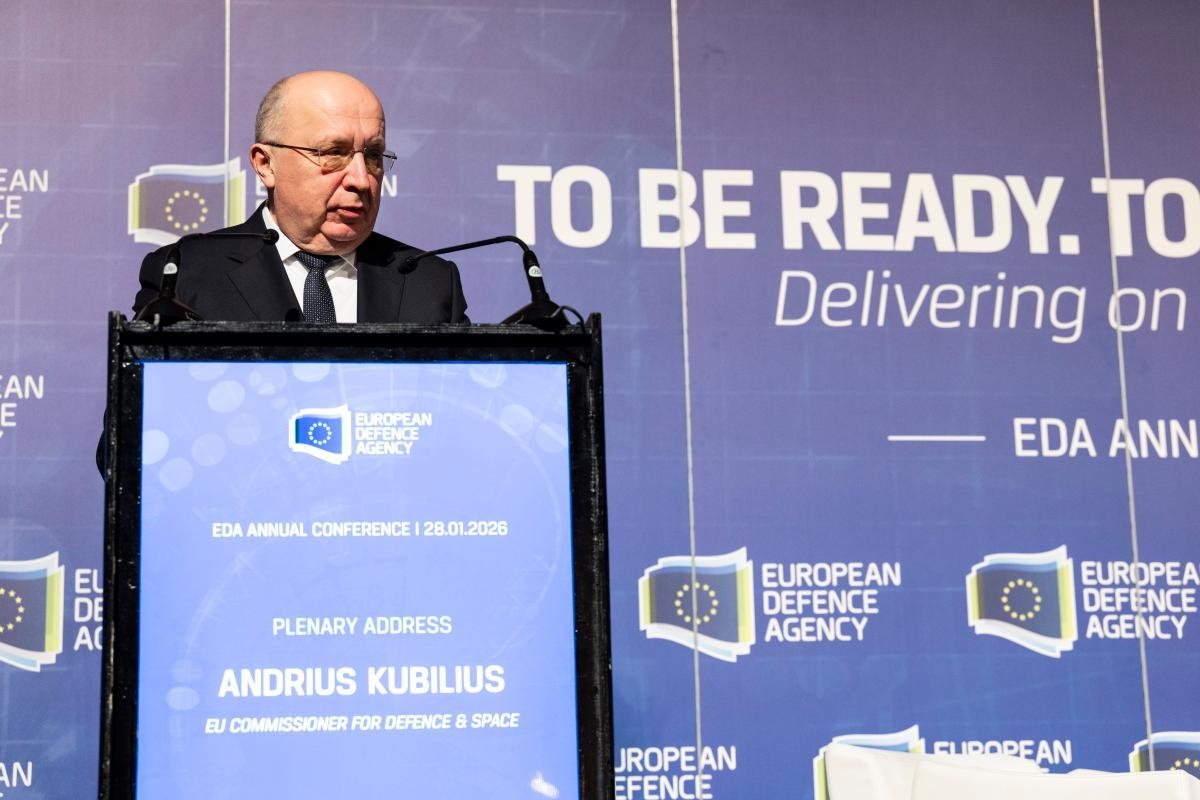
Andrius Kubilius, EU Commissioner for Defence and Space, threw his support behind a stronger EU defence. “Europe has the potential to become a defence giant,” he underscored.
Member State Perspectives
Sweden’s Minister of Defence Mr. Pål Jonson, said money was less of an issue in the past, with Sweden’s defence budget tripling compared to 2018. But he urged the EU and NATO to invest in European ground forces to be able to potentially hold ground for longer periods. He also argued, along with Germany’s State Secretary that missile defence should be a priority for EU defence. Both stress the need to give emphasis on space, as well as continuing to learn from Ukraine’s fast cycles of innovation.
Germany’s State Secretary Mr. Plötner said that “Hard core defence will remain intergovernmental, emphasizing that while EU cooperation is essential, national sovereignty in defence decision-making remains fundamental.
Head of Cabinet of Belgium’s Minister of Defence Mr. Joachim Pohlmann, underlined the need for EU’s strategic autonomy, stressing also that smaller EU countries would still need to rely on larger EU Member States’ willingness to work together. “We are part of a bigger whole, and so we need standardisation. Without it, that makes it impossible for our smaller, innovative companies to participate”.
Major General Hanke Bruins Slot, the National Capability Director of the Netherlands, warned of potential turf wars if too many proposals to improve European defence cooperation were put forward, calling for decisive action from EU institutions. “Readiness relies on the ability to take decisions,” Bruins Slot told the conference.
Jan Grabowski, vice-president of the management board at Poland’s state-owned defence group PGZ, said Europe needed to focus on funding and planning amid shifting geopolitical pressures.
Cyprus Presidency Priorities
Cypriot Minister of Defence Vasilis Palmas, whose country holds the rotating EU Presidency of the Council, said his government would make a “particular effort” to strengthen EDA over the next six months. Defence Minister Vasilis Palmas said the Presidency will focus on continuing to support Ukraine, strengthening Europe’s defence industry, speeding up defence readiness and innovation, investing in maritime security and supporting humanitarian operations, including the evacuation of non-combatant personnel. He also highlighted issues linked to economic security, including addressing threats to critical infrastructure and defence supply-chain vulnerabilities.
Industry Perspectives
The conference featured substantive roundtable discussions where industry leaders shared their views on the future of European defence cooperation and industrial strategy.
Procurement and Supply Chain Resilience: Industry representatives emphasized the critical need for Europe to maintain greater control over defence capabilities and supply chains, particularly given evolving transatlantic dynamics. Saab’s leadership argued that prioritizing European sources in procurement should be viewed through the lens of capability sovereignty rather than protectionism—focusing on Europe’s ability to independently upgrade, maintain, and sustain critical defence systems without relying on potentially fragile external supply chains.
Structural and Governance Reforms: A recurring theme in industry contributions was the challenge of governance mechanisms. While there is broad consensus on defence integration objectives and ambitions—including proposals for competitive funding through the Multiannual Financial Framework—industry leaders noted that national sovereignty continues to dominate defence policy, creating friction in collective decision-making at EU level. The “elephant in the room,” as described by one CEO, remains the question of structure, mandate, and decision-making authority.
Strategic Timeframes and European Perspective: European defence industry associations stressed the importance of shifting from short-term political debates to sustained, long-term strategic thinking in European terms. Industry warned that procurement decisions delayed today translate directly into capability gaps in future deliveries. The message was clear: European member states must adopt a genuinely European perspective in their defence planning, or risk losing competitive advantage and operational effectiveness.
Practical Challenges: Industry participants also highlighted practical obstacles including the need for greater standardization to enable SME participation, the importance of predictable long-term funding commitments, and the challenge of coordinating across 27 Member States with different industrial capabilities, procurement cycles, and strategic priorities.
EUDIMA’s Engagement
EUDIMA’s participation at the conference provided valuable insights into multiple dimensions of European defence transformation.
EUDIMA gained detailed insights into enhanced joint procurement mechanisms and the emerging concept of European preference in defence procurement, understanding how this approach balances capability sovereignty with maintaining transatlantic partnerships and Alliance commitments. The discussions on innovation funding from laboratory research through testing to field deployment revealed new pathways for supporting clients in accessing EU defence innovation programmes.
The conference provided exceptional networking opportunities with Ministers of Defence from across the EU, senior officials from European institutions, NATO representatives, members of the Ukrainian delegation, and industry leaders from major defence primes to innovative SMEs. These connections strengthen EUDIMA’s ability to support clients in navigating the complex European defence ecosystem.
The conference was particularly timely for understanding the Cyprus Presidency priorities for the first half of 2026, including the focus on simplifying defence procurement, strengthening the industrial base, supporting innovative SMEs, and enhancing maritime security.
Understanding the Defence Readiness 2030 framework and its priorities across land, air, sea, cyber, and space domains will inform EUDIMA’s strategic advisory services. Equally important were the insights into how Member States are balancing the imperative for strategic autonomy with the practical realities of intergovernmental cooperation, where national sovereignty remains paramount in defence decision-making.
The industry perspectives on governance challenges, standardization requirements, and the need for long-term planning provided practical understanding of the obstacles and opportunities facing defence companies seeking to participate in European collaborative programmes. This knowledge enhances EUDIMA’s ability to guide clients through consortium formation, funding applications, and cross-border partnership development.
Strategic Importance
The conference underscored a transformative moment for European defence cooperation. With over 400 participants from across the EU defence ecosystem, the event signaled a shift from facilitation to leadership for EDA, increased defence budgets across Member States, and urgency in translating political ambition into operational capability.
EUDIMA’s participation in the EDA Annual Conference 2026 reflects our commitment to understanding European defence policy developments and supporting clients in navigating the evolving landscape of EU defence cooperation, funding mechanisms, and capability development programmes.
We thank the European Defence Agency for organizing this critical platform for European defence stakeholders at a pivotal moment for the Alliance and EU security.