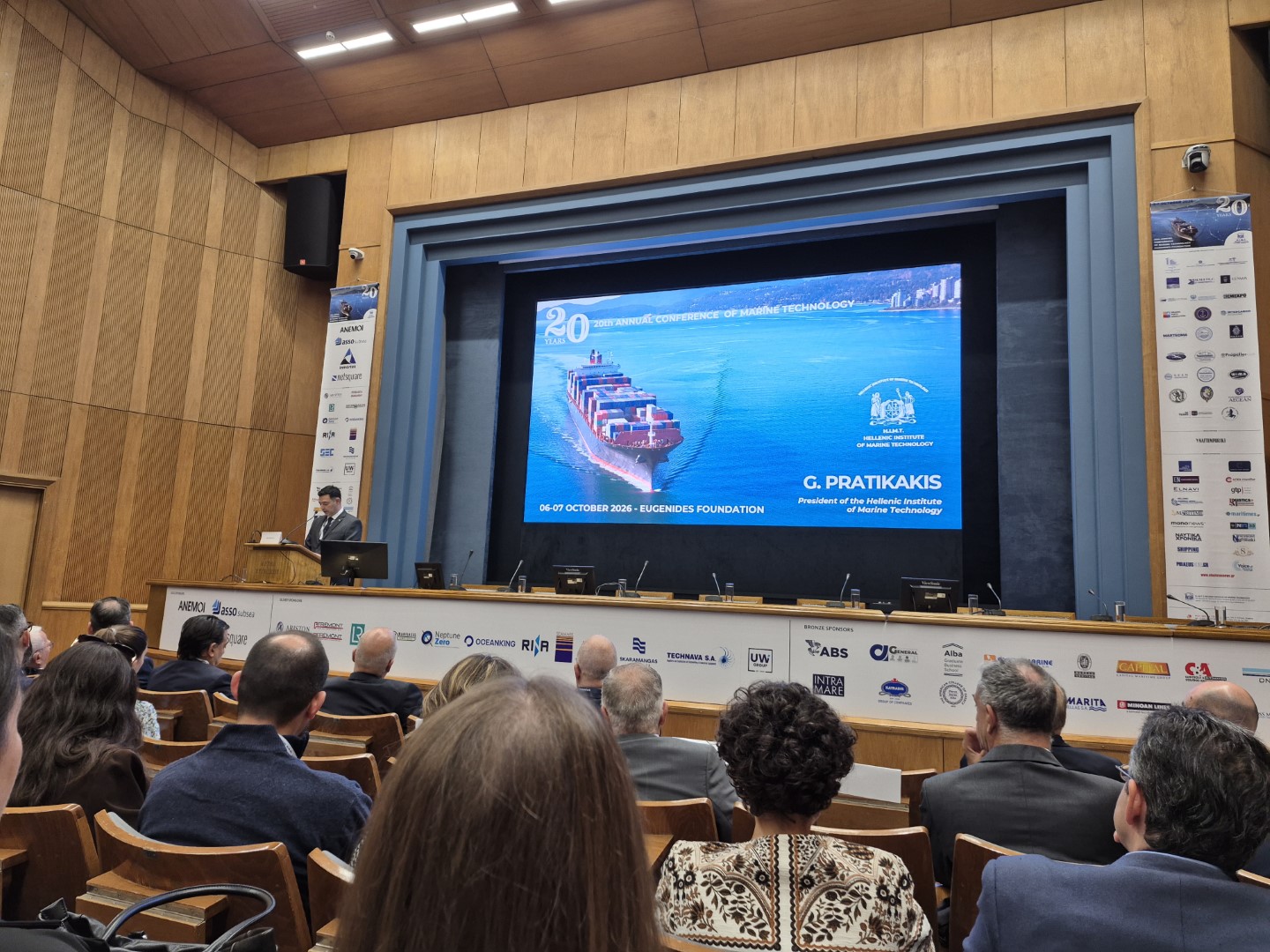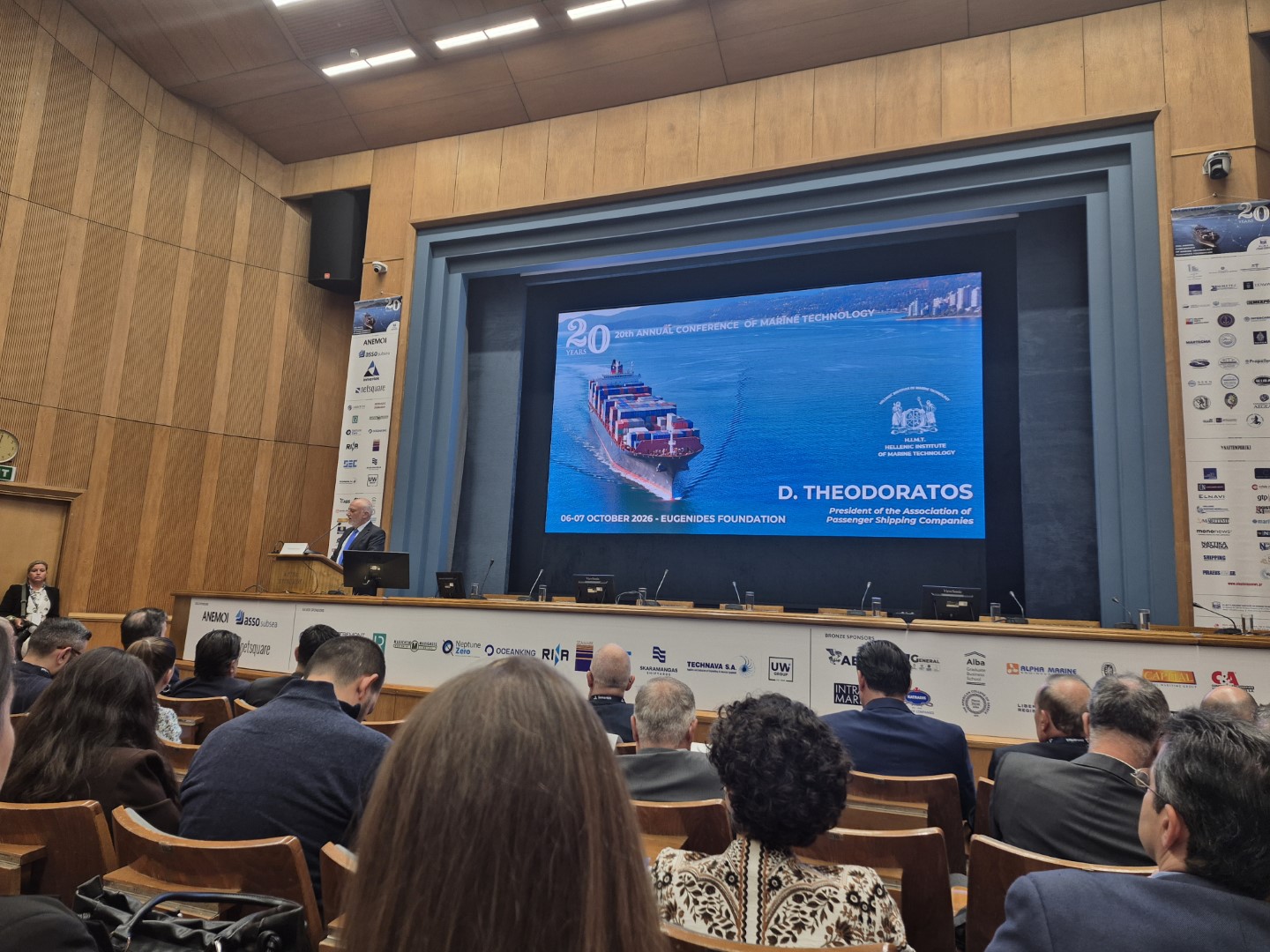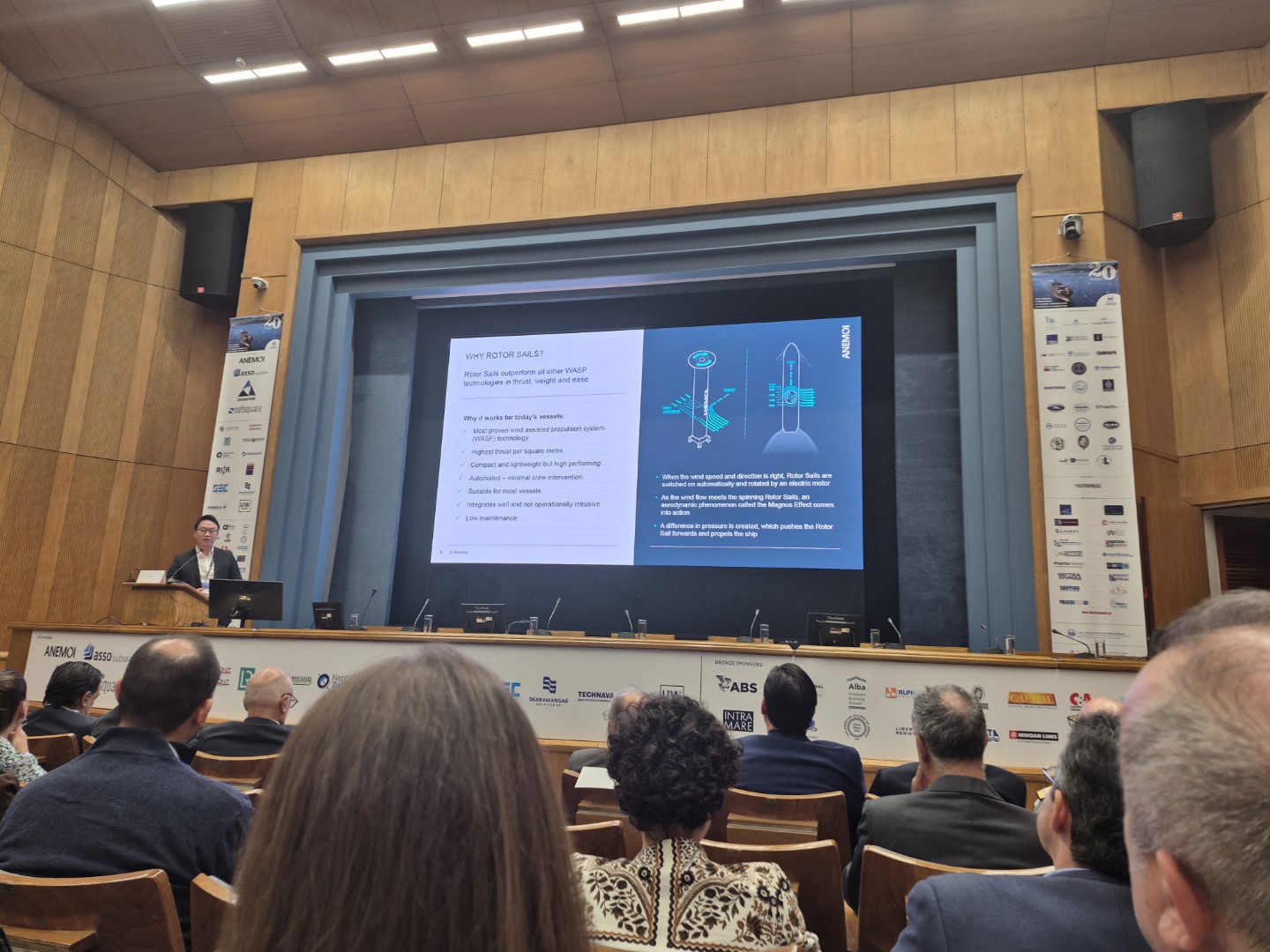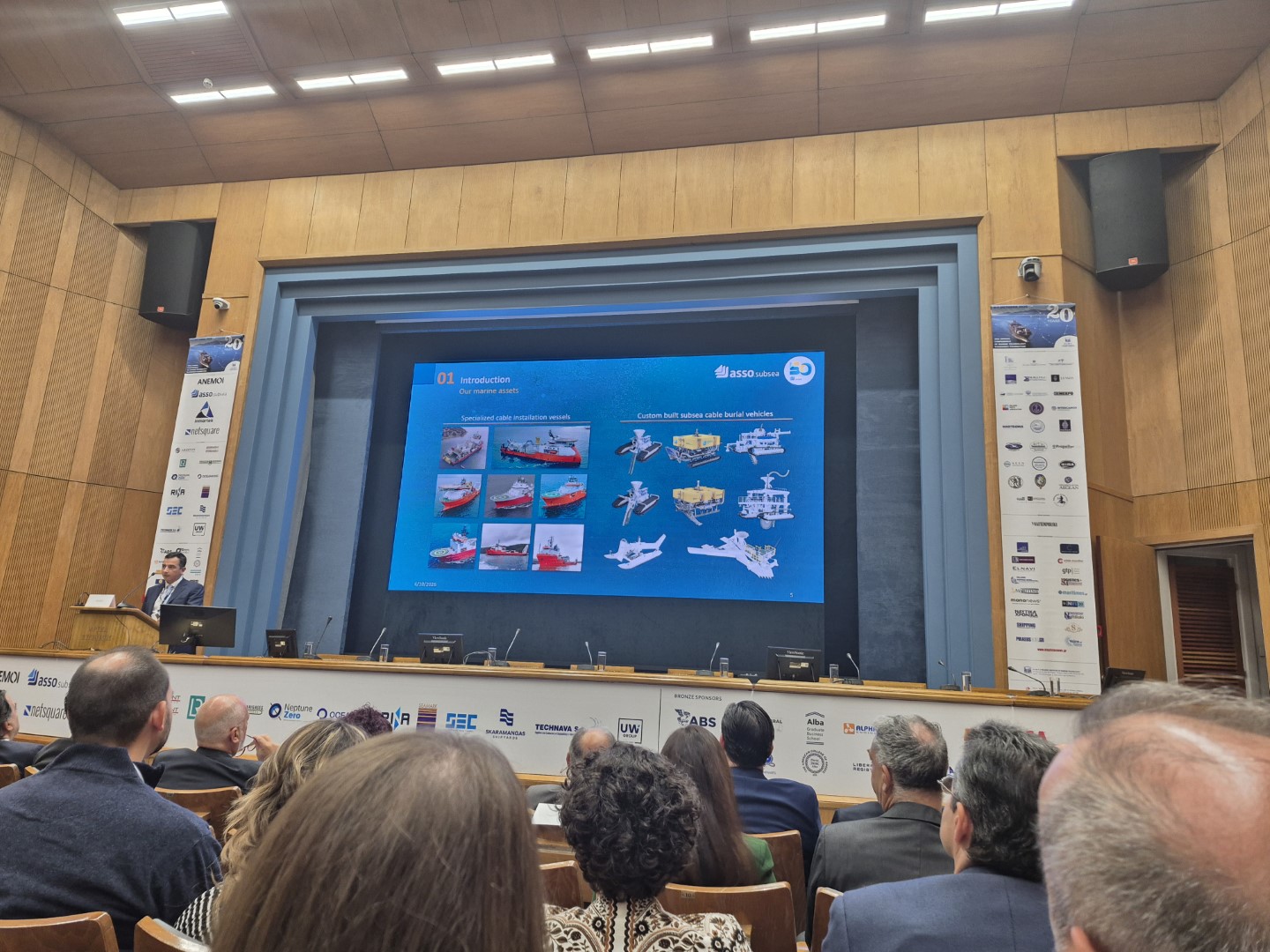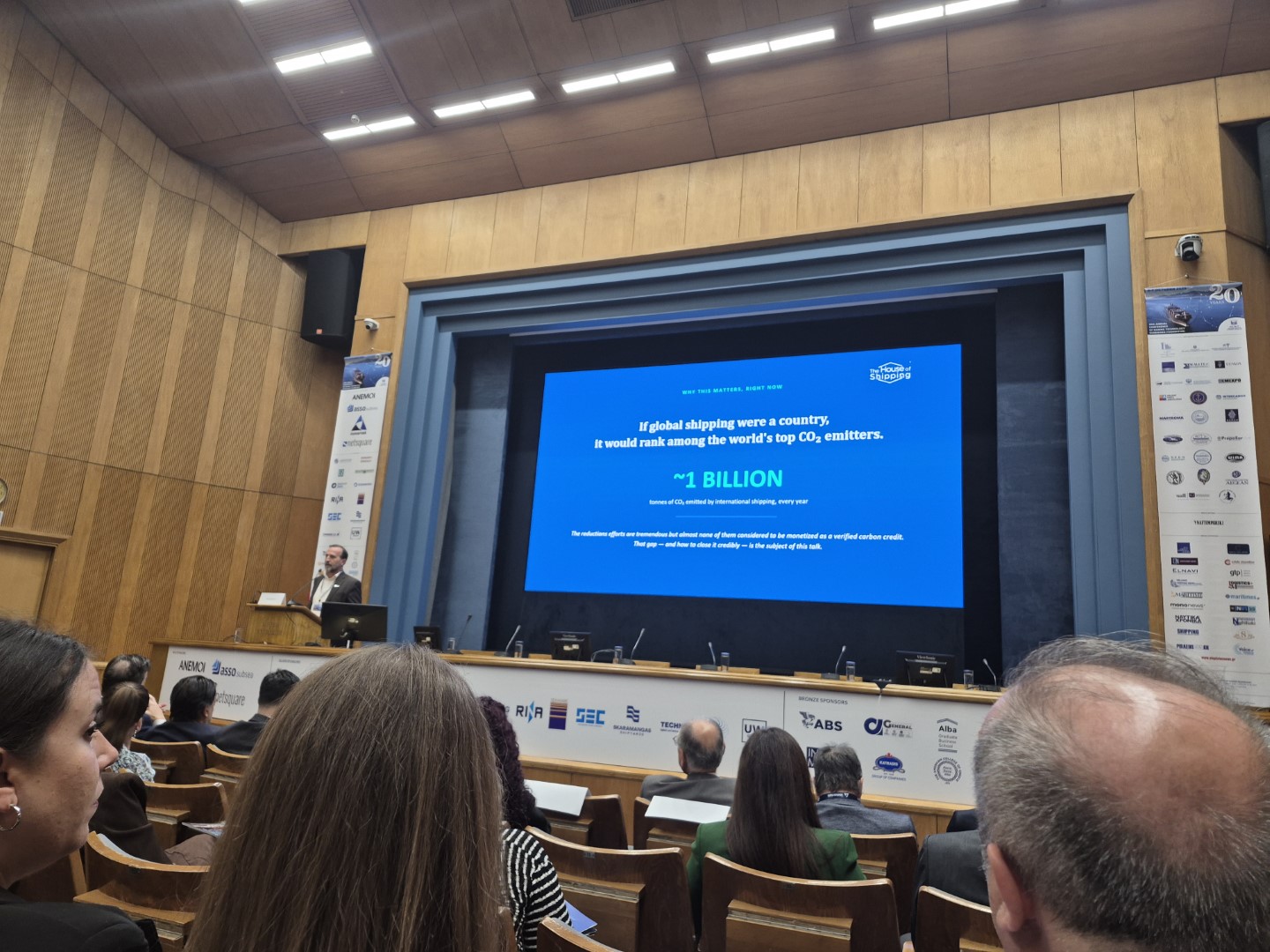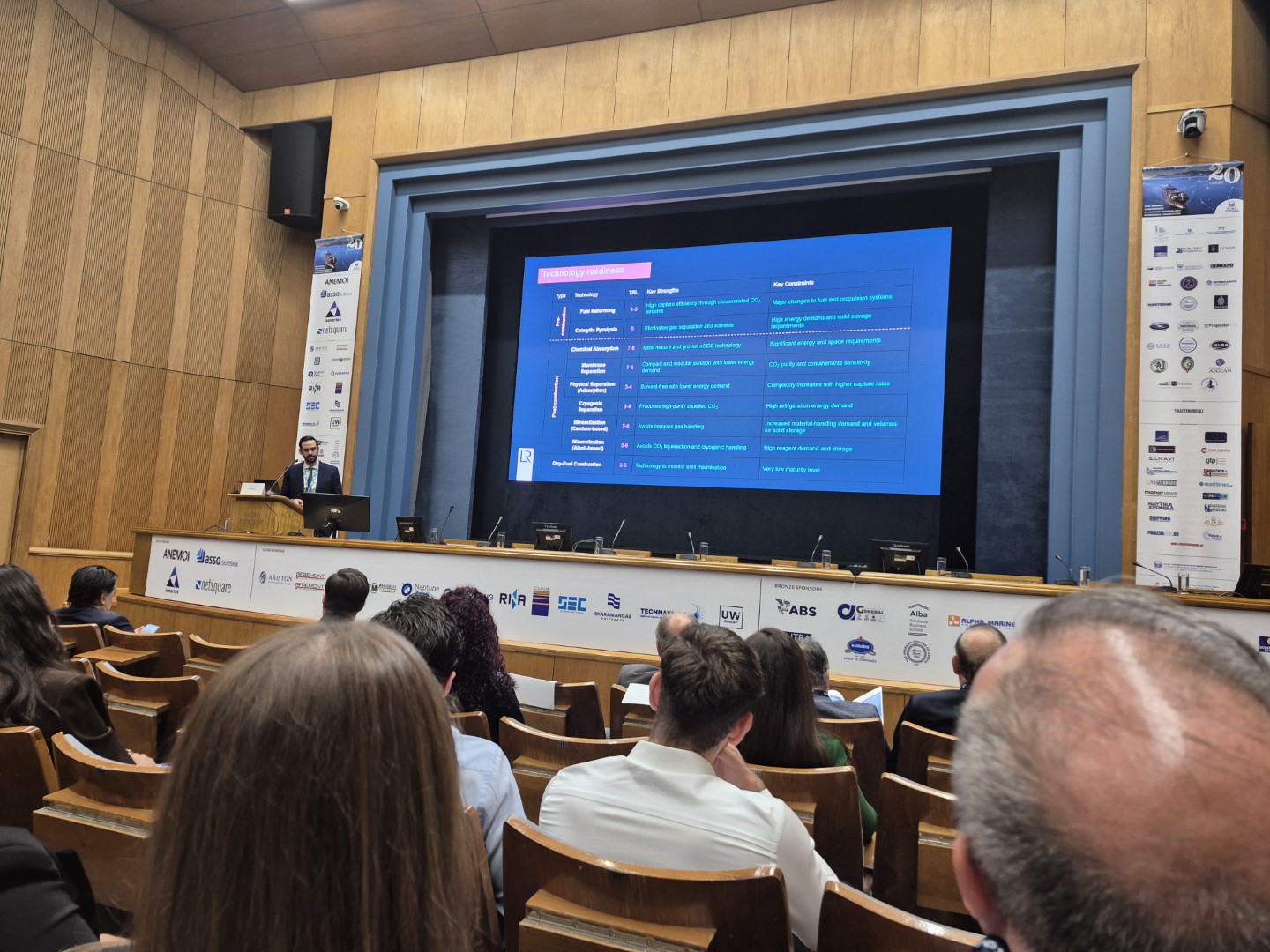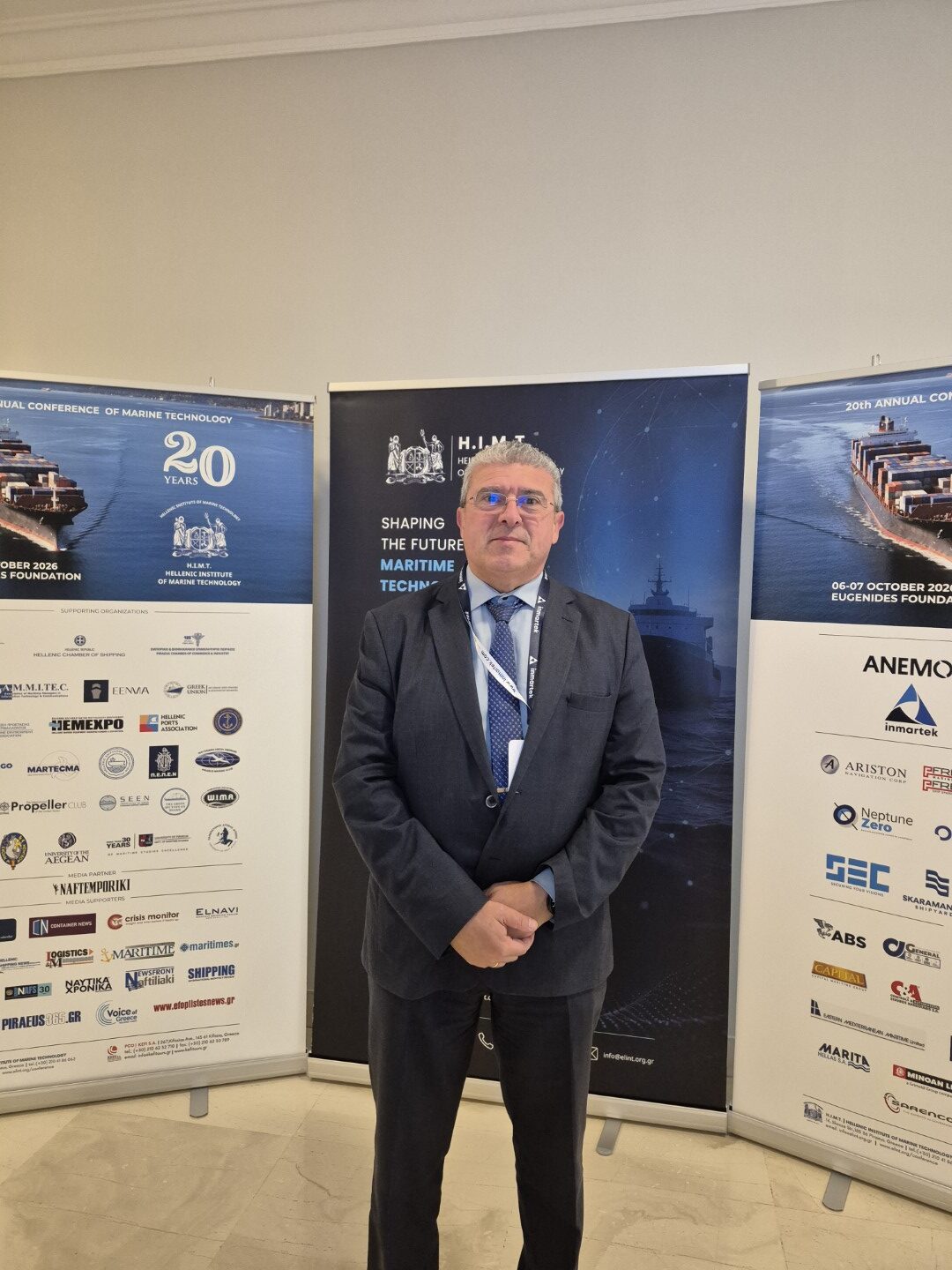
EUDIMA, represented by its CEO, Commodore (ret.) Antonios Boumpas, attended the 20th Annual Marine Technology Conference, organised by the Hellenic Institute of Marine Technology (H.I.M.T.) on 6 and 7 October 2026 at the Eugenides Foundation in Athens. The anniversary edition, which according to the organiser drew more than 900 registrations, placed the energy transition, digitalisation and, above all, skills at the heart of the debate on the future of Greek and European shipping.
Twenty Years of Marine Technology Dialogue
H.I.M.T., founded in 1972, is an independent scientific organisation linking research, academia and the shipping industry, and its annual conference has become a focal event in Greece for discussing technological advances in shipping. George Pratikakis, President of H.I.M.T., opened the proceedings by pointing to the pressures of the energy transition, digitalisation, artificial intelligence (AI) and cybersecurity. Investment in innovation and in human capital, he argued, is a precondition for the competitiveness of Greek shipping. As also reported by Naftemporiki, he added that the coming years will be decided by who develops the best technologies, designs safer and more efficient ships, makes the most effective use of data and, above all, invests most in people and knowledge.
Competitiveness Built on Workable Technology and People
The opening addresses converged on a shared point, the technological transition has to be workable, economically viable and accompanied by investment in people. George Alexandratos, President of the Hellenic Chamber of Shipping, described shipping as standing at a historic turning point and called for realistic, well-founded solutions that can be turned into commercially viable applications. Vassilis Korkidis, President of the Piraeus Chamber of Commerce and Industry, framed the link between shipping and high technology as a lever for moving beyond maritime strength towards new added value, built on innovation, digital infrastructure, research and domestic investment.
Dionysios Theodoratos, President of the Association of Passenger Shipping Companies, turned to the position of Greek coastal shipping. According to Naftemporiki’s account of his remarks, Greece represents about 2% of the EU population but 18% of European coastal shipping, which in his view strengthens the case for a louder Greek voice in European decision-making. He also pointed to the recovery of Greek shipyards and to the prospect of Greek ferries being maintained, upgraded and, in time, built in the country. Dr Matthew Maheras, President of the Association of IT Managers in Shipping (AMMITEC), stressed that digital transformation is first of all a question of people. The more advanced ships and their systems become, the more they depend on staff who understand the technology rather than merely operate it.
Addresses also came from the academic and naval training community, including Dr Ioannis Chatzigeorgiou, Rector of the National Technical University of Athens (NTUA), Dr Dimosthenis Kyriazis, Rector of the University of Piraeus, and Dr George Galanis, Dean of the Hellenic Naval Academy, reflecting the weight the sector now places on education alongside technology.
From Alternative Fuels to Cybersecurity
Across the two days, scientific papers and technology presentations covered energy efficiency and alternative fuels, emissions reduction, propulsion systems, digitalisation, AI, cybersecurity, ship and equipment safety, and developments in the shipbuilding industry. The call for papers also listed the European shipbuilding strategy, the financing of European shipbuilding, shipbuilding defence and security, and the role of small and medium-sized enterprises (SMEs) among the conference’s thematic areas, topics that sit where industrial and security policy meet.
Two panel discussions framed the wider context. The first, Powering Shipping Through Uncertainty: Alternative Fuels, Safety Challenges and Geopolitical Realities, looked at the move to alternative fuels alongside safety and geopolitical developments. The second, Profitable Waters Ahead? Navigating Market Volatility in a Changing Maritime Economy, addressed market fluctuations and the prospects for sustainable growth and profitability. Companies also used the accompanying technology exhibition to present their solutions.
Building the Maritime Workforce of the Future
The proceedings culminated in the roundtable Ships Are Changing Faster Than People: Building the Maritime Workforce of the Future, moderated by Dr Nikolaos Liapis, Director of H.I.M.T. Speakers from shipping associations, shipbuilding and corporate sustainability discussed the need for the maritime workforce to adapt to rapid technological and operational change, and the importance of developing new skills for the industry of the future. It was a fitting end to a conference in which discussions on fuels, digitalisation and safety repeatedly came back to skills.
The European Dimension: Skills, Shipyards and Dual-Use Industry
These themes align closely with the EU Industrial Maritime Strategy, which the European Commission adopted on 4 March 2026 together with an EU Ports Strategy. The Strategy recognises shipbuilding as a strategic dual-use sector, launches an EU Industrial Maritime Value Chains Alliance, and includes a “Shipyards of the Future” research and innovation flagship call under Horizon Europe. It also addresses the re-skilling of shipbuilding workers and seafarers, which is precisely the concern that shaped the Athens roundtable. The revival of Greek shipyards, raised in the opening addresses, also connects with the picture EUDIMA described in its coverage of Posidonia 2026, where shipyards serving both commercial and naval programmes were already part of the conversation.
EUDIMA’s Engagement
For EUDIMA, the conference offered a close reading of how Greece’s maritime technical community sees the next phase of the industry. Three observations stand out. Technology adoption is increasingly limited less by engineering than by skills, financing and regulatory clarity. Shipbuilding capacity and the workforce that sustains it are now treated as strategic questions, not only commercial ones. And the line between civil maritime innovation and security applications is becoming thinner, in areas such as cybersecurity, autonomy and digital systems.
These points feed directly into EUDIMA’s work in maritime consultancy and EU funding strategy, where Horizon Europe, the European Defence Fund (EDF) and the European Defence Industry Programme (EDIP) offer routes for projects that combine civil maritime know-how with security relevance. Understanding where the industry feels the constraints, whether in skills, financing or shipyard capacity, helps EUDIMA frame projects and partnerships that respond to real needs.
Europe’s maritime industrial ambitions will be won as much through skills and shipyard capacity as through strategy documents. The next test is implementation, as the EU Industrial Maritime Strategy translates into the Value Chains Alliance, research and innovation calls and funding opportunities, a process EUDIMA will follow closely. Thank you to H.I.M.T. and its President, George Pratikakis, for hosting a well-organised 20th anniversary edition.