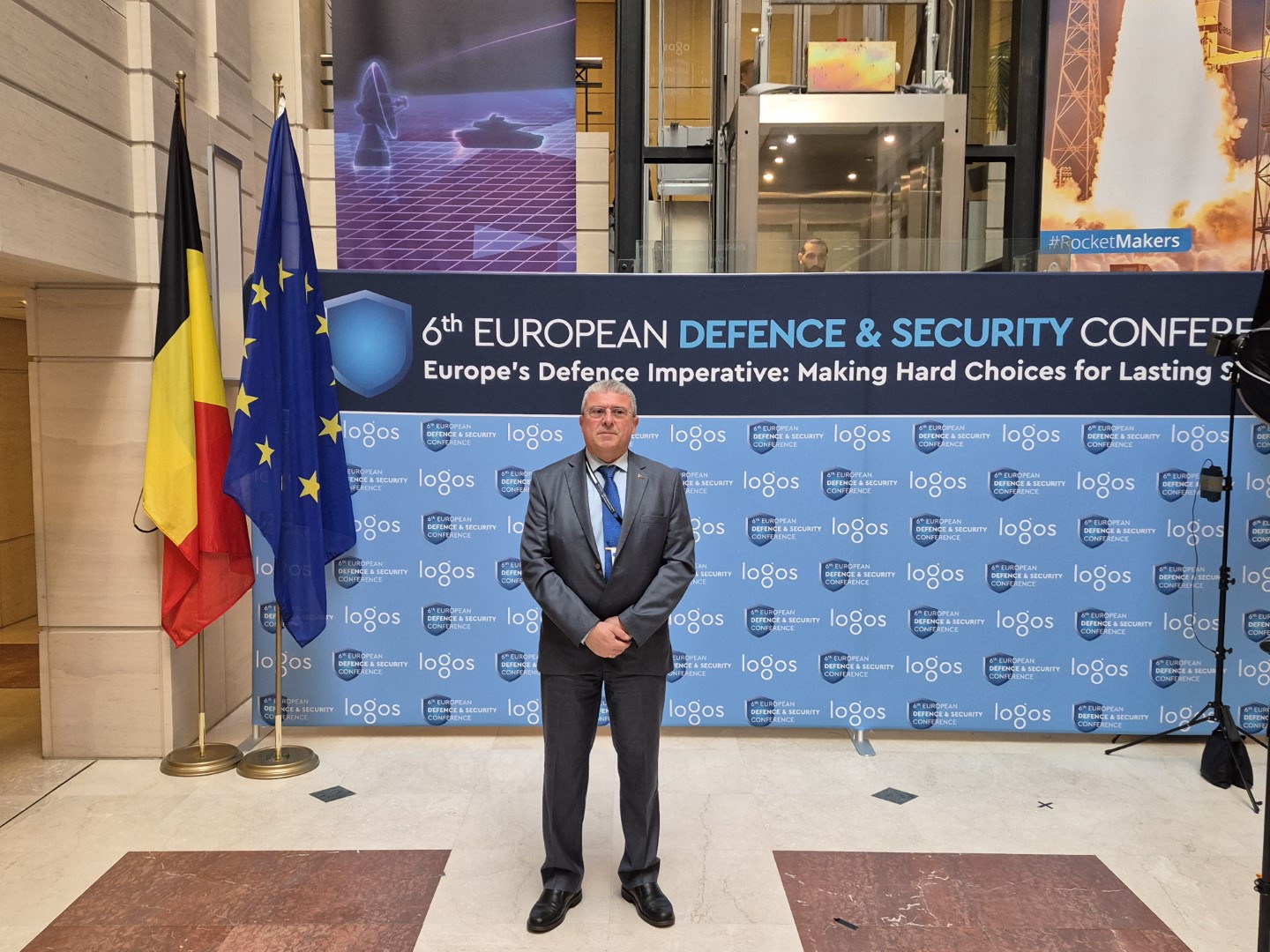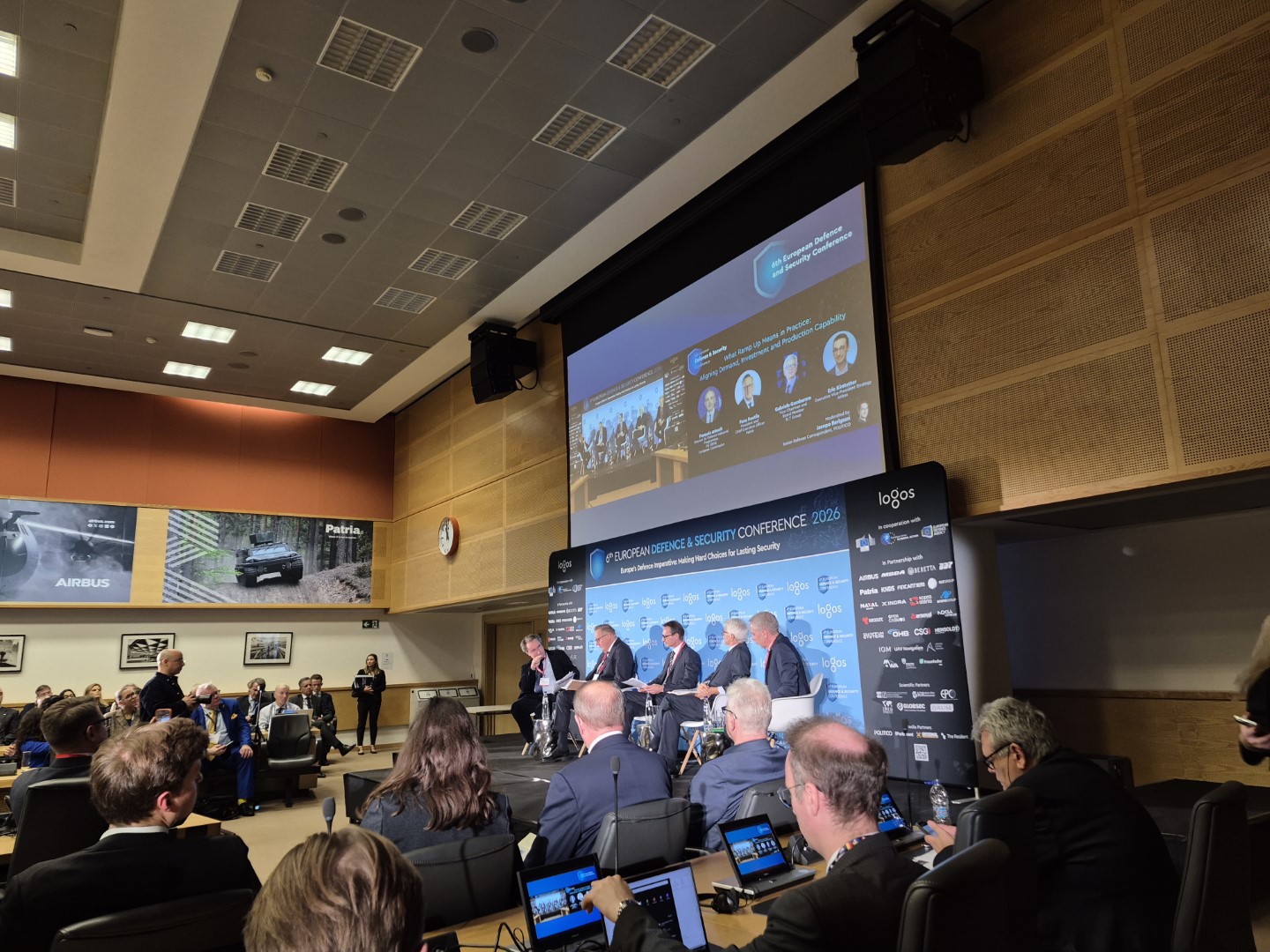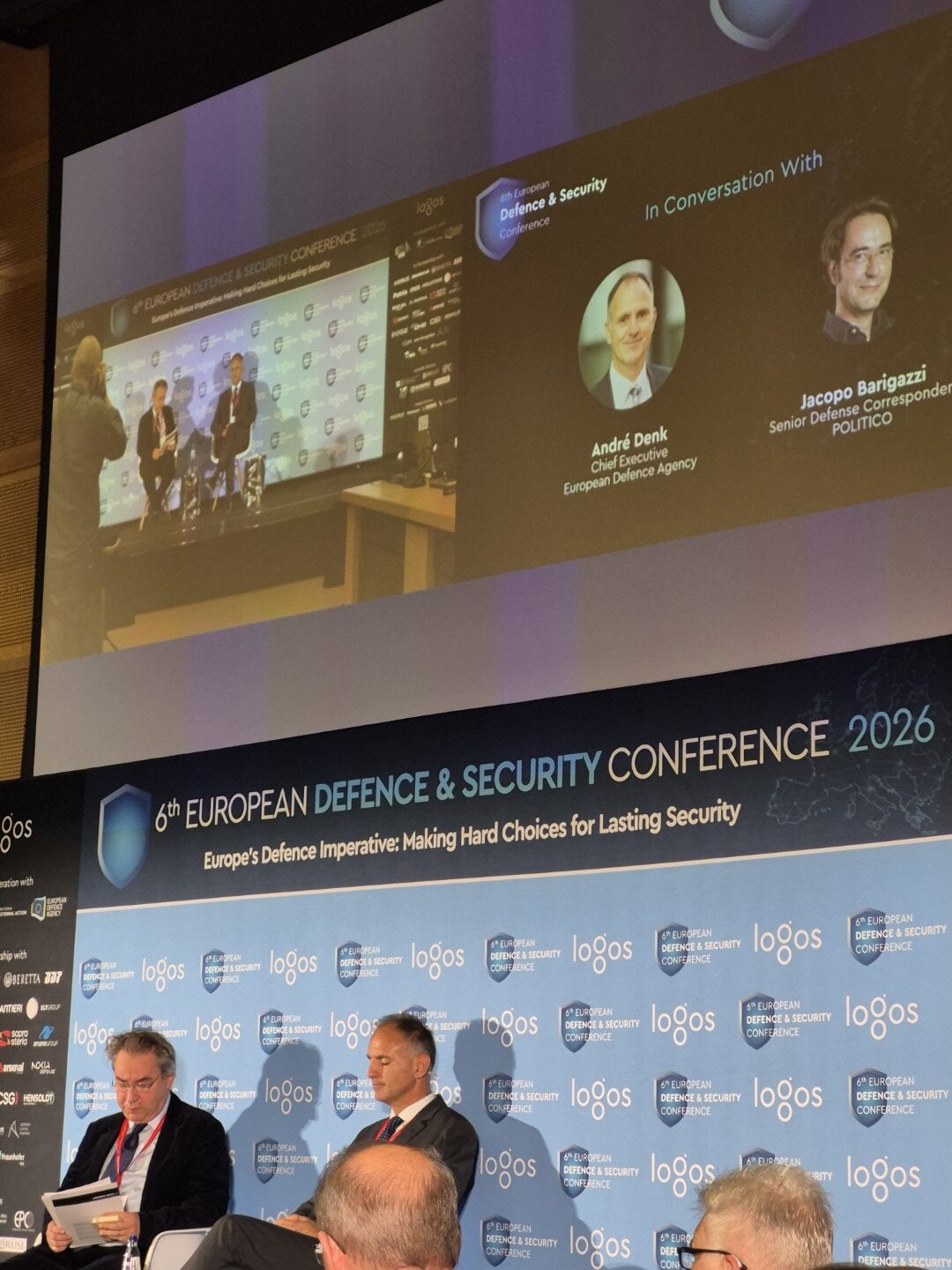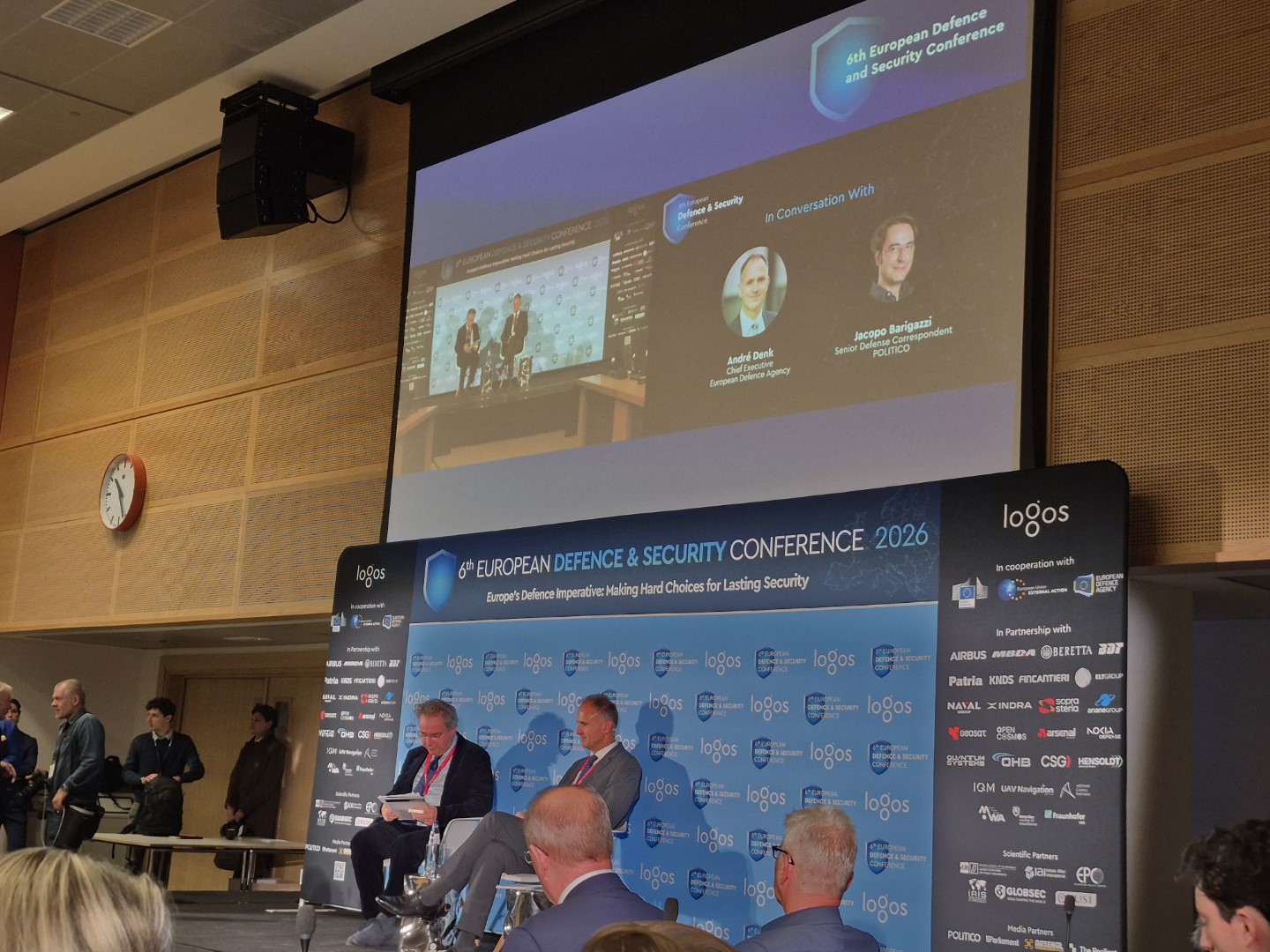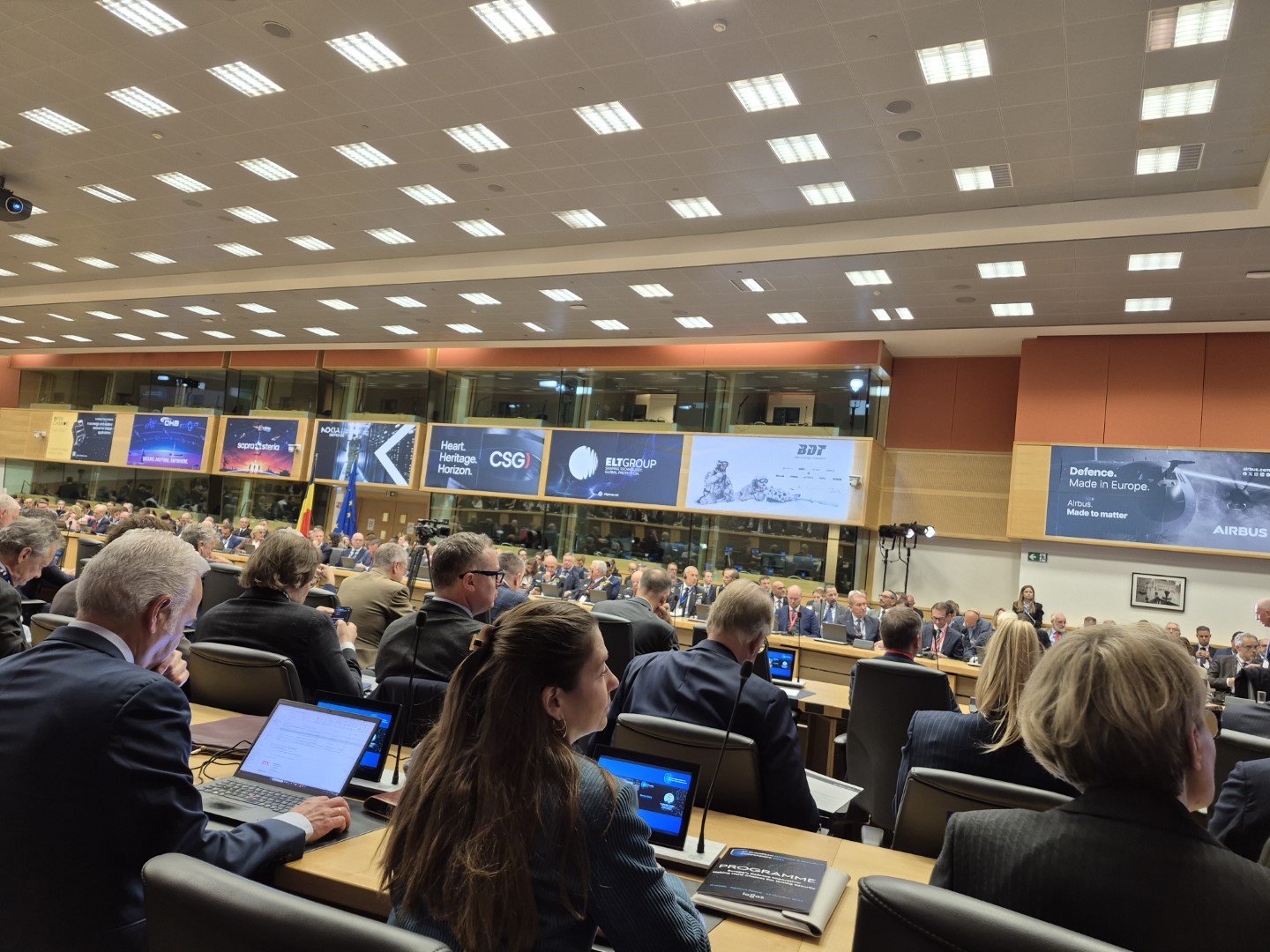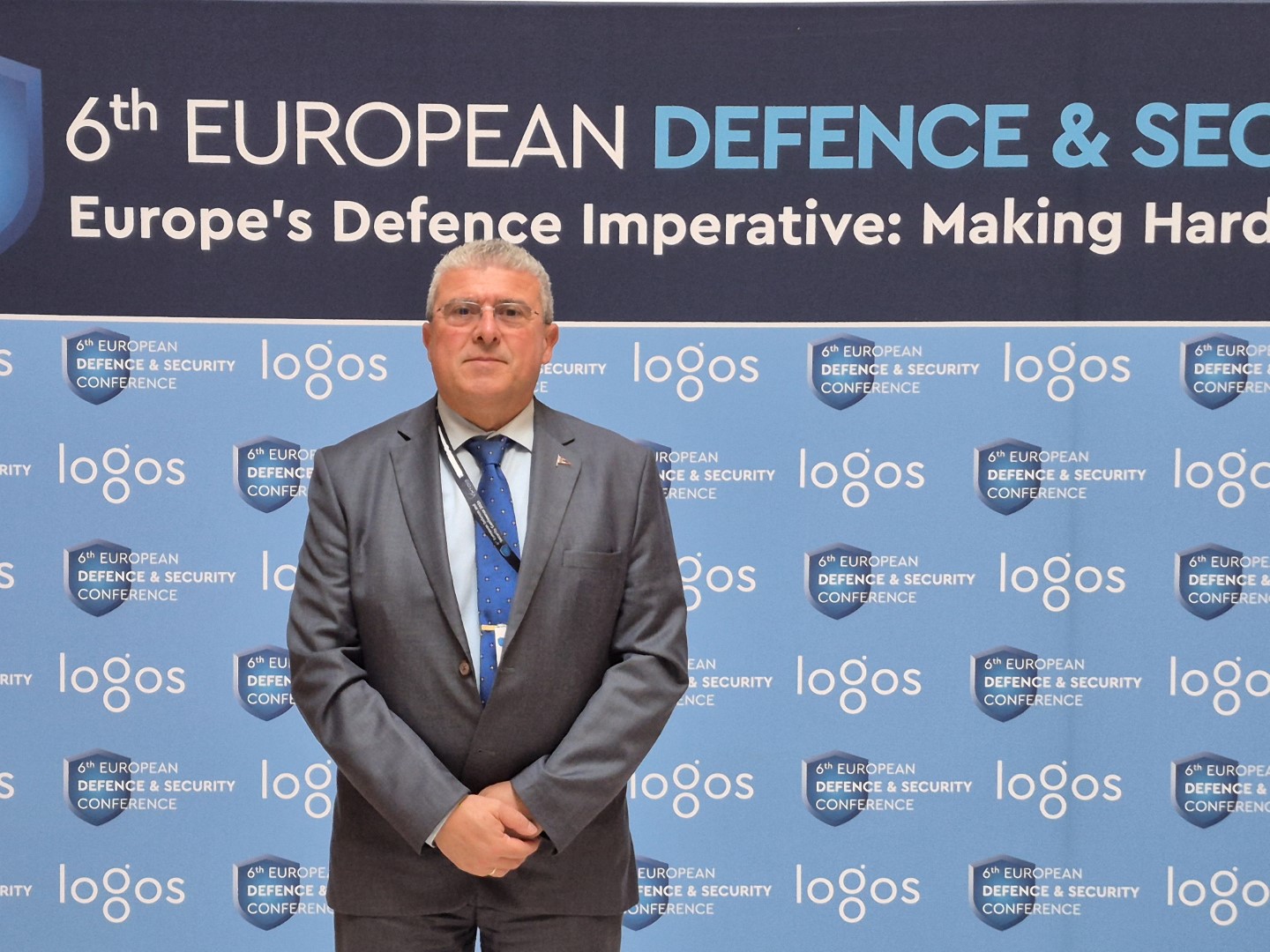
Europe’s defence agenda is negotiated in separate rooms: requirements in one, industrial projects in another, money and infrastructure in others. The 6th European Defence & Security Conference, titled “Europe’s Defence Imperative: Making Hard Choices for Lasting Security”, brought them together at the Egmont Palace in Brussels on 29 October 2026. EUDIMA followed a programme of more than twenty sessions in parallel tracks, organised by logos public affairs together with Business Bridge Europe, which launched the series in 2021, and with the Centre for Security, Diplomacy and Strategy (CSDS) of the Vrije Universiteit Brussel as scientific partner.
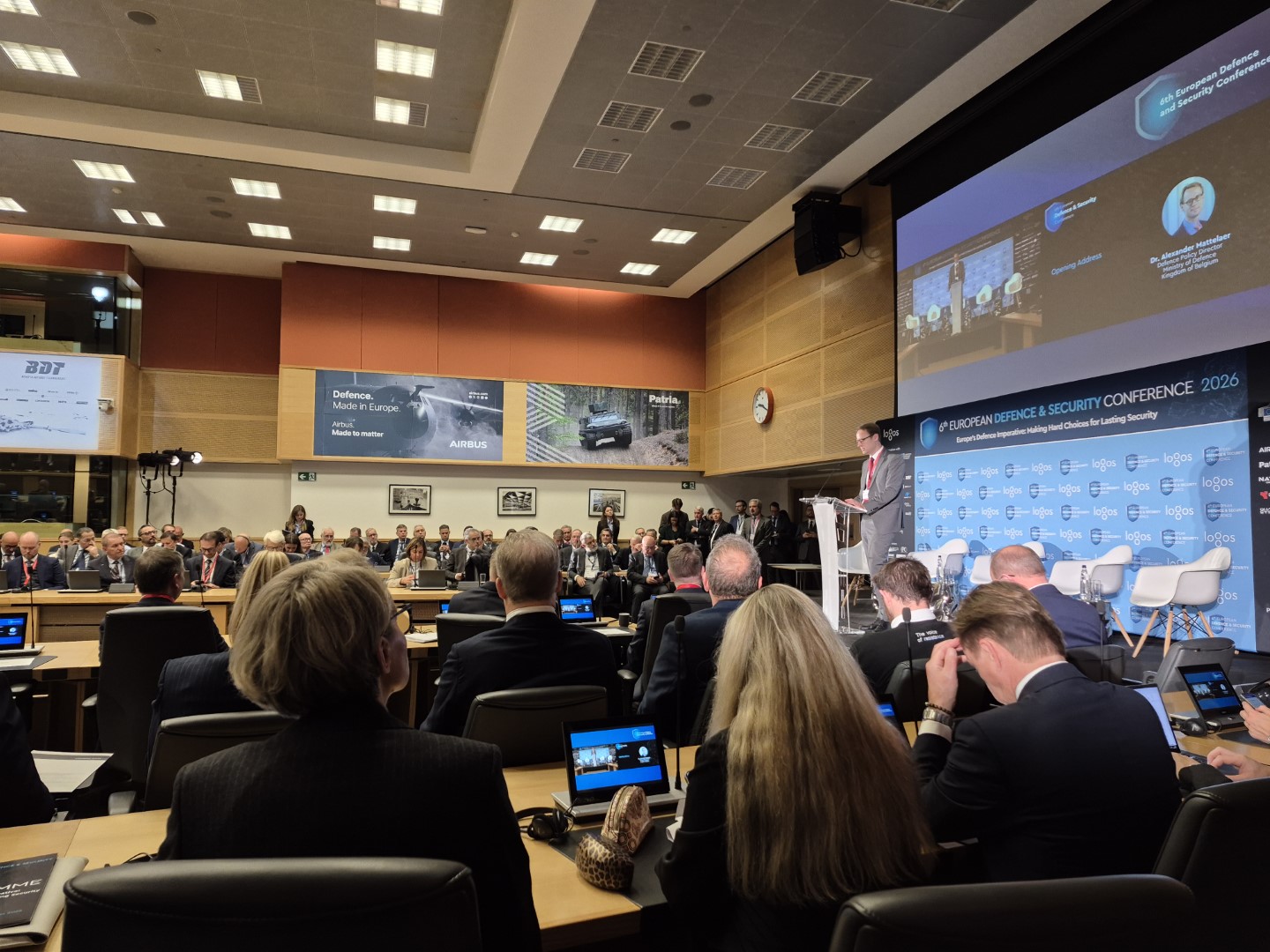
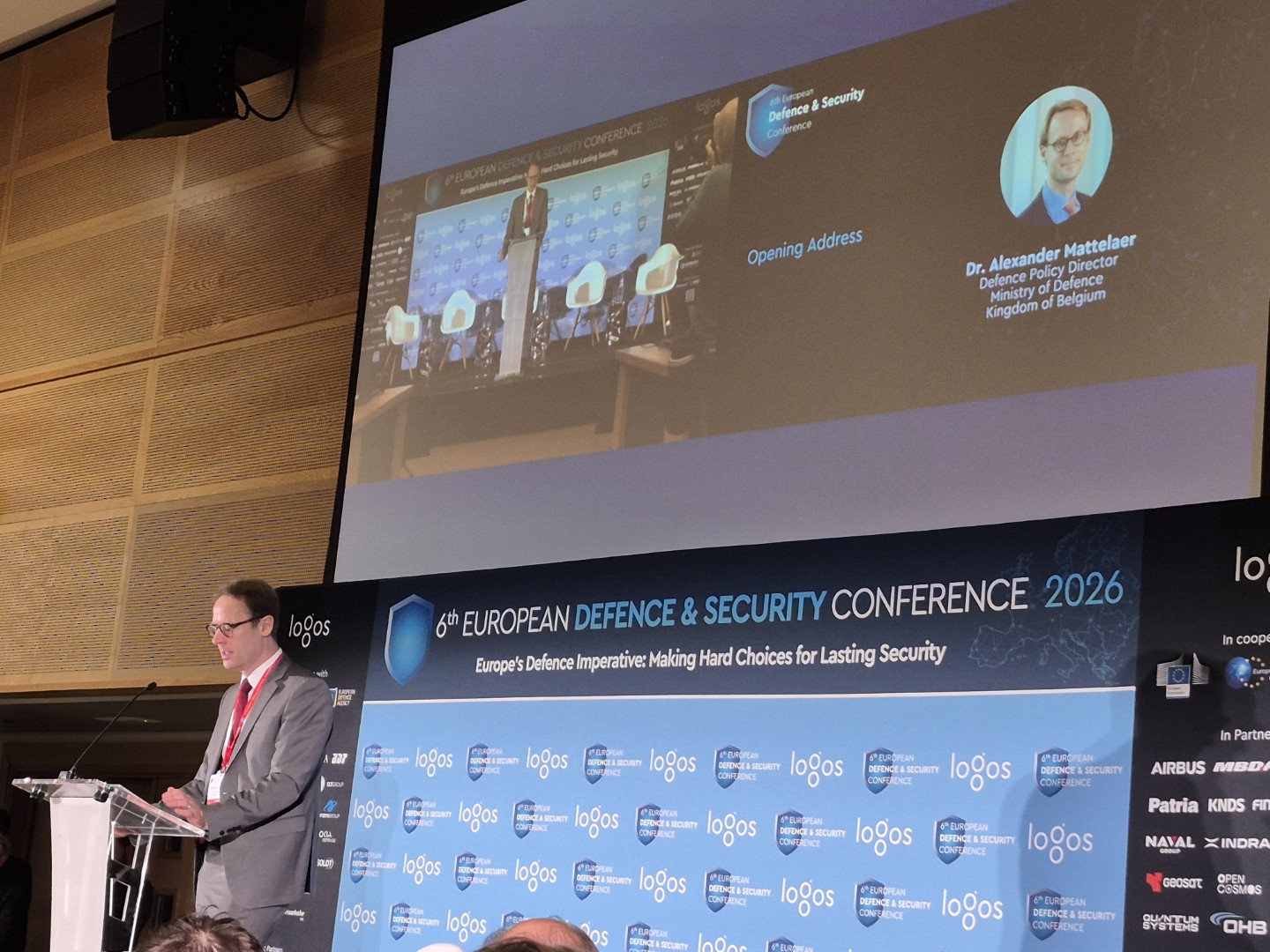
The day opened with a video message from Andrius Kubilius, European Commissioner for Defence and Space, who urged Europe to keep its ambition high, with more production, resilient supply chains and more collaborative programmes. Dr Alexander Mattelaer, Defence Policy Director at the Belgian Ministry of Defence, then took the stage in place of Defence Minister Theo Francken, according to Belgian press coverage. He argued that the era of lasting peace is over and that Europe must take more responsibility for its own security, with credible deterrence even if US support becomes less reliable. According to the organisers’ account of his keynote, he also warned that Russia is now capable of a large-scale bombing campaign against targets across the continent, which makes the production of air defence munitions the priority.
European Preference and the Question of Industrial Capacity
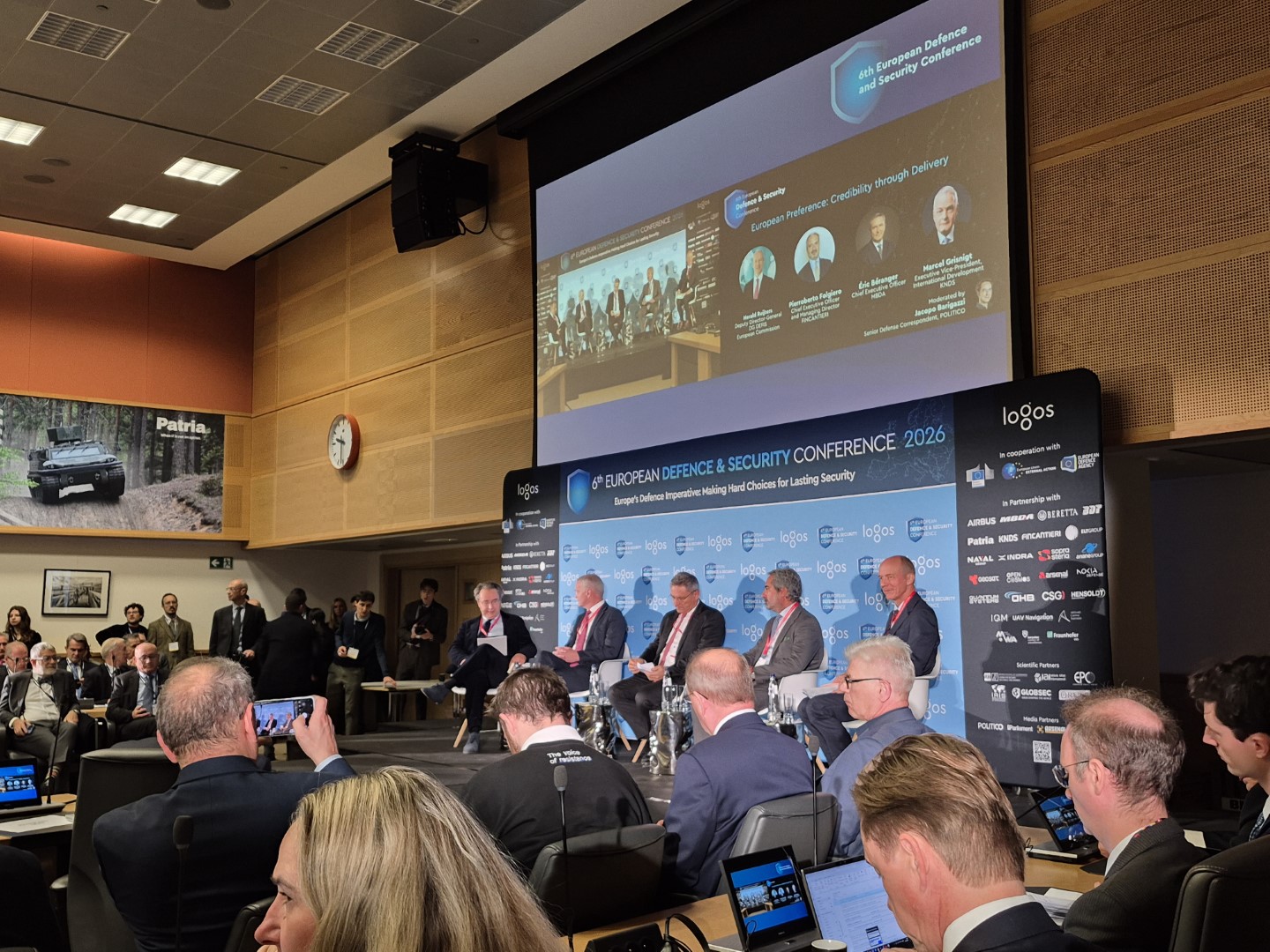
Belgium’s own line, as reported in the Belgian press, kept NATO at the core of collective defence and argued against duplicating structures, with smaller states tying their procurement closely to allies. It was a useful backdrop to the opening panel, “European Preference: Credibility through Delivery”. Herald Ruijters, Deputy Director-General at the Commission’s Directorate-General for Defence Industry and Space (DG DEFIS), joined senior executives from Europe’s shipbuilding, missile and land systems industries. They discussed whether public investment and procurement can strengthen the European industrial base while keeping cooperation with trusted partners open. The question is live because origin rules already shape access to the Security Action for Europe (SAFE) instrument and the European Defence Industry Programme (EDIP), a point EUDIMA examined after the Euronews Defence & Space Summit a month earlier. In conversation, André Denk, Chief Executive of the European Defence Agency (EDA), spoke about readiness and the Agency’s evolving role as new EU initiatives take shape. According to the organisers’ summary, he also highlighted innovation, procurement and the translation of Member States’ capability priorities into European ones.
From Military Requirements to Five Flagship Projects
The strongest thread of the day was the insistence that operational needs, not industrial convenience, should set priorities. A session on putting military requirements at the heart of defence industrial policy brought together General Frederik Vansina, Chief of Defence of Belgium, David Cvach, Deputy Secretary-General for Peace, Security and Defence at the European External Action Service, and national representatives. It asked how needs are identified, prioritised and aligned between capitals and Brussels.
The programme also followed the logic of the first five European Defence Projects of Common Interest (EDPCIs). The Commission proposed them on 3 July 2026, and the Council identified them on 28 September. They cover drones and counter-drones (DECODER), maritime and seabed defence (IMSD), space, air and missile defence including early warning (EU-FIAMD) and the Eastern Flank Watch. Following the Council’s decision, they became eligible for EU support under EDIP, with €325 million of the programme’s €1.5 billion for 2026 and 2027 allocated, according to the Council, to their establishment and initial deployment. The conference programme featured dedicated discussions in capability areas closely aligned with them: air and missile defence, maritime and seabed defence, drone and counter-drone systems, ground capabilities on the Eastern Flank, and space-based Earth observation. Across them the recurring questions were interoperability, sensors and command networks that work across borders, and procurement that can keep pace with technology.
Funding the Ambition: The Next MFF
EUDIMA followed the session “Designing the Next MFF to Sustain the Defence Ambition”. It opened with a video message from Elena Donazzan, Vice-Chair of the European Parliament’s Committee on Industry, Research and Energy (ITRE). The panel then included Tomasz Husak, Director for Defence Policy at DG DEFIS, and Camille Grand, Secretary General of the Aerospace, Security and Defence Industries Association of Europe (ASD). The debate looked beyond the size of the envelope to how it should be used. Speakers discussed predictable investment, flexibility as threats change, and concentrating EU money where cooperation adds most value, from strategic enablers and common capability priorities to resilient supply chains.
The numbers explain both the stakes and the uncertainty. The Commission’s July 2025 proposal for the 2028 to 2034 Multiannual Financial Framework (MFF) set aside €131 billion for defence, security and space within the European Competitiveness Fund (ECF), five times the current level. The Irish Presidency’s revised negotiating box of 10 October proposed total commitments of €1.622 trillion in 2025 prices, 8% below the Commission’s proposal. EU leaders discussed the framework at the European Council of 15 and 16 October without reaching an agreement, while continuing to pursue a settlement before the end of 2026. The programme side of the argument came from Joachim Sucker, Director of the Organisation for Joint Armament Co-operation (OCCAR), whose keynote OCCAR reported itself. Drawing on more than twenty-five years of multinational armament cooperation, he argued that funding alone does not deliver capability. Governance, commitment, trust, industrial capacity, skilled people and cooperation sustained over many years matter just as much. He pointed to diverging national requirements, growing regulatory complexity, competing industrial interests and shifting political priorities as the recurring obstacles, and said that Europe’s security will be measured by the capabilities fielded and the deterrence achieved, not by the funding allocated or the initiatives launched.
Military Mobility: The Regulation Behind the Movement
EUDIMA also followed the panel “Military Mobility: A System for European Movement”. Its speakers included Lieutenant General Ernst Dobbenberg, Military Representative of the Netherlands to NATO and the EU, Maja Bakran Marcich, Deputy Director-General at the Commission’s Directorate-General for Mobility and Transport (DG MOVE), Tomasz Husak and an industry representative. They treated mobility as more than a transport problem. The discussion covered interoperability, civil-military coordination, digital capabilities and administrative procedures. It also covered how Member States, the EU, NATO and industry can coordinate investments for both rapid deployment and sustained movement in a prolonged crisis.
The legislative context made the session timely. The Commission’s military mobility package of November 2025 proposes a single permission procedure with a maximum processing time of three days, and a European Military Mobility Enhanced Response System (EMERS) for accelerated transport in exceptional circumstances. The Council agreed its mandate on 17 June 2026. Parliament’s committees adopted their position on 23 June, proposing among other things compensation for infrastructure managers when the emergency system is activated. Parliament’s plenary raised no objection on 8 July to opening talks, trilogue negotiations began on 16 July, and a second informal trilogue took place on 20 October. EU leaders have asked for an agreement by the end of 2026, and Commissioner Kubilius warned in early October against watering the text down.
Innovation Finance, Space, Data and Ukraine
Four further strands stood out. In a separate session on building an innovative defence ecosystem, Robert de Groot, Vice-President of the European Investment Bank (EIB), delivered a keynote on how public finance can help bridge financing gaps and mobilise private investment as defence companies scale. On space, a session on Earth observation governmental services examined how existing capabilities could become a coherent service for security and defence, with roles for the Commission, Member States, the European Space Agency (ESA) and the EU Satellite Centre. The Council reworked this planned service in its June position on the ECF, setting out a stepwise approach: pooling and sharing existing resources, a gap analysis, and then a Council decision on whether to develop a satellite constellation, with an essential role for the EU Satellite Centre in providing data and services. On data, a session on defence data spaces weighed secure sharing, artificial intelligence and cloud infrastructure against national control.
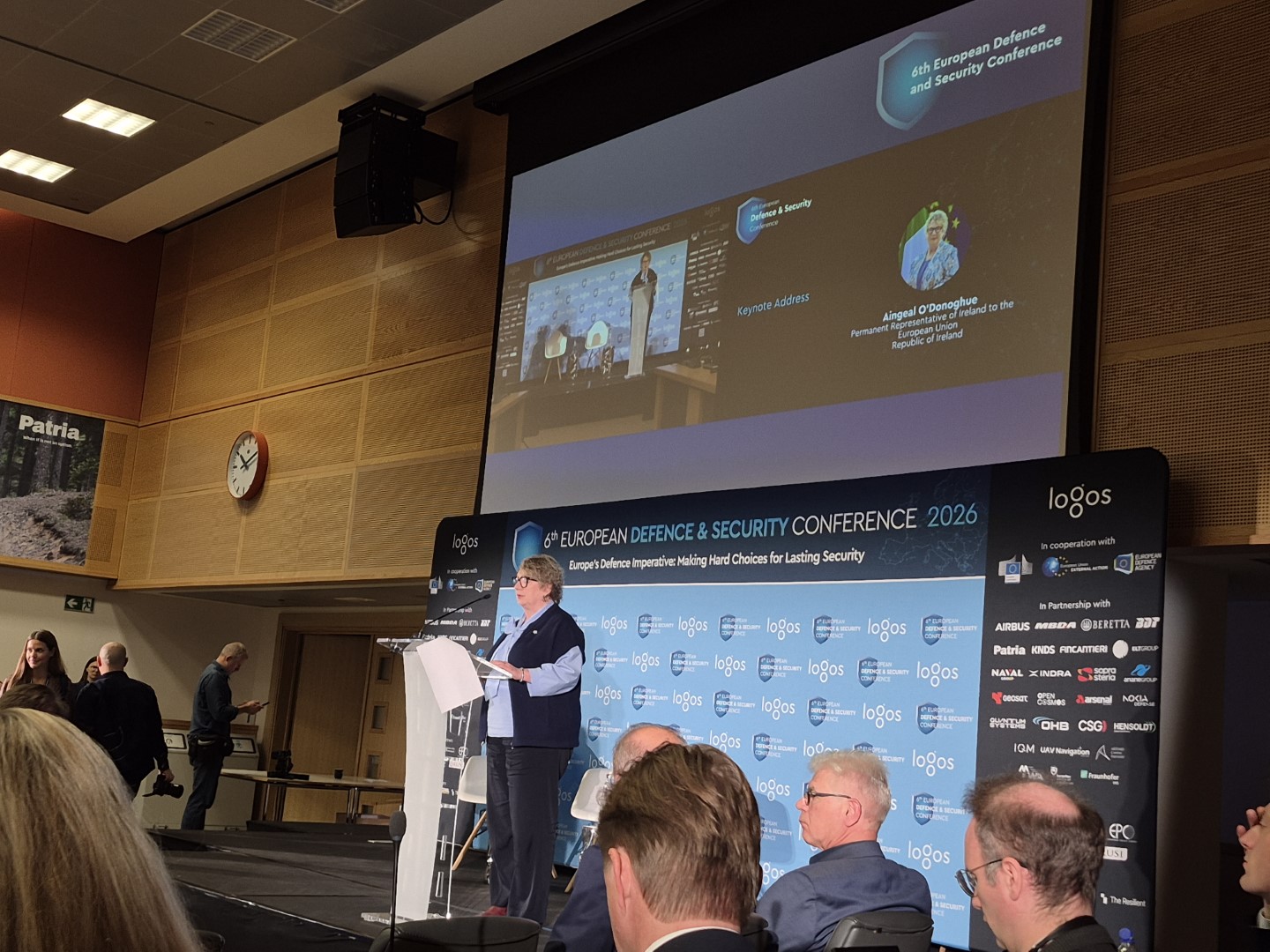
On Ukraine, Arseniy Yatsenyuk, Chairman of the Kyiv Security Forum and Prime Minister of Ukraine from 2014 to 2016, argued that Ukraine must be given the means to prevail. Aingeal O’Donoghue, Permanent Representative of Ireland to the EU, said that the security of Ukraine and the security of Europe are inseparable, pledged continued support including through the European Peace Facility, and said Ireland aims to help Ukraine move closer to EU membership. According to the organisers, she added that any peace settlement must respect Ukraine’s sovereignty and territorial integrity. A dedicated session drew on Ukrainian experience with uncrewed systems to stress a continuous cycle between the battlefield, technological adaptation and deployment.
EUDIMA’s Perspective
For EUDIMA, the day showed the European defence funding chain in one place, from requirement to project to budget line to the infrastructure that moves the result. Three points stand out for advisory work. First, the EDPCIs are a significant new strand of EDIP, so companies, and SMEs in particular, will increasingly need to show how their offer fits the capability gaps and supply chains of these projects, alongside EDIP’s other tools. Second, the ECF consolidates fourteen existing funding instruments, and the Council’s June position stresses continuity with the existing defence industrial framework, notably EDIP, and stronger Member State control over award decisions. With the budget still open, the eligibility and governance rules clients will face from 2028 need to be followed, not assumed. Third, military mobility and maritime and seabed defence both depend on dual-use infrastructure, including ports, but they follow distinct policy and funding routes: military mobility through its own regulation and the Connecting Europe Facility, maritime and seabed defence through the EDPCI route under EDIP. EUDIMA’s maritime work, including its report from Defending Europe at Sea, follows that second route closely.
Closing
Europe has now named its first flagship projects, and whether the budget and the road, rail and port network follow will be decided in the coming weeks. Leaders are aiming for an MFF agreement, and the co-legislators for a military mobility deal, by the end of 2026, and further EDPCIs are expected to follow. EUDIMA thanks logos, Business Bridge Europe and the speakers for a well-organised and substantive conference.