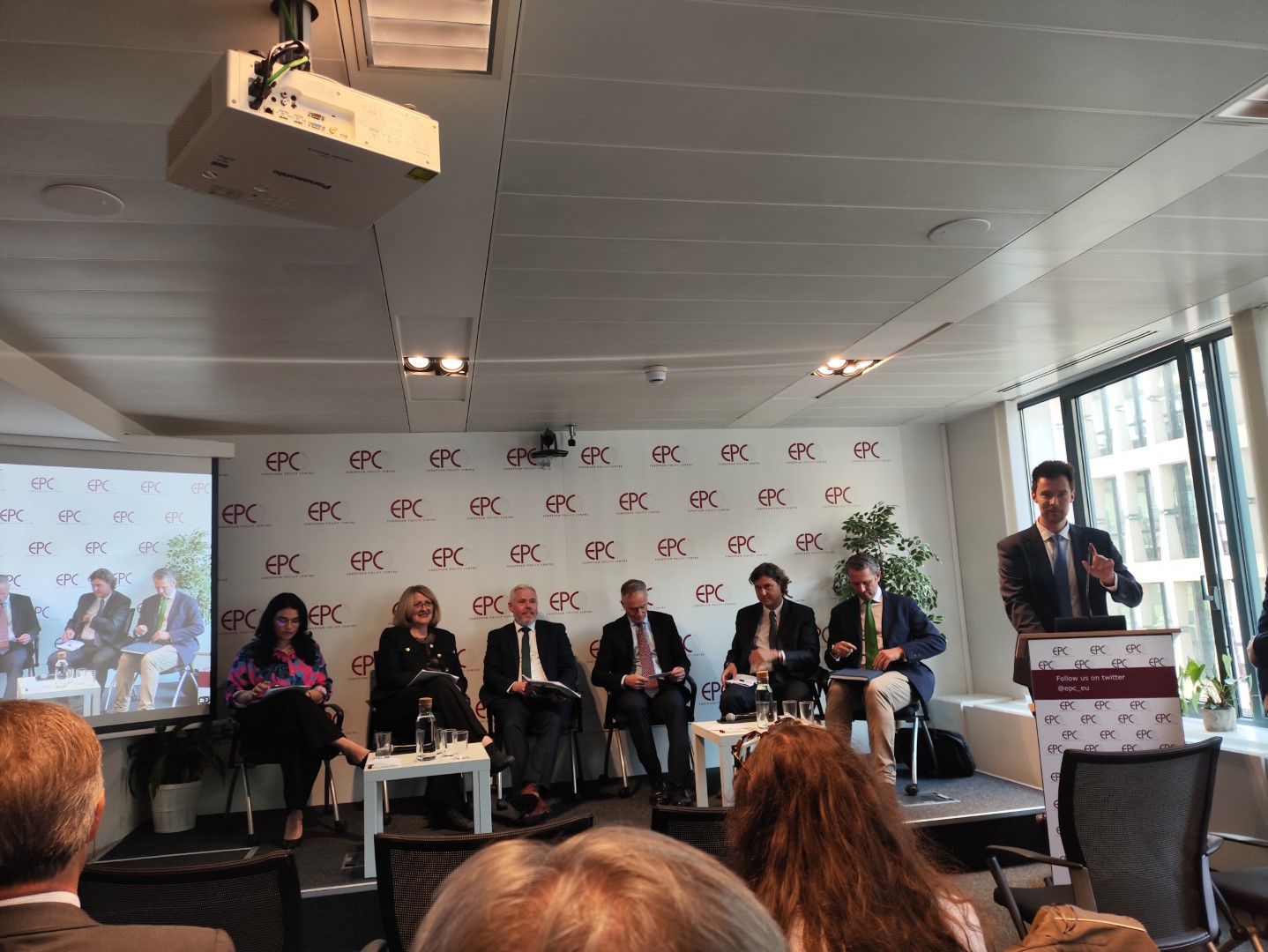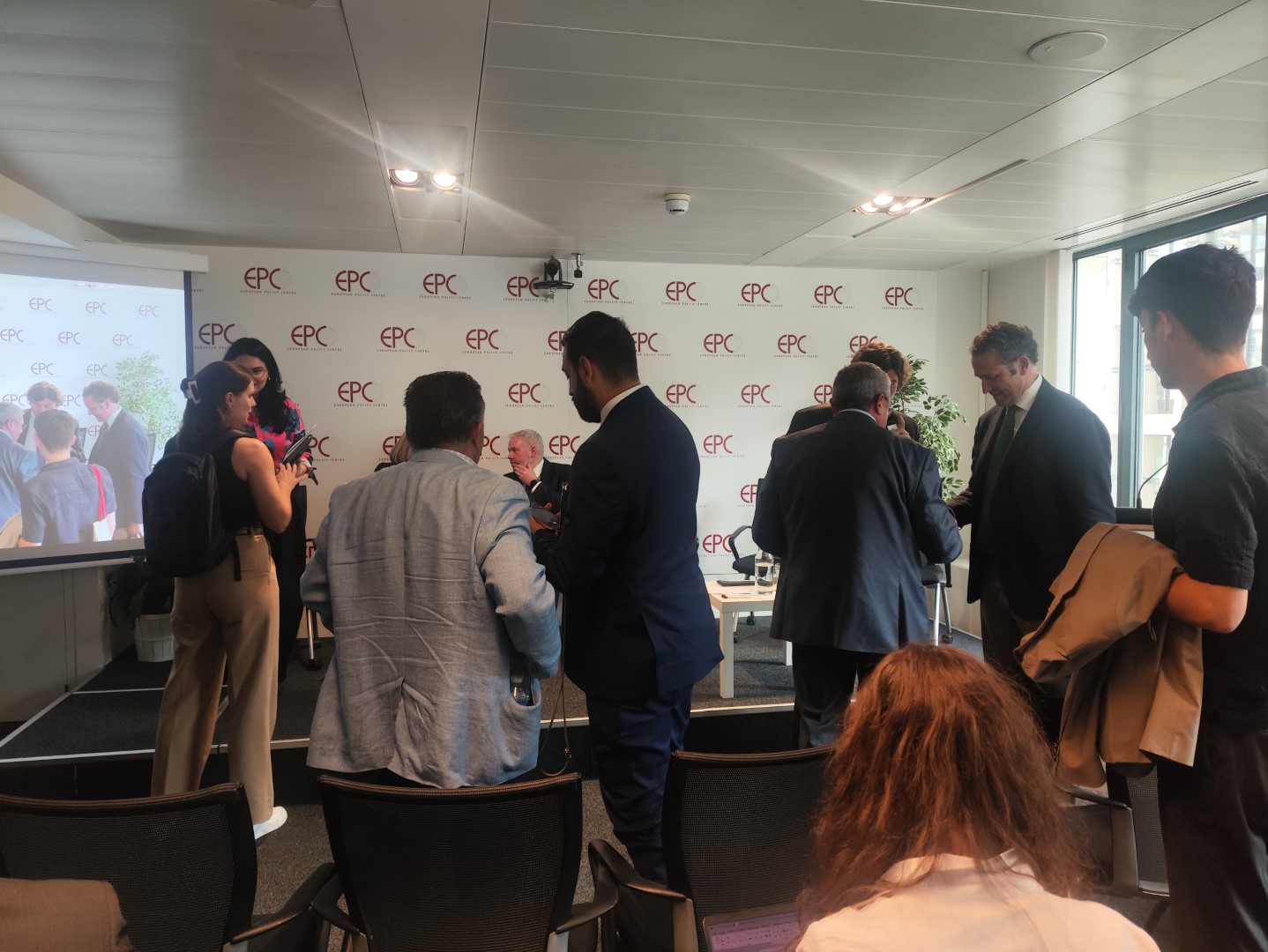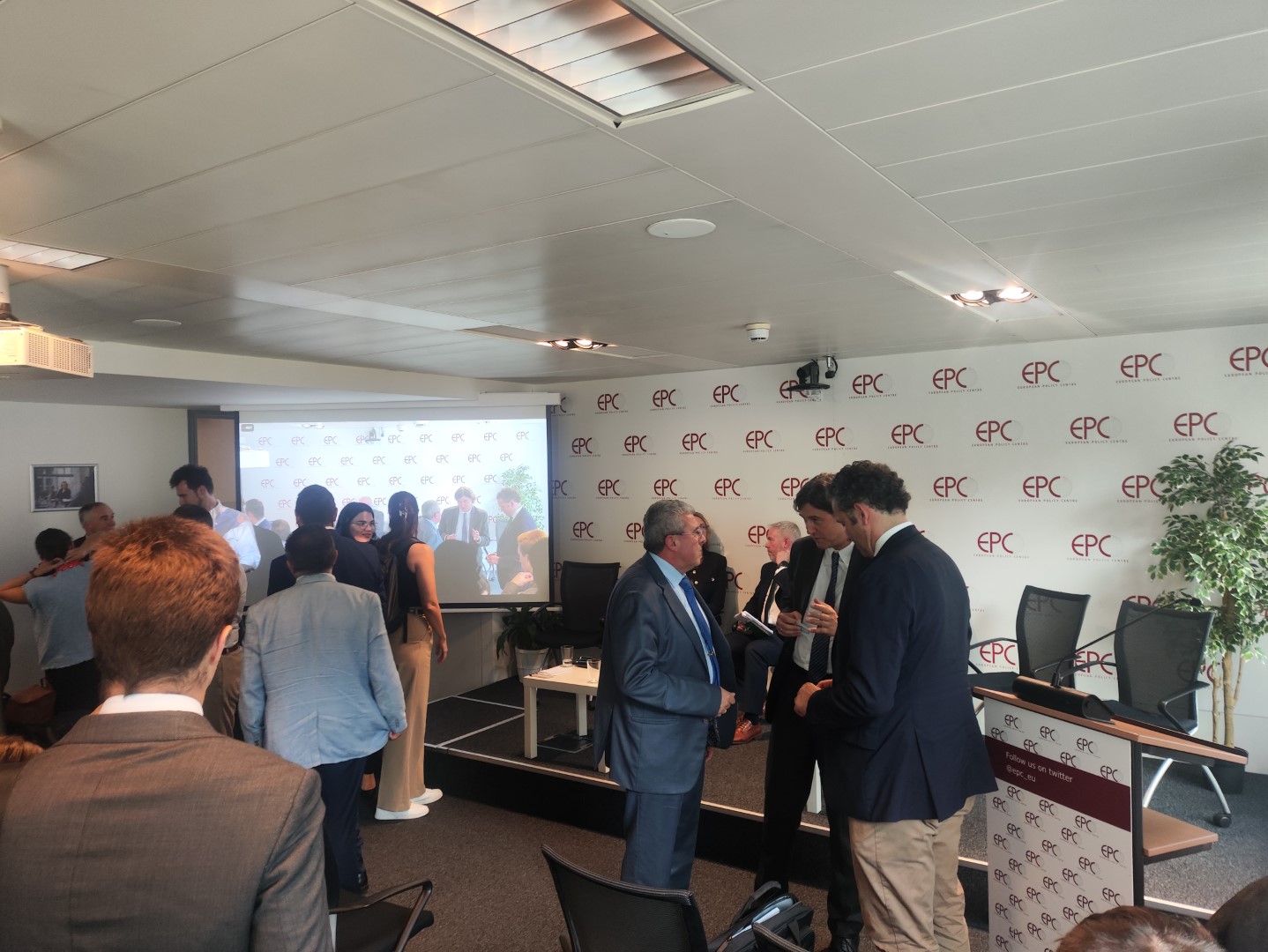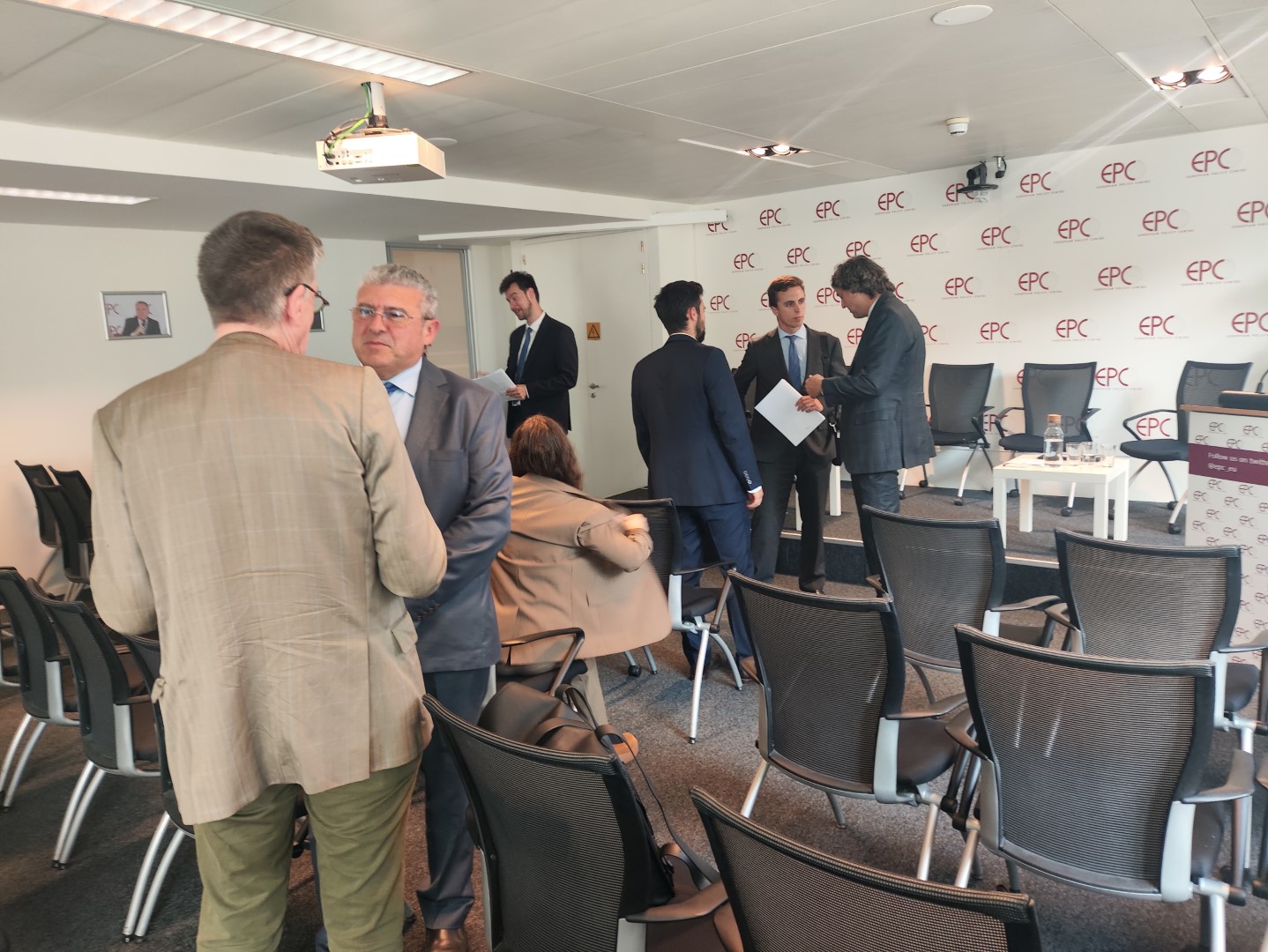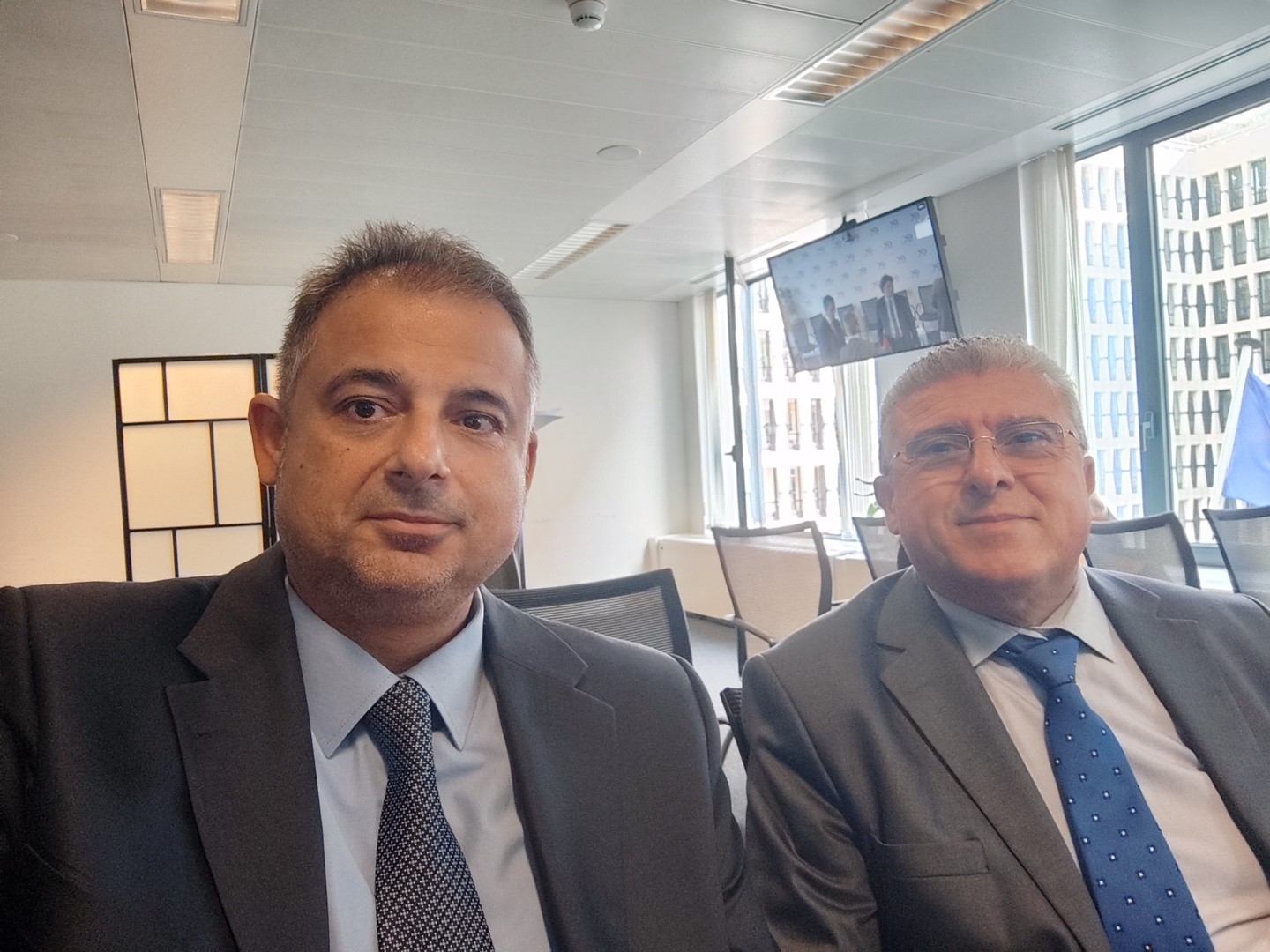
Europe’s economic dependence on the sea is growing faster than its ability to defend it. That was the starting point of a new policy brief launched on 1 October 2026 at the European Policy Centre (EPC) in Brussels, and the thread running through the policy dialogue Defending Europe at Sea: Building Europe’s Naval Edge, organised by the EPC in partnership with SEA Naval. EUDIMA followed a discussion that brought together the European External Action Service (EEAS), the European Commission, the European Defence Agency (EDA), the Irish Presidency of the Council of the EU and Europe’s naval shipbuilding industry.
A policy brief built around mass precision
The dialogue marked the launch of the EPC policy brief Defending Europe at Sea: Naval Power Needs Industrial Strength, written by Chris Kremidas-Courtney and Mihai Chihaia, Policy Analyst at the EPC. Its analysis draws on recent naval operations in the Black Sea, the Red Sea and the Strait of Hormuz. Cheap, networked precision weapons and uncrewed systems now allow states and non-state actors to disrupt shipping without controlling the sea, and the authors conclude that Europeans must be ready for high-intensity naval warfare. Interception alone, they argue, is not sustainable given the cost imbalance between drones and interceptors.
The brief sets out four priorities. The first is to treat the European maritime industrial base as a strategic sector. The second is to build a maritime economic security system against strategic dependencies. The third is to anchor EU investment, above all in research and development, in the operational needs of navies. The fourth is to integrate the protection of critical infrastructure into European policies and roadmaps. On funding, the authors call for the European Competitiveness Fund to guarantee a minimum investment threshold for defence R&D, with a fair share for naval and underwater systems.
From threats to capabilities: the key messages from the panel
Alison Weston, Senior Coordinator for Maritime Security at the EEAS, described maritime challenges as an extension of those on land. Traditional threats such as piracy persist, while new vulnerabilities are emerging around subsea cables, pipelines and energy infrastructure, where artificial intelligence is eroding the protection once offered by depth. She pointed to the updated EU Maritime Security Strategy of 2023 and to a joint implementation report and Council conclusions expected under the Irish Presidency. David Kiely, Maritime Attaché at the Permanent Representation of Ireland to the EU, stressed the whole-of-government approach behind Ireland’s first national maritime security strategy and the need to bring maritime security to the top of the political agenda.
The Chairman of SEA Naval Adm. (r) Stanislas Gourlez de La Motte, argued that the lessons of recent conflicts, fought largely in confined waters, must be read within a broader geopolitical picture. He warned of a “democratisation of weapons” that lets actors without sophisticated navies use highly effective systems, and noted that new threats never replace old ones. Defending the value of Europe’s shipyards as a source of resilience, he said that SEA Naval had delivered its final report on the European Combat Vessel (ECV) to the EDA the previous day. The ECV is a family of modular frigates, backed by a letter of intent signed by Belgium, Cyprus, Greece, Italy, the Netherlands, Portugal and Spain.
From the EDA, Philip von Eberhardt, Project Officer for Maritime Capabilities Support, listed military mobility, speed, scalability and sustainability among the overarching challenges, and put detection first: “what we can’t detect, we can’t counter.” He pointed to the EDA’s MARSUR network as a tool to connect navies, law enforcement and other civilian actors in the space between peace and war.
From the part of the European Commission, Andrei Mungiu, Deputy Head of the Maritime Safety Unit at DG MOVE, presented the logic of the EU Industrial Maritime Strategy: a civilian and naval industrial base is in itself a strategic capability. He acknowledged that the proposed support scheme for dual-use ferries is still to be designed with its beneficiaries, and that a Commission study is assessing the minimum civilian industrial base needed to sustain naval capability. Europe, he added, must combine openness with strength: “We want to stay open and stay strong.”
Strategic sealift: EUDIMA’s question
For EUDIMA, the most relevant exchange concerned strategic sealift. EUDIMA’s CEO, Commodore (ret.) Antonios Boumpas, asked what mechanisms exist at European level to mobilise the merchant capacity controlled by European shipowners in a crisis or a military operation, noting that the capability exists but the means to use it must be in place.
From his side, von Eberhardt described strategic sealift as a NATO and EU-NATO matter, agreed that Europe needs to know where such vessels are at the decisive moment, and called it a “very hot question” to be addressed quickly. Mr. Mungiu underlined that the EU has no power to requisition ships and will not acquire one. What it can do, he explained, is encourage Member States to coordinate and think alike, and implement the Industrial Maritime Strategy so that EU flags, ownership and shipbuilding capacity remain levers of control. The exchange showed where the issue sits: between national competence, NATO planning and an EU agenda that is advancing on military mobility through the Military Mobility Package, for which the Council agreed its negotiating mandate in June 2026.
EUDIMA’s engagement
The dialogue confirmed a pattern EUDIMA has followed through this year, from EURONAVAL Conference Brussels to Posidonia 2026: the boundary between commercial shipping, shipbuilding and defence is dissolving, and policy is following. The Commission’s proposal for a European Defence Project of Common Interest on Integrated Maritime and Seabed Defence, with 17 participating countries, which EUDIMA also followed at the EDA Defence Industry Workshop, shows how these threads are converging into funded programmes. For EUDIMA’s advisory work in maritime consultancy and EU funding, this means that naval projects will increasingly be judged on operational relevance, industrial resilience and dual-use value together. The exchanges on the margins of the event added to this picture, and will inform how EUDIMA supports its clients in positioning themselves within the evolving European maritime framework.
Europe’s naval strength will be decided as much in its shipyards, supply chains and funding frameworks as at sea. Alison Weston closed the discussion with a three-word agenda, “Spend more. Spend better. Spend more European.” EUDIMA will follow the Council conclusions on maritime security under the Irish Presidency, and the negotiations on the maritime and military mobility files that will shape how that agenda is delivered.
EUDIMA thanks the European Policy Centre and SEA Naval for organising a timely and substantive discussion.