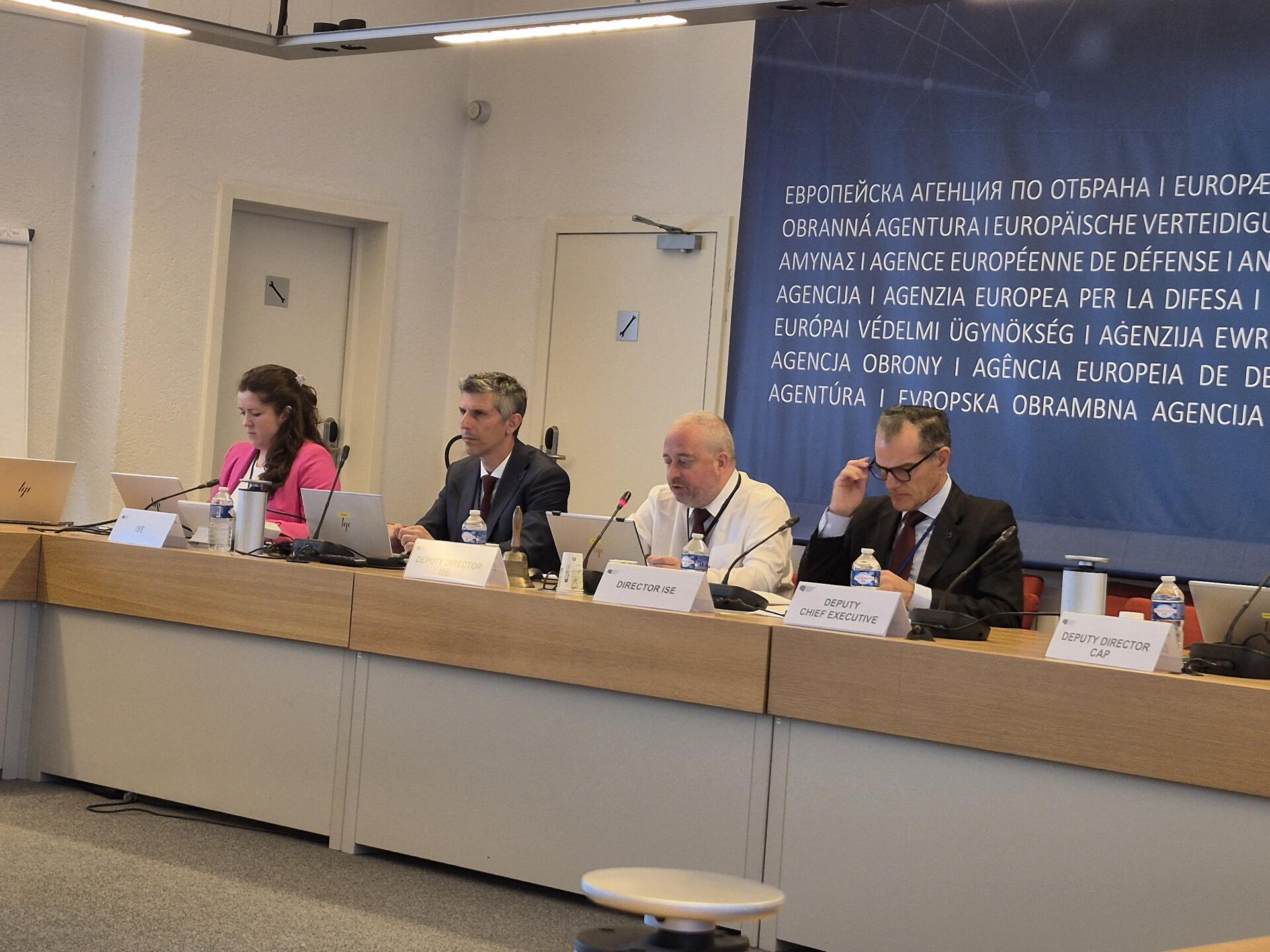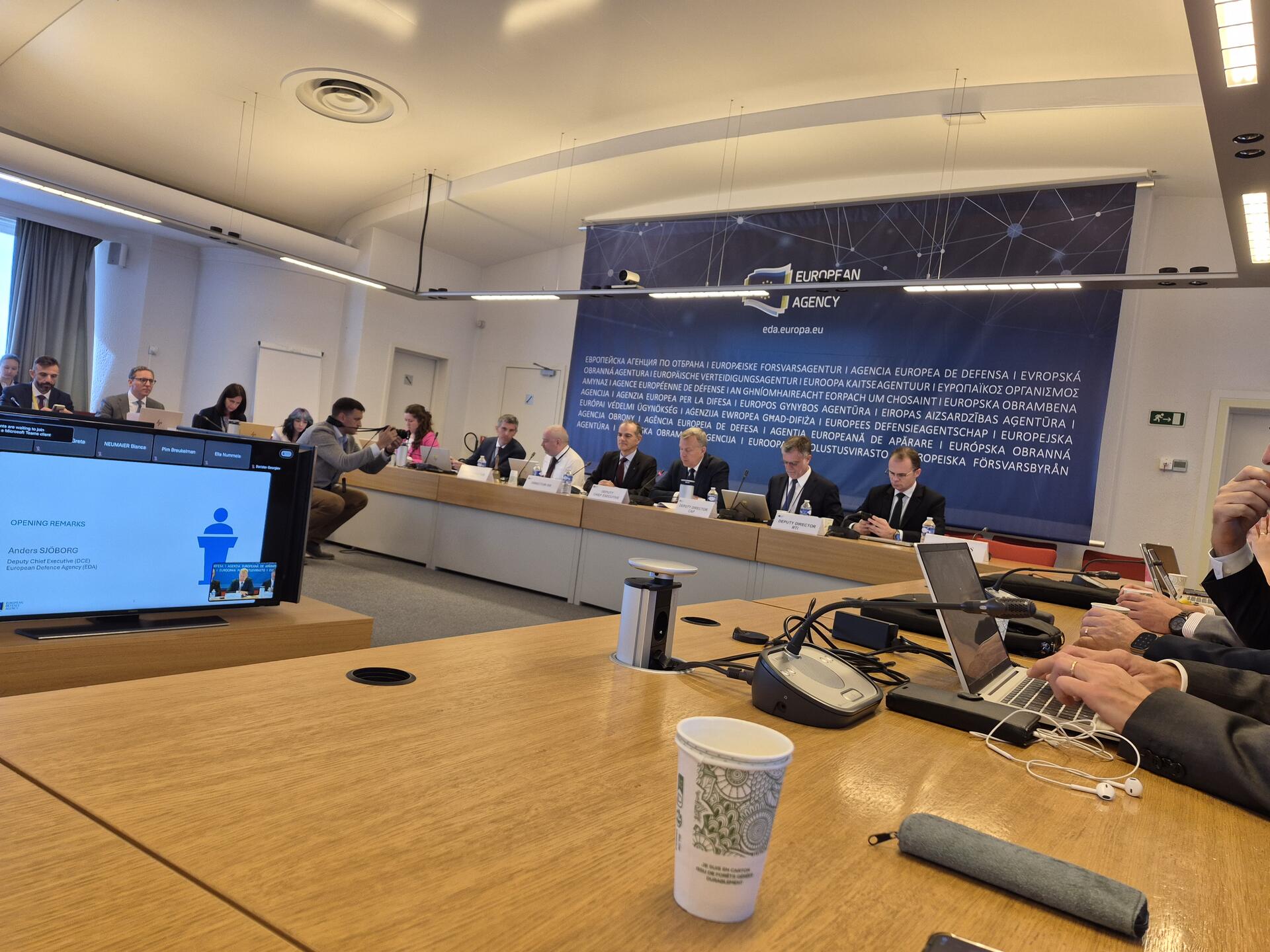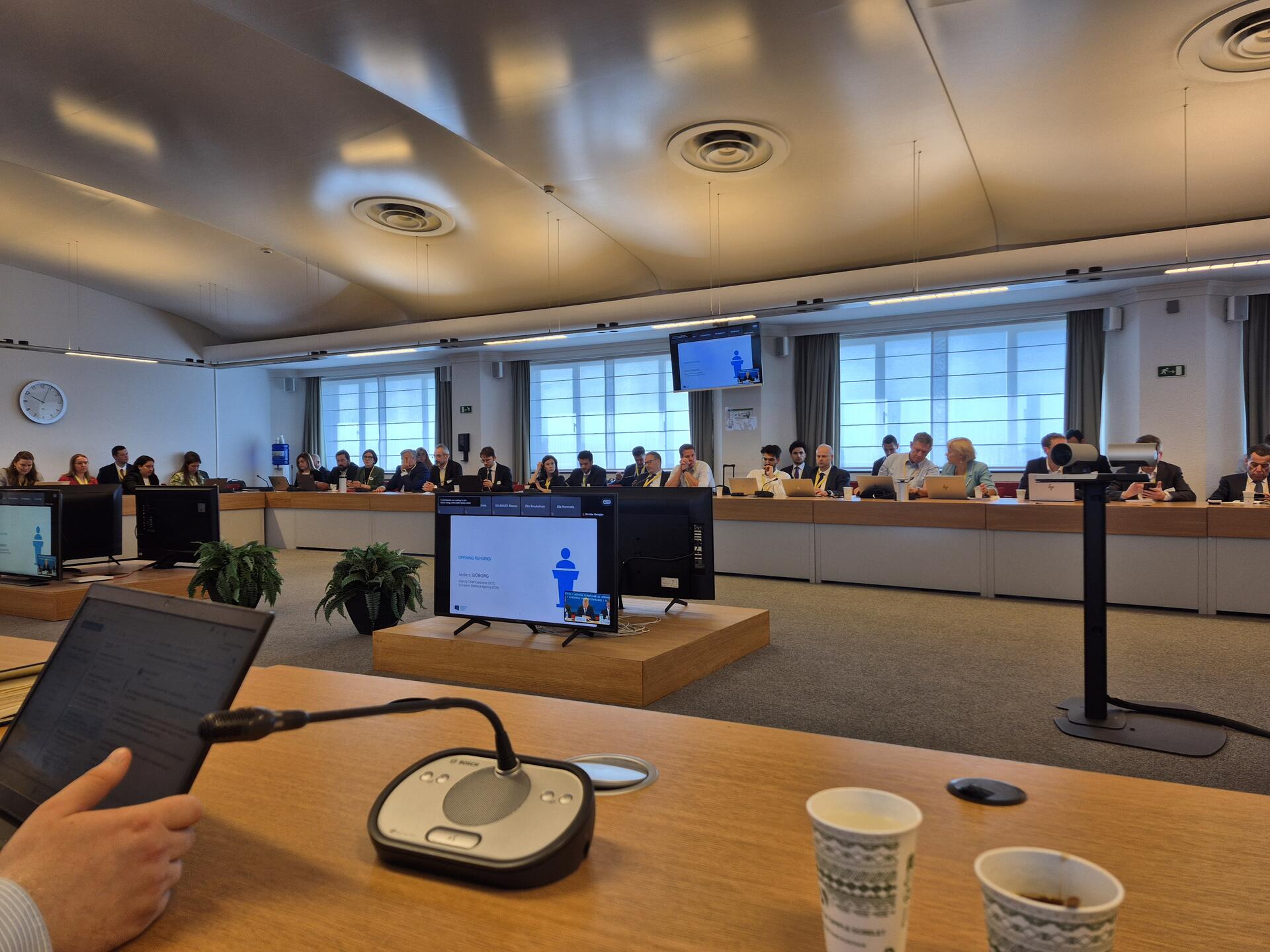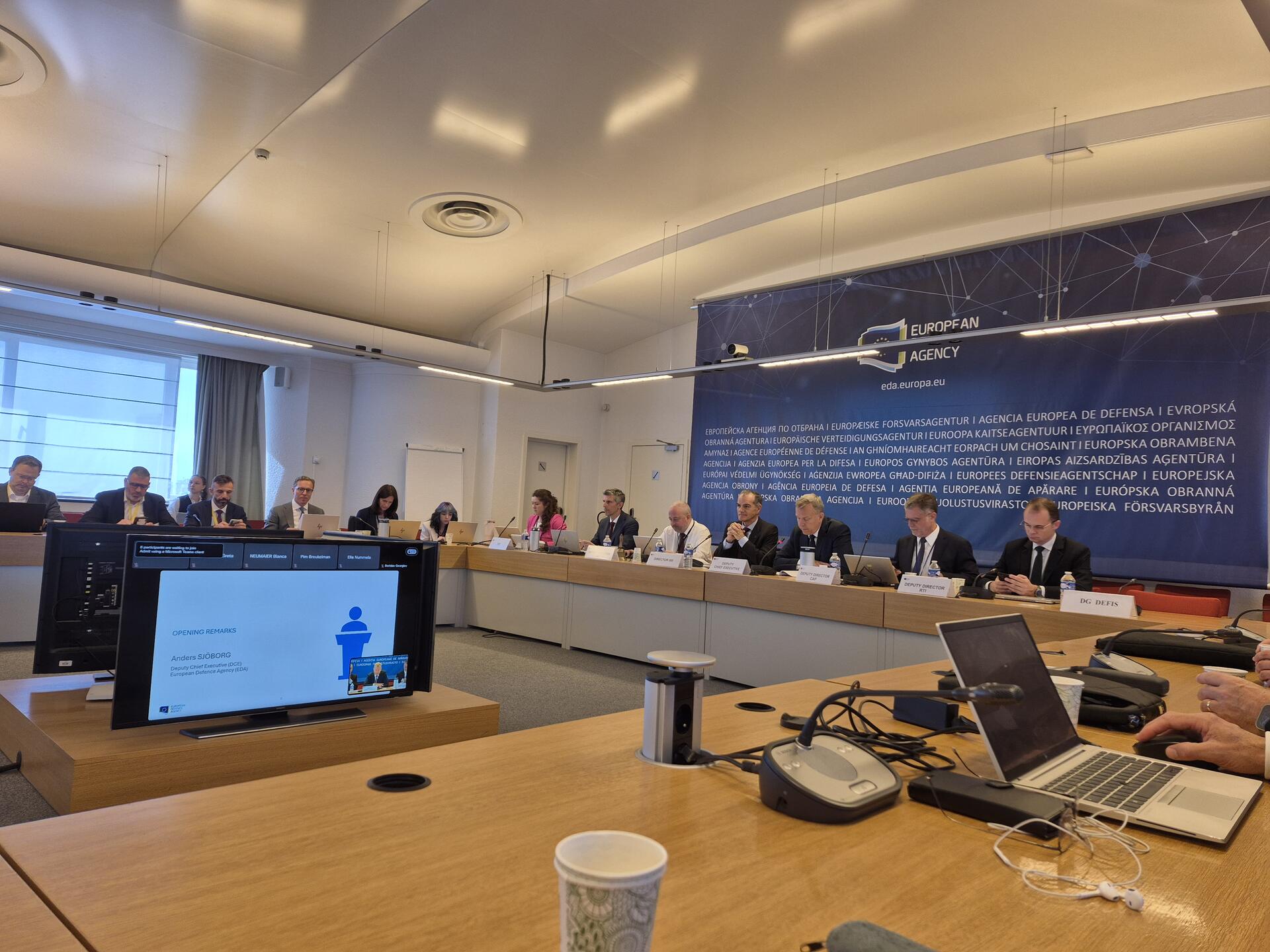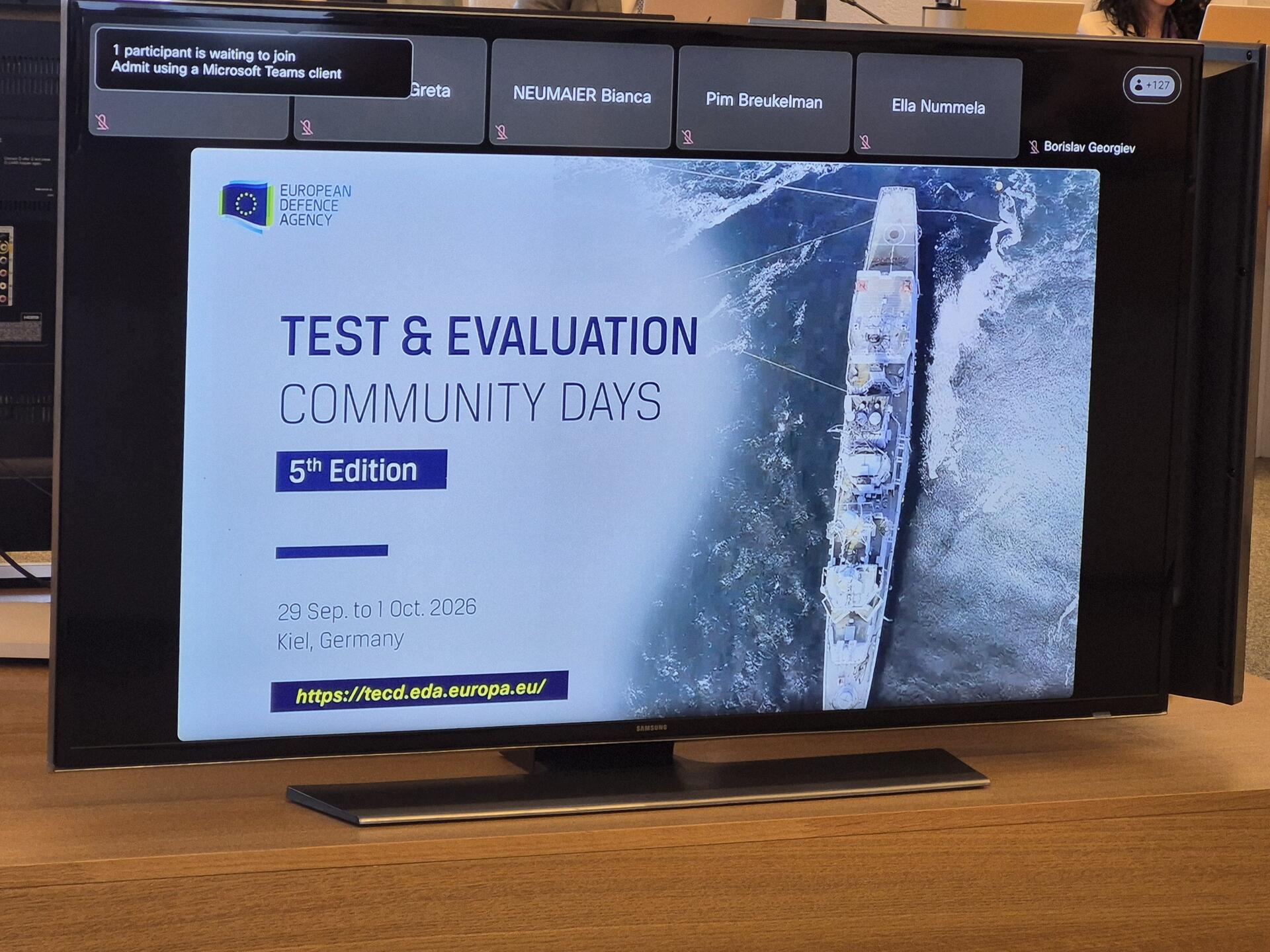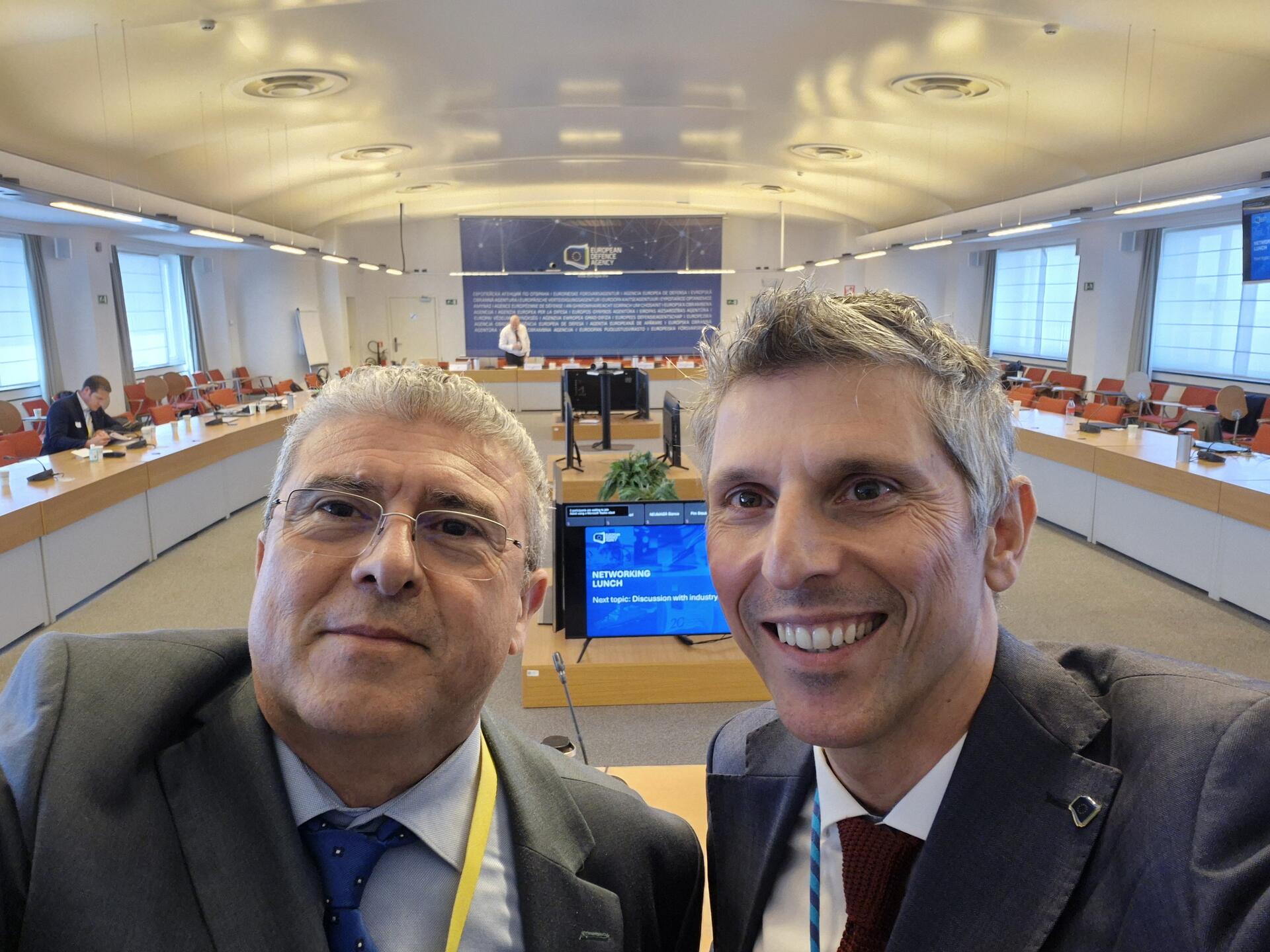
Four days after the European Commission put forward the first five European Defence Projects of Common Interest (EDPCIs), Brussels’ defence community reconvened at the European Defence Agency (EDA) for its annual Defence Industry Workshop. Held on 7 July 2026 at EDA premises in a hybrid format, the workshop gathered more than 300 industry representatives, from major primes to small and medium-sized enterprises (SMEs), together with National Defence Industry Associations (NDIAs), the Aerospace, Security and Defence Industries Association of Europe (ASD), and Member State delegates. EUDIMA followed the proceedings both on site and online. The prevailing theme was unmistakable: with defence budgets at record highs and the European Union’s industrial toolbox maturing quickly, the central question is no longer whether Europe will invest, but how it converts that investment into delivered, interoperable capability.
A structured dialogue at a decisive moment
Opening the workshop, Anders Sjöborg, Deputy Chief Executive of the EDA, framed the event against a security environment shaped by Russia’s continued war of aggression against Ukraine and persistent hybrid threats. Antonio Armada Vázquez, Director for Industry, Synergies and Enablers (ISE), welcomed participants and set out the workshop’s purpose as a two-way exchange, with the Agency updating industry on its activities and, in turn, listening to feedback from companies of every size. That framing mattered. Coming shortly after the entry into force of the European Defence Industry Programme (EDIP), adopted on 16 December 2025, the workshop offered industry an early reading of how the EU’s new instruments will translate into concrete opportunities under the Defence Readiness 2030 agenda.
Capability development and the spending picture
Franck Desit, Deputy Director for Capabilities, Armaments and Planning, presented the state of play on capability development, including the conclusion of the fourth cycle of the Coordinated Annual Review on Defence (CARD) and the Agency’s support to Lead Nations across the Priority Capability Areas. He pointed to active proposals spanning integrated air and missile defence, artillery, missiles and ammunition, drones and counter-drones, military mobility and maritime capabilities, alongside a forthcoming call for new projects under Permanent Structured Cooperation (PESCO).
The most striking figures came from the Agency’s forthcoming Defence Data publication. According to data presented by the EDA at the workshop, total defence expenditure by the 27 Member States reached €418 billion in 2025, equivalent to around 2.2% of GDP and roughly 20% higher than in 2024. Defence investment rose to €134 billion, an increase of some 23% year on year, representing close to a third of total defence spending. Yet the collaborative dimension remained modest, with cooperative procurement accounting for just under a quarter of investment and national-only approaches still dominating. That persistent gap between record national spending and limited joint procurement was, throughout the day, the strategic problem to which most discussions returned.
Innovation, research and the road from lab to field
Michal Wiercinski, Deputy Director for Research, Technology and Innovation, set out the Agency’s research portfolio and its growing role in managing European Defence Fund (EDF) actions, with dozens of projects entrusted to the EDA since 2021. Much of the forward-looking interest centred on the Hub for EU Defence Innovation (HEDI) and its operational experimentation model, which brings promising technologies into contact with military users under realistic conditions. Particular attention went to BraveTech EU, the joint EU-Ukraine initiative delivered with the EDF, the EU Defence Innovation Scheme (EUDIS) and Ukraine’s Brave1 platform, whose second phase, worth €35 million to the EDA, focuses on testing and scaling battlefield-proven solutions. For EUDIMA, which has tracked these funding channels closely at the EDF Info Days 2026, the message was that the distance between innovation and operational capability is precisely where EU instruments are now concentrating.
Security of supply and support to industry
Dr Baudouin Heuninckx, Deputy Director for Industry, Synergies and Enablers, addressed security of supply, Key Strategic Activities (KSA) and wider EU policies. The revised KSA approach shifts the analytical focus from technology to industrial production capacity, asking, in blunt terms, what Europe has and what it lacks. The Agency’s own assessment, that Europe can look strong on the surface while remaining fragile underneath, was reinforced by figures on critical dependencies in areas such as raw materials and semiconductors. On the support side, the Agency highlighted practical tools for industry, including its B2B matchmaking platform, the IdentiFunding gateway to European funding opportunities, and continued work on EU defence standardisation.
The Commission’s perspective: EDPCIs, SEAPs and procurement reform
The most closely followed contribution came from Guillaume de La Brosse, Head of Unit for Defence Policy and Innovation at the European Commission’s Directorate-General for Defence Industry and Space (DG DEFIS). Speaking days after the Commission proposed five EDPCIs covering drones and counter-drone systems, maritime and seabed defence, space, air and missile defence, and Eastern Flank security, he set out how these flagship projects will be governed and financed. He explained that the Commission itself intends to participate in the EDPCIs, and that the Structure for European Armament Programme (SEAP), a voluntary framework under EDIP, could be used by Member States to govern an EDPCI or its building blocks, offering advantages including VAT exemption on jointly owned assets.
On financing, de La Brosse was candid about scale. He noted that the current multiannual funding envelope of around €300 million running to the end of 2027 is modest, and that the Commission’s ambition is to allocate significantly more under the next Multiannual Financial Framework from autumn 2028. He added that of the nine proposals originally submitted, the four not selected as EDPCIs would receive seed funding to mature towards a possible future wave, and observed that once established, an EDPCI is intended to endure across financial periods.
Looking ahead, de La Brosse signalled that the Commission will move in the autumn to table a review of the Defence Procurement Directive. His argument was that the existing rules were designed in peacetime rather than in an era of defence readiness, and therefore need to enable faster, simpler and more user-friendly procurement, greater transparency, and wider market access for new entrants rather than a familiar set of incumbents. Transforming the demand side, he suggested, is as necessary as transforming the supply side.
The structured discussion and EUDIMA’s engagement
The afternoon turned to a structured discussion built around two themes: strengthening the European Defence Technological and Industrial Base (EDTIB) through cooperation and joint procurement, and driving innovation and future capabilities, including for SMEs, mid-caps and dual-use technologies. During the question-and-answer session, EUDIMA’s founder and Chief Executive, Commodore (ret.) Antonios Boumpas, raised the question of how the EDPCI budget will be allocated in the programme’s early years, and requested an update on the SEAPs, prompting the clarifications on governance and financing set out above.
For a consultancy operating at the intersection of European funding, industry and institutions, exchanges of this kind carry direct value. Understanding how instruments such as EDIP, the EDPCIs and the SEAPs will be sequenced and financed is precisely the intelligence that allows EUDIMA to help organisations position themselves within Europe’s evolving defence architecture, a theme the firm has followed from Eurosatory 2026 to the DEFEA Conference and the Cyprus Presidency conference on financing dual-use technology.
A defining moment for European defence industry cooperation
The 2026 Defence Industry Workshop confirmed that Europe has moved decisively from strategy to instruments, and now faces the harder task of execution. Record spending, a maturing EDIP, five proposed EDPCIs and an imminent overhaul of procurement rules together mark the most substantial reshaping of the EU defence industrial landscape in a generation. The tests ahead are concrete: the Council’s adoption of the EDPCIs, the autumn review of the Defence Procurement Directive, and the scale of ambition under the next Multiannual Financial Framework. EUDIMA thanks the European Defence Agency for convening a timely and substantive exchange, and will continue to follow how these commitments translate into opportunities for Europe’s defence industry.